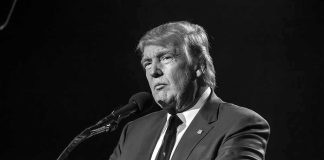
A 2019 FBI interview document reveals Donald Trump contacted Palm Beach police about Jeffrey Epstein’s criminal activities nearly two decades ago, stating authorities should stop him because “everyone has known he’s been doing this.”
Story Snapshot
- FBI documents from a 2019 interview show Trump called Palm Beach police chief Michael Reiter in July 2006 during the Epstein investigation
- Trump allegedly told Reiter he had banned Epstein from Mar-a-Lago and described Ghislaine Maxwell as Epstein’s “evil” operative
- The call occurred during the initial probe into Epstein recruiting girls as young as 14 for sexual massages
- Documents surfaced through the November 2025 Epstein Files Transparency Act, which mandated DOJ file releases
- This represents the first public reporting of FBI-documented contact between Trump and investigators regarding Epstein’s criminal behavior
The 2006 Phone Call That Stayed Hidden for Nearly Two Decades
Former Palm Beach Police Chief Michael Reiter sat down with FBI agents in October 2019, two months after Jeffrey Epstein’s death in federal custody. During that interview, Reiter recounted a phone conversation from July 2006 that would remain buried in government files for years. Trump had reached out to him as the Epstein investigation gained public attention, expressing support for law enforcement efforts. According to Reiter’s account, Trump acknowledged widespread knowledge of Epstein’s predatory behavior and revealed he had already severed ties with the financier by removing him from his private club.
When Elite Social Circles Collided With Criminal Reality
Trump and Epstein moved in overlapping social circles throughout the 1990s and early 2000s. The two appeared together at events, and Trump once publicly called Epstein a “terrific guy” in a 2002 interview. But according to the FBI documents, Trump claimed he distanced himself when he realized the extent of Epstein’s activities. He specifically mentioned leaving an Epstein gathering after noticing teenagers present and referenced Ghislaine Maxwell as an “evil” operative facilitating Epstein’s schemes. The timing proves significant because Palm Beach police had launched their investigation in April 2005 after a woman reported Epstein paid her 14-year-old stepdaughter for sexual contact.
A Police Chief Fighting an Uphill Battle Against Power
Michael Reiter led an investigation that would expose deep frustrations with how the justice system treats the wealthy and connected. His department gathered evidence of Epstein recruiting underage girls for sexual massages at his Palm Beach mansion. Reiter clashed publicly with state prosecutors in 2006 over their handling of the case, eventually apologizing to victims for the leniency shown through a grand jury that produced only a single count of solicitation. The police chief’s determination to pursue federal charges reflected his belief that local prosecutors wouldn’t hold Epstein accountable. Trump’s call came during this contentious period when Reiter needed support but faced institutional resistance.
The investigation documented systematic abuse involving girls as young as 14, yet it culminated in Epstein’s controversial 2008 non-prosecution agreement. That sweetheart deal allowed Epstein to plead guilty to state charges and serve just 13 months in a county jail with generous work-release privileges. Reiter’s frustration with the outcome drove him to cooperate with federal investigators and later with journalists who would eventually expose the full scope of Epstein’s crimes. The FBI interview in 2019 provided an official record of Trump’s 2006 contact, distinguishing this from unsubstantiated claims about later communications.
The Files That Nearly Stayed Sealed Forever
The FBI summary documenting Trump’s call surfaced only after Congress passed the Epstein Files Transparency Act in November 2025, legislation Trump initially opposed before ultimately signing. The Miami Herald first reported the contents of Reiter’s interview, drawing from newly released Department of Justice documents that include unredacted materials, Maxwell depositions, and investigative footage. These revelations arrived amid ongoing congressional review of approximately 3 million pages of documents related to Epstein and Maxwell’s criminal enterprise. The scale of the document release has created pressure on multiple political figures, including current administration officials with documented Epstein connections.
The transparency act represents a victory for those demanding accountability regarding how authorities handled Epstein over decades. Victims of Epstein’s abuse gain validation through documentation showing prominent figures knew about his criminal behavior years before his arrest. The files also confirm details that challenge conspiracy theories while raising new questions about why certain evidence remained classified for so long. Political divisions emerge even in interpretation of these documents, with some viewing Trump’s call as evidence of cooperation while others question why he maintained any association with Epstein given his stated awareness of the criminal activity.
What Early Knowledge Reveals About Accountability
Trump’s alleged statement that “everyone has known” Epstein engaged in predatory behavior raises uncomfortable questions about elite circles that tolerated or ignored criminal conduct. The FBI document supports Trump’s longstanding claim that he distanced himself from Epstein, but it also confirms he possessed knowledge of serious crimes years before Epstein faced significant consequences. Reiter’s account provides the most detailed official record of Trump’s perspective during the active 2006 investigation. The police chief has not responded to requests for additional comment, leaving the FBI summary as the primary source for details of the conversation.
Sources:
Ex-police chief says Trump told him ‘thank goodness you’re stopping’ Epstein in 2000s – ABC News
Relationship of Donald Trump and Jeffrey Epstein – Wikipedia