
A single unanswered question in Munich can follow a politician all the way to 2028.
Quick Take
- Rep. Alexandria Ocasio-Cortez faced a direct question at the Munich Security Conference about sending U.S. troops to defend Taiwan and did not give a direct yes-or-no answer.
- Right-leaning coverage treated the moment as a political “gotcha,” branding it a sign of Democratic weakness on China and deterrence.
- The bigger story is how “rules-based order” talk collides with real-world commitments, costs, and credibility.
- Munich has become an early proving ground for national ambitions, and foreign-policy fluency now functions like a presidential prerequisite.
Munich’s Taiwan Question Turned a Panel into a Stress Test
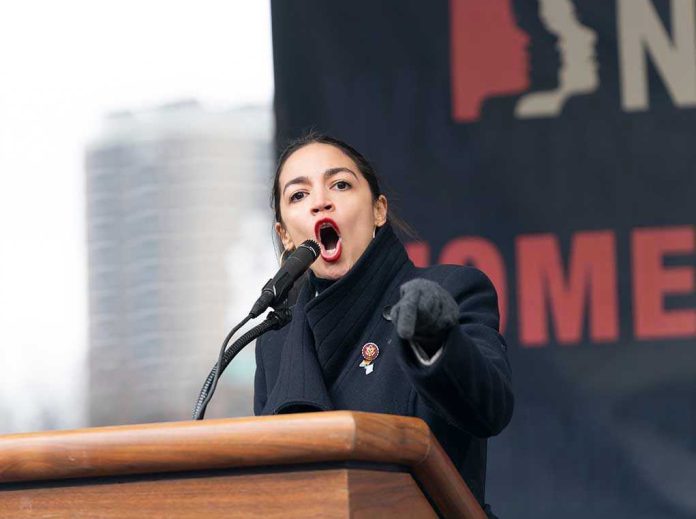
Rep. Alexandria Ocasio-Cortez appeared on a Munich Security Conference panel alongside Michigan Gov. Gretchen Whitmer and U.S. Ambassador to NATO Matthew Whitaker, a lineup designed to showcase competing instincts about power, alliances, and populism. The flashpoint came when AOC faced a question about whether the United States should deploy troops to defend Taiwan in the event of a Chinese invasion. Reports say she sidestepped rather than answered directly, and that alone became the headline.
That reaction reveals something cynical but true about modern politics: a single clipped exchange travels farther than a full hour of discussion. Critics framed the moment as a “faceplant,” while more neutral accounts treated it as the kind of careful ambiguity politicians adopt when the downside of clarity looks bigger than the upside. Without a published transcript or full clip in the research record, the exact wording matters less than the unmistakable fact that the non-answer landed as a message.
Why Taiwan Is the Question No One Gets to “Workshop”
Taiwan is not a symbolic issue, and that’s why dodging it looks worse than dodging most. A clear pledge to send troops signals deterrence but also binds a country to war planning, casualties, and budget reality. A clear refusal invites Beijing to test U.S. resolve and makes allies wonder what American promises mean. American conservatives tend to respect plain talk on national defense, and common sense says voters notice when a leader can’t articulate what “peace through strength” or restraint actually looks like.
Democrats often try to thread a needle: sound firm about authoritarianism while keeping distance from open-ended military commitments. That approach can work on domestic stages, where the audience is partisan and the time horizon is the next news cycle. Munich operates differently. The room includes Europeans trying to price American reliability into their own security planning, and officials watching for signals about whether the U.S. still treats deterrence as something you fund, explain, and commit to, not just something you hashtag.
“Rules-Based Order” Sounds Noble Until Someone Asks Who Enforces It
The panel’s broader theme revolved around the “rules-based order,” a phrase that has become diplomatic shorthand for post–World War II institutions, U.S.-anchored alliances, and predictable responses to aggression. AOC reportedly argued that rules should apply universally rather than carve out exceptions, including for the Global South. That principle resonates morally, but the enforcement question never goes away: rules without consequences become suggestions, and suggestions don’t deter nuclear-armed competitors.
Whitaker, described as dismissive of abstract theorizing, reportedly labeled some of the “rules-based order” talk as “theoretical” and “coastal elite.” That jab matters because it mirrors a broader American argument: elites enjoy the language of universal norms, while working families pay the bill when norms fail. Conservatives usually agree with that critique, and it gains traction when public figures sound more comfortable diagnosing “systems” than stating whether they would accept the risk of war to defend a strategic partner.
The “Kamala 2.0” Label Works Because It Exploits a Real Voter Fear
Right-leaning outlets attached a familiar insult: “Kamala 2.0,” suggesting a pattern of high-profile awkwardness on serious questions. That label is opinion, not a verified fact, but it sticks because it targets a real fear among swing voters: that some leaders speak in slogans when stakes turn lethal. The comparison also plays off memories of past campaign moments where opponents argued Democrats struggled to communicate crisp positions on geopolitics.
As a matter of political mechanics, the attack writes itself. AOC arrived billed as a “working-class” voice in an elite venue, then appeared to stumble on the most concrete working-class question imaginable: would you send other people’s sons and daughters to fight? Conservatives don’t need to invent a conspiracy to find that jarring. The contrast between populist branding and elite-stage ambiguity is enough to create distrust, especially among voters who want leaders to say what they mean.
What This Moment Signals for 2028 and for the U.S.–Europe Relationship
Munich has become a stage where American parties audition for credibility with allies. The research record frames Democrats at the conference as pushing back on Trump-era “America First” instincts and warning about an “age of authoritarians.” Meanwhile, Rubio represented the administration’s posture in Munich, and the broader context included tension over alliances and commitments. Against that backdrop, any Democrat who wants to look “ready” must demonstrate command of deterrence, not just criticism of Trump.
The smartest takeaway is not that AOC is uniquely unprepared; it’s that the political environment punishes hesitation on hard security questions more than it punishes mistakes on softer ones. Taiwan will remain a credibility test because it compresses everything voters dislike about foreign policy into one demand: choose. Munich simply made that demand public, in front of an audience trained to hear subtext, and a media ecosystem built to monetize the pause between question and answer.
Limited public sourcing in the provided research leaves open questions about the exact phrasing and full context of AOC’s reply. That uncertainty won’t slow the political narrative, though, because politics rarely waits for transcripts. The practical lesson for any would-be national leader is brutally simple: on Taiwan, ambiguity reads like weakness to adversaries and like evasion to voters, and neither group needs you to “faceplant” for them to conclude you might.
Sources:
AOC populism Munich rules-based order
Ocasio-Cortez says unconditional US