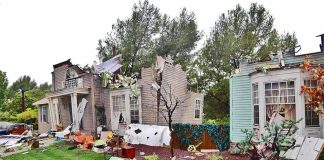
A single click of a furnace igniter can turn a familiar building into a blast zone in less time than it takes to say “everyone out.”
Quick Take
- An explosion tore through Abundant Life Fellowship church in Boonville, New York, after leaders reported an “obvious” gas leak just before 10:30 a.m. on Feb. 17, 2026.
- Five people suffered injuries: Fire Chief David Pritchard Jr., three firefighters, and Pastor Brandon Pitts; all were reported in critical but stable condition in the latest updates.
- Investigators said the blast occurred when the church’s furnace activated with accumulated gas present; the heating setup reportedly relied on propane cylinders, not a conventional gas line.
- New York State Police continued investigating, with officials saying no criminal activity appeared involved as the community shifted from shock to the hard work of recovery.
The Morning the “Gas Smell” Became a Countdown
Church leaders at Abundant Life Fellowship did what public safety campaigns beg people to do: they called for help after noticing an obvious gas leak. That call went out just before 10:30 a.m., and responders arrived to treat it like the routine-but-serious incident it often is in small towns. Then routine snapped. Around 10:30 a.m., the building exploded, and within minutes fire and smoke overwhelmed what had been a place of worship.
The injuries tell you how quickly conditions turned unforgiving. Reports identified five victims: Boonville Fire Chief David Pritchard Jr., three firefighters, and Pastor Brandon Pitts. Early coverage sometimes describes a “civilian” among the injured, but later local reporting clarifies the pastor as one of the five and notes a congregation member was also present during the emergency. By the next day, officials said the injured remained hospitalized in critical but stable condition.
Propane, Rural Reality, and Why This Risk Hides in Plain Sight
Upstate towns like Boonville often depend on propane cylinders for heat when a centralized natural gas system isn’t available or economical. That practical choice carries a quiet vulnerability: propane can accumulate if equipment leaks or venting fails, and an ignition source can arrive in the most ordinary way. Reports said the church used propane cylinders, which fits a broader rural pattern—common-sense infrastructure decisions that work for decades, until one maintenance issue turns them into a headline.
Investigators pointed to a classic mechanism: accumulated gas met ignition when the furnace activated. That detail matters because it shifts the conversation from “mystery explosion” to the unglamorous reality of building systems—fuel supply, shutoffs, sensors, ventilation, and protocols when people smell gas. The root cause of how gas built up remained under investigation, but the suspected trigger underscores why responders treat gas calls as inherently unstable scenes, even before flames appear.
First Responders Took the Hit, Not Sunday Families
The casualty list reads like a roster of people who ran toward danger: fire chief, firefighters, pastor. That’s a grim kind of reassurance for the wider community, because it suggests the building was not packed with families when the blast occurred. The church itself echoed that theme in a message asking for prayer and expressing gratitude for “the Lord’s protection” over what was not happening at the time. That kind of statement lands hard in towns where everyone can picture the alternative.
Local reporting described multiple agencies responding, which is how rural emergency management survives major incidents: mutual aid, ambulances, neighboring departments, sheriff’s support, and county emergency services all stacking into one coordinated effort. When several responders suffer serious injuries at once, the strain is immediate and personal. The same people who normally backstop every house fire and crash now become the ones needing rescue, transport, and long hospital watches by their own colleagues.
What Investigators Can Say Now, and What They Cannot
New York State Police led the investigation and said they found no indication of criminal activity. That’s an important baseline in a country trained to suspect the worst whenever a church appears in a breaking-news alert. The evidence described so far points away from malice and toward a failure chain: a leak, a buildup, and ignition. The unanswered questions still matter—where the leak originated, whether any safety device failed, and how the building’s layout influenced gas accumulation.
Officials also faced the accountability question without rushing it: What protocols governed entry into the building once the leak was detected? People often assume “just open a window” solves it, but gas behavior depends on ventilation, airflow, and concentrations, not good intentions. Conservative common sense calls for two things at once here: respect for the investigators’ process and a sober refusal to normalize preventable failures. The public deserves facts, not scapegoats or conspiracy.
The Hard Lesson for Churches and Community Buildings: “Cheap Heat” Isn’t Cheap
Catastrophic damage to the structure means the congregation lost more than a building; it lost the physical anchor for everything from worship to meals to funerals. Rebuilding will involve insurance, fundraising, permitting, and hard decisions about future heating and detection systems. The wider lesson extends beyond Boonville: rural churches, VFW halls, and volunteer firehouses often run on aging systems kept alive by tight budgets and can-do maintenance. That’s admirable, but it’s not a safety strategy.
The most useful outcome would be a statewide pause-and-check moment: verify propane storage and lines, confirm automatic shutoffs, test detectors, and review response protocols for “smell of gas” calls at community buildings. That is not “more red tape” for its own sake; it’s the kind of targeted prevention that keeps volunteer departments staffed and congregations intact. When a furnace activation can become an ignition event, every small-town board meeting suddenly has a new agenda item.
NY church explodes after freak gas leak, injuring firefighters, pastor: police https://t.co/ZCXC4yS0eu pic.twitter.com/XfWKVCZXgP
— New York Post (@nypost) February 17, 2026
The story isn’t finished because the investigation isn’t finished, and recovery will run longer than the news cycle. Five people remained hospitalized as officials continued work at the scene, and the town’s next chapter will hinge on what investigators confirm about the leak’s origin and the furnace’s role. The enduring takeaway, though, already stands: the most dangerous emergencies often start with the most ordinary smell.
Sources:
Report: Emergency crews respond to explosion at Oneida County church