

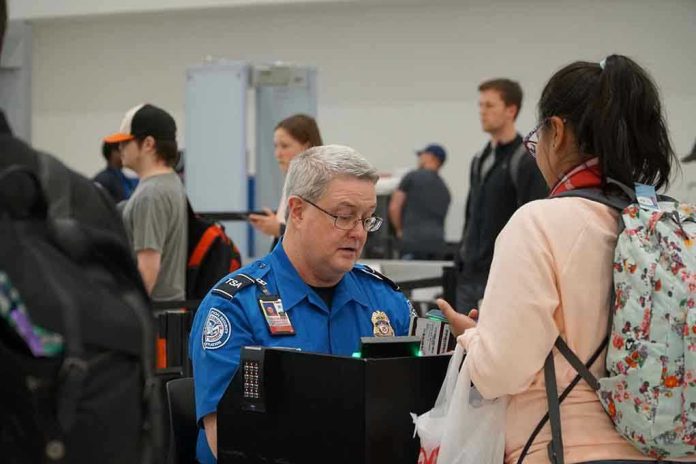
An Oscar-winning filmmaker discovered that airport security doesn’t care about your Hollywood credentials when TSA agents at JFK flagged his Academy Award statuette as a weapon and forced him to check it, only for the priceless trophy to vanish somewhere over the Atlantic.
Story Snapshot
- TSA agents blocked Pasha Talankin from carrying his 8.5-pound Oscar aboard a flight to Germany, classifying it as a potential weapon
- The Best Documentary Feature winner had successfully transported the trophy on previous flights without incident
- The checked statuette went missing upon arrival in Frankfurt before Lufthansa later confirmed its recovery
- The incident raises questions about security protocols for high-value cultural items and baggage handling procedures
When Your Greatest Achievement Becomes a Security Threat
Pasha Talankin arrived at John F. Kennedy International Airport on Wednesday, April 30, 2026, carrying what should have been his golden ticket to celebration. The filmmaker had won the Academy Award for Best Documentary Feature earlier that year. Instead of smooth sailing through security, TSA agents stopped him cold. The 8.5-pound Oscar statuette triggered concerns. Agents deemed the prestigious award a potential weapon and barred Talankin from carrying it aboard his Lufthansa flight to Frankfurt, Germany.
The irony cuts deep. Talankin had traveled with this same trophy before without raising eyebrows. The metallic construction and weight apparently triggered either automated screening protocols or manual inspection concerns this time around. TSA security measures operate on physical characteristics rather than cultural significance. An Oscar might represent the pinnacle of cinematic achievement, but to airport scanners, it’s an 8.5-pound object that could theoretically cause harm. The rules applied equally, regardless of the item’s prestigious origins or the winner’s legitimate claim to ownership.
From Carry-On to Cargo Hold Catastrophe
Talankin faced an impossible choice at the security checkpoint. He could abandon his Oscar or check it as baggage. He chose the latter, trusting the airline’s handling system with an irreplaceable symbol of his career achievement. The statuette disappeared into the baggage system, presumably placed in a protective box for the transatlantic journey. What happened next represents every traveler’s nightmare magnified by the stakes involved. Upon landing in Frankfurt, the box containing the Oscar was nowhere to be found.
David Borenstein, Talankin’s collaborator, became the public voice during the crisis. The frantic search involved coordination between the filmmaker, airline personnel, and presumably airport authorities in both countries. An Oscar statuette holds both monetary and sentimental value that defies calculation. The Academy maintains the ability to replace lost statuettes, acknowledging that these situations occasionally occur. But a replacement never carries the same weight as the original handed to you on stage during your moment of triumph.
The Recovery and Remaining Questions
Lufthansa Airlines eventually confirmed what everyone hoped to hear. The missing Oscar had been located. Borenstein shared the airline’s statement via Instagram, indicating that Lufthansa had contacted Talankin to arrange the trophy’s return. The immediate crisis resolved itself, though the experience left lasting concerns about how airlines and security agencies handle culturally significant items during air travel.
The incident exposes practical gaps in current security protocols. Should TSA agents receive training to recognize legitimate awards and develop procedures for their secure transport? Would a simple verification process allowing winners to carry their trophies with proper documentation prevent future incidents? These questions matter for future Oscar winners and anyone transporting valuable, recognized items. The Academy Awards ceremony happens annually, creating recurring scenarios where winners need to travel with their statuettes. This case establishes an unfortunate precedent that security concerns trump common sense recognition of legitimate cultural artifacts.
Common Sense Lost in Translation
The broader implications reach beyond one filmmaker’s temporary loss. TSA operates under necessary security mandates designed to protect travelers from genuine threats. Nobody disputes that mission. However, the inability to distinguish between a potential weapon and a world-famous trophy suggests protocols need refinement. Conservative principles favor both security and common sense application of rules. This situation demonstrates what happens when bureaucratic rigidity overrides practical judgment and reasonable accommodation for exceptional circumstances.
Talankin recovered his Oscar, but the hassle, anxiety, and international coordination required to fix a preventable problem raises legitimate concerns. Airlines handle millions of bags annually, and losses occur despite best efforts. Forcing valuable items into checked baggage unnecessarily increases risk. Future award winners now face uncertainty about whether they’ll encounter similar treatment, depending on which airport, which agents, and which day they travel. That inconsistency serves nobody’s interests and undermines both security credibility and traveler confidence in the system’s ability to apply judgment alongside enforcement.
Sources:
TSA blocks Oscar winner from boarding with trophy, calling it a weapon — now it’s missing – TMZ
Oscar Award Missing After TSA Incident – Wide Open Country