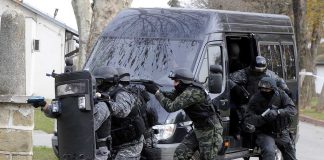

Left-wing activists decry LA’s 2028 Olympics security as a police-heavy blueprint haunted by 1984’s militarization ghosts, but will ignoring real threats doom the Games?
Story Snapshot
- LAPD seeks 520 new recruits and $100 million in equipment amid 500+ annual officer losses and overtime crises.
- White House Task Force under DHS coordinates federal response, sparking progressive fears of overreach.
- City Council expresses deep skepticism over costs, funding uncertainties, and historical police militarization risks.
- Activists push alternatives, citing 1984 Olympics equipment later used against communities of color.
- 30,000 law enforcement personnel needed for eight venues during the 66-day event.
LAPD Faces Staffing Crisis Ahead of Olympics
LAPD Chief Jim McDonnell presented budget requests to Los Angeles City Council on May 1, 2026. He demanded 520 new police recruits and nearly $100 million for 500+ vehicles, upgraded radios, computers, and 1,600 body cameras. Current force stands at 8,600 officers, down from 9,500, with 500+ leaving yearly. Overtime projections hit 1.4 million hours, creating a $16.5 million deficit. Chief warns staffing shortages threaten Olympic readiness and daily policing.
Federal Coordination Through DHS Task Force
President Trump signed an executive order on August 5, 2025, creating a White House Task Force chaired by him, with VP JD Vance, AG Pam Bondi, and DHS Secretary Kristi Noem. DHS leads as primary coordinator for the National Special Security Event. Responsibilities cover counterterrorism, dignitary protection, and venue security across eight sites like LA Memorial Coliseum and Crypto.com Arena. LA28 claims zero police budgets, shifting costs to city and federal sources.
Progressive Activists Challenge Police-Centric Plan
Councilmember Eunisses Hernandez of the Democratic Socialists of America questions the scale of police deployment. Activists reference 1984 Olympics, where LAPD acquired military gear later deployed disproportionately against communities of color. City Council shows deep skepticism on equipment needs, taxpayer burdens, and federal funding timelines. They demand alternatives to what they call excessive reliance on police and Homeland Security, fearing civil liberties erosion.
Common sense aligns with law enforcement needs here. LAPD’s attrition and overtime crises are factual crises demanding hires and tools. Activist fears of “militarization” recycle unproven narratives; 1984 equipment served public safety post-Games. Prioritizing national security for a global event reflects conservative values of law and order over ideological experiments.
Budget Battles and Historical Echoes
LA28’s shared security pool covers only overtime, leaving vehicle shortages of 700-800 units unaddressed. LAPD plans 2,400 officers for venues, part of 30,000 total personnel including FBI, Secret Service, and CIA. Council worries federal funds lag, forcing city taxpayers to foot bills. Planners study Italy and France models. Mayor Karen Bass balances reelection with restoring LAPD strength while eyeing fiscal restraint.
Venue security spans 66 days from July 14, 2028, challenging routine 911 responses. Communities near sites face traffic curbs and checkpoints. Long-term, Olympic gear stays with LAPD, potentially boosting capabilities against crime spikes. Protests loom if progressives mobilize, but robust security ensures athlete safety and deters threats in a high-risk world.
Sources:
LAPD chief warns Los Angeles not prepared to secure 2028 Olympics due to staffing shortages
2028 Olympics security plan for LA, DC includes White House task force