

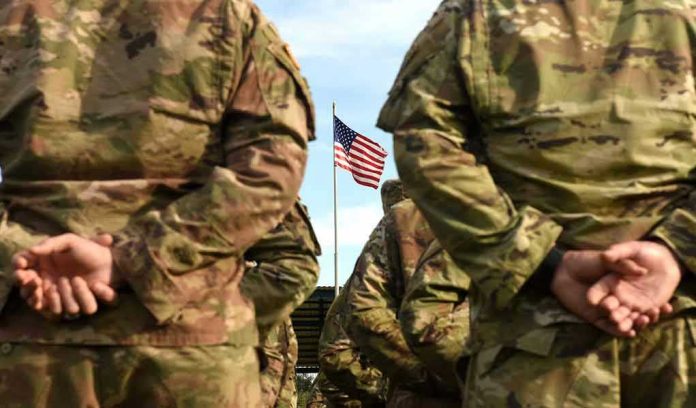
The Army is not starting executions from scratch; it is opening a door it has left closed since 1961.
Quick Take
- The Army has an internal plan called Operation Resolute Justice for four military death row inmates.
- The plan only moves forward if the president gives formal approval.
- The last military execution took place in 1961, which gives this story its force.
- The strongest detail is not action. It is preparation, and that distinction matters.
The Plan Behind the Headlines
An internal Army document reviewed by ABC News says the service has prepared for possible executions under the name Operation Resolute Justice.[7] The plan calls for coordination with the Federal Bureau of Prisons and a transfer of condemned inmates from Fort Leavenworth, Kansas, to Terre Haute, Indiana.[7] It also sets a 150-day timeline after presidential approval.[7]
That timing gives the story its sharp edge. The Army says these are routine contingency drills, not a sign that executions are imminent.[7] Army spokesperson Cynthia Smith said such exercises have been run for years and that the service has not received a formal order from the president.[7] In plain terms, the Army is readying the machinery, but the key switch has not been turned.
Why This Feels So Unusual
The United States military can impose death sentences under the Uniform Code of Military Justice, but presidential approval is required before execution.[7][14] The Army’s own execution procedures are laid out in Army Regulation 190-55, which governs how military executions would be carried out once approved.[8] That legal structure has existed for years, but it has rarely been tested in modern times.
The reason people are reacting so strongly is simple: the last military execution was in 1961.[4][7][17] That is not a small gap. It is a generational break. Most Americans, including many in uniform, have never seen the military carry out this punishment. So even a planning document can feel like the start of something historic, even if it remains only a contingency.
What Is Clear, and What Is Not
The clearest fact is that four inmates are on military death row and the Army is planning for the possibility of action.[7][14] What remains less clear is the full public record behind those cases. The available reports do not provide the names, crimes, or court-martial file numbers for each inmate in a single official source.[7][14] That leaves a real gap between the headline and the proof.
Another open question is the legal path between approval and action. The plan sets a 150-day operational window, but the public reporting does not explain how appeals, stays, or other legal challenges would fit inside that clock.[7] That matters because death penalty cases often move through layers of review. A timetable is not the same thing as a guarantee.
The Political and Moral Stakes
This story also lands inside a much larger debate about power, punishment, and restraint. Supporters see a lawful system finally preparing to use a penalty that still exists on the books. Critics see a grim relic being dusted off after decades of disuse.[7][8][14] Both sides are reading the same facts, but they are drawing very different lessons from them.
The conservative case for taking the Army at its word is straightforward: if the law still allows a punishment, the government should keep its procedures ready and follow them exactly. At the same time, common sense demands caution. A punishment this final should never run on vague public talk or media drama alone. It should run on full legal authority, full transparency, and a paper trail that leaves no doubt.
Sources:
[4] Web – Army lays groundwork for death row executions if Trump gives approval
[7] Web – List of people executed by the United States military – Wikipedia
[8] Web – No Military Executions Since 1961
[14] Web – Military Executions
[17] Web – Capital punishment in the United States – Wikipedia