
When a smoking transformer turned a quiet Sunday at Spanish Hills Apartments into a blast that hurled firefighters backward, it exposed how fragile our everyday sense of safety around “simple” electricity really is.
Story Snapshot
- Smoke from a failed transformer slowly filled buildings before the explosion hit.
- Firefighters triggered an electrical arc when they shut off power in an electrical room.
- No residents or firefighters were hurt, but several families were displaced.
- Investigators suspect aging or stressed equipment, not a random fluke, caused the failure.
The quiet smoke before the sudden blast
Residents at the Spanish Hills Apartments in Tacoma first faced smoke, not fireballs. Tacoma Fire Department crews were called around 5:37 p.m. after alarms sounded and people saw smoke coming from electrical conduits and a transformer serving the complex. Fire officials said a malfunctioning electrical transformer pushed smoke into multiple buildings and triggered automatic alarms, even though there was no active fire at that stage. One resident pulled a manual fire alarm to make sure neighbors woke up to the danger.
Crews entered the 600 building and found smoke in an electrical room between units, the space where power feeds the apartments. About 20 minutes after firefighters arrived, they went into that room to shut off electricity to the building so they could work safely. That should have been the step that makes a scene safer. Instead, it became the turning point. When firefighters cut the power, electricity arced and ignited the smoke hanging in the room, creating a sudden blast.
Firefighters in the blast zone, and why they walked away
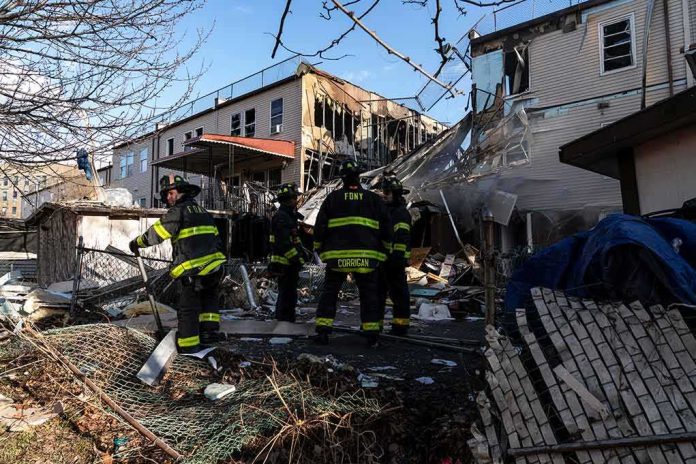
Neighbor video shows firefighters standing just outside the electrical room door, talking and checking conditions, when a violent flash erupts and a pressure wave throws them backward down the breezeway. The blast tore through walls of the 600 building, blew debris into the courtyard, and shocked residents who thought the danger was just “some smoke.” Tacoma Fire’s spokesperson later explained that the arc inside the room lit off the smoke like fuel, turning a small electrical problem into a room-sized explosion.
Here is the part that should matter to anyone who thinks public workers never take real risks. Those firefighters followed standard steps, checked the room, and still faced a sudden electrical event that none of them caused on purpose. Yet every report confirms no injuries to firefighters or residents. Residents were evacuated quickly after the blast, and Tacoma Fire and Tacoma Public Utilities cleared all but the damaged 600 building for reoccupation that same night.
What “failed transformer” really means in the real world
Fire investigators suspect a failed electrical transformer sparked the entire chain of events: smoke in conduits, alarms, and the electrical conditions that made the arc and blast possible. Many people hear “failed transformer” and imagine a freak accident. The global data say something different. Energy and engineering studies show that around seven in ten transformer failures come from worn-out insulation, often caused by age, moisture, and years of thermal stress.
An explosion erupts at a Tacoma, Washington, apartment complex while firefighters investigate reports of smoke, sending crews scrambling for safety.
Officials say firefighters were responding to an electrical transformer malfunction when an explosion occurred in an electrical… pic.twitter.com/bWHOJnFHSB
— Fox News (@FoxNews) July 2, 2026
Independent engineering research also finds that over one-third of transformer failures tie back to design or manufacturing defects, and about one-fifth are linked to aging and overheating that weaken insulation over time. That pattern suggests most failures are slow-building problems, not lightning-from-nowhere surprises. When a transformer runs past its design limits, heat shortens the life of its insulation by half, which makes a sudden failure far more likely. That is exactly the kind of background that fits what happened in Tacoma.
Media clips, quick takes, and the risk of missing the real lesson
Social media posts and local TV pushed one main clip: firefighters blasted backward as the apartment wall blew outward. The video is dramatic, and the algorithms love drama. Yet the deeper story is about infrastructure that quietly fails and puts both residents and first responders in harm’s way. Early news framing repeated that a “suspected transformer failure” caused the blast without exploring whether aging, design flaws, or poor maintenance played a role.
From a common-sense, conservative point of view, this is where questions should focus. Did the transformer operate past its safe limits for years? Were maintenance checks regular and honest? Engineering guides warn that inadequate maintenance, moisture intrusion, and ignoring aging equipment are direct paths to transformer failure and fire. Those factors do not automatically prove negligence in Tacoma. But they do match the most common failure causes and deserve clear answers instead of silence and vague “suspect” language.
What comes next, and what accountability should look like
The official fire investigation is still ongoing, and no final report has been released to the public. That means we do not yet know whether Tacoma Public Utilities will face tough questions or simple bad luck. A serious response would include a full engineering review of the failed transformer, operating logs from the day of the incident, and honest disclosure about age, load history, and maintenance records. These facts matter because transformers connect directly to homes where families sleep.
Transformer experts are clear on one thing: planned inspection and maintenance sharply cuts failure risk. That is not a partisan idea; it is basic stewardship. When utilities keep transformers in good shape, firefighters are less likely to be thrown across hallways while doing their jobs. When aging equipment is left in place until it fails, families pay the price in evacuation orders, lost homes, and fear. The Spanish Hills blast turned a dry technical topic into a loud warning: infrastructure choices reach straight into living rooms, whether we pay attention or not.
Sources:
facebook.com, kiro7.com, dailydispatch.com, firerescue1.com, firehouse.com, instagram.com, thenewstribune.com, youtube.com, tiktok.com, journal.nafe.org