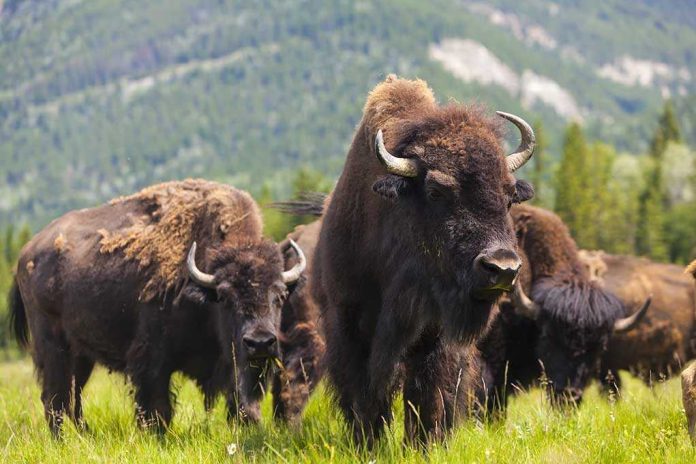
A Yellowstone bison turned a summer visit into a viral near-tragedy, sending a man flying like a rag doll and reminding everyone that “fluffy cows” are 1,000‑pound missiles with horns.
Story Snapshot
- Yellowstone rules say stay 25 yards from bison, yet people keep walking right up to them.
- Bison injure more visitors at Yellowstone than any other animal, beating even bears.
- Recent attacks on a 12-year-old child and several adults show the danger is real, not internet hype.
- Video of a man getting launched into the air is not a freak event; it is part of a long, predictable pattern.
How A Park Vacation Turns Into A Launch Sequence
Yellowstone National Park looks peaceful from the road, with bison grazing like slow, gentle cattle. That calm scene tricks people. Many visitors see a huge animal that does not bolt and assume it is safe to walk closer for a photo or a selfie. That is exactly how a man ended up airborne in the now-infamous campground video: he crossed the invisible line between “watching wildlife” and “entering a wild animal’s personal space.”
🇺🇸 A tourist was seriously injured after a bison tossed him several feet into the air in Yellowstone National Park. The dramatic attack was captured on video. pic.twitter.com/8b5V9wUC7V
— Planet Report HQ (@PlanetReportHQ) July 12, 2026
When a bison decides you are too close, there is almost no warning the average person will catch in time. Rangers describe raised tails, head swings, and subtle shifts as danger signs, but those clues happen fast. A bison can run three times faster than a human, which means that once it lowers its head and charges, you are simply not outrunning it. The man in the video did what many do—hesitated instead of backing off early—and paid for that hesitation with a midair flight.
The Rule Everyone Knows And Too Many Ignore
Yellowstone’s safety rule is plain: stay at least 25 yards away from bison and other large animals, and 100 yards away from bears, wolves, and cougars. That is not a suggestion; it is a legal requirement backed by decades of injury data. The Centers for Disease Control studied bison injuries and found that most people were hurt after they chose to approach the animals, often closer than 10 yards, for photos. These are not random attacks. They are human decisions that strip away the margin for error.
Conservative common sense says you do not argue with physics or history. A one-ton animal with horns does not care that you drove twelve hours and bought a new phone for vacation shots. Yet park rangers now fight social media culture on top of the usual tourist impulse. Videos that show people getting “epic close-ups” or daring stunts get likes and views, even when those stunts end in torn flesh and broken bones. Algorithms reward risk, and quiet, safe visits rarely go viral.
Numbers That Tell A Hard Truth About Bison And People
Yellowstone officials openly say bison have injured more people there than any other animal. From the late 1970s into the early 1990s, the park averaged more than four bison‑related incidents per year, including two deaths. Even after big safety campaigns cut that number, there are still one or two serious bison injuries in a typical year. In 2023 there was one such injury. In 2024 and 2025, several tourists were gored after getting too close while walking or taking pictures.
🚨 A bull bison launched a tourist 8 feet into the air at Yellowstone National Park after suddenly charging while the man walked with his grandson.
The shocking attack, captured on video by photographer Mike MacLeod, left the tourist seriously injured#Yellowstone #sstvi pic.twitter.com/z8ri1BFahE
— GlobeUpdate (@Globupdate) July 12, 2026
That pattern continued in 2026. On June 26, a 12‑year‑old visitor near Mud Volcano was injured and sent to the hospital after a bison encounter. Officials did not release every detail, but their warning sounded familiar: wild animals become aggressive when people do not respect their space. This is the first reported bison attack of that year, but it fits the same script as the man tossed into the air at the campground and many others—humans inside the 25‑yard safety zone, bison reacting the only way they know how.
Wild Animals, Human Pride, And Real Responsibility
Some online voices try to soften these stories by claiming “it was not an attack” and that the animal simply defended itself. That description is partly true; the bison is not a villain, it is a wild creature reacting to a perceived threat. But this framing can let reckless people off the hook. American conservative values stress personal responsibility. When a sign says “Stay 25 yards back” and someone chooses to walk within 5 yards, that outcome is not bad luck—it is the cost of ignoring clear rules.
Yellowstone cannot fence every bison or guard every visitor. The park’s job is to warn, educate, and set rules based on science and experience. The rest is up to the individual. The smart move is simple: treat every big animal like a loaded weapon that you never point at yourself. Stay back, use binoculars, and teach your kids that wild does not mean friendly. The viral clip of a man flying through the air is not just entertainment. It is a blunt, painful lesson that nature does not bend for human ego.
Sources:
thegatewaypundit.com, oldfaithfulrvpark.com, nps.gov, facebook.com, yellowstone.org, stacks.cdc.gov, windriverbuffalo.org, cdc.gov