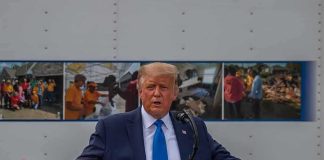
Top House Democrats have accused Donald Trump of engineering a $230 million scheme to divert taxpayer funds from the U.S. Treasury directly to himself—while sitting in the Oval Office as both president and the alleged beneficiary.
Story Snapshot
- Senior House Democrats publicly allege Donald Trump planned to use presidential authority to approve massive payments to himself from federal funds.
- The scheme, as described, involves Trump simultaneously acting as president, claimant, and defendant in a single financial maneuver.
- Lawmakers frame the accusations as a brazen conflict of interest and potential violation of federal law.
- The $230 million figure represents one of the largest alleged self-dealing claims in modern U.S. political history.
- Critics question whether existing legal and oversight mechanisms could effectively counter such a scenario.
The Anatomy of the Allegation
House Democrats allege a three-part scheme: Trump as president would authorize investigations, Trump as private citizen would claim damages from those same investigations, and Trump as defendant would then receive payment from the Treasury. This arrangement, if true, would place Trump in the extraordinary position of both approving and personally benefiting from federal expenditures. The $230 million figure, according to lawmakers, reflects the amount Trump would have directed to himself from public coffers.
"It's crazy he demanded the money in the first place."
Ty Cobb, Trump's former White House attorney, weighs in on a New York Times report that President Trump is demanding the Justice Department to pay him $230 million for the federal investigations into him.#OutFrontCNN… pic.twitter.com/C6NBnSiv4J
— Erin Burnett OutFront (@OutFrontCNN) October 22, 2025
No president in U.S. history has faced public allegations of attempting to approve payments from the Treasury directly to himself while in office. The scenario raises immediate questions about constitutional constraints, the emoluments clause, and the practical limits of presidential authority. Legal scholars note that, while the Constitution bars presidents from accepting gifts or payments from foreign governments, it contains no explicit prohibition against a president authorizing payments to himself from the U.S. Treasury.
Legal and Constitutional Implications
The accusations hinge on the interpretation of federal law regarding conflicts of interest and misuse of public funds. Federal statutes prohibit government employees from participating in matters in which they have a financial interest, but the presidency occupies a unique legal space. The Justice Department has previously opined that criminal conflict-of-interest laws do not apply to the president. This legal ambiguity leaves open the possibility that a president could, in theory, authorize payments to himself unless Congress or the courts intervene.
Critics argue that the allegations, if proven, would represent a fundamental breach of the public trust. They contend that the founders never envisioned a scenario where a president could act as judge, claimant, and beneficiary in a single financial transaction. Defenders of executive power might counter that the president’s broad authority over the Treasury and federal spending is a matter of constitutional design, not abuse. However, even proponents of expansive presidential authority concede that self-dealing on this scale would test the limits of legal and political norms.
Historical Precedents and Political Reactions
No direct historical precedent exists for a president attempting to pay himself from the Treasury. Past scandals, such as Teapot Dome or Watergate, involved third-party beneficiaries or indirect financial gains. The uniqueness of the current allegation has drawn bipartisan attention, though reactions break sharply along party lines. Democrats frame the issue as a glaring example of corruption requiring immediate legislative remedy. Republicans, meanwhile, dismiss the accusations as politically motivated and lacking concrete evidence.
Public records do not indicate that the $230 million payment was ever made or that the alleged scheme moved beyond the planning stages. The absence of a completed transaction complicates both legal and political responses. Some legal analysts suggest that, absent an actual transfer of funds, the allegations remain in the realm of hypothetical constitutional crisis rather than prosecutable offense. Others argue that the mere discussion of such a scheme by a sitting president—regardless of outcome—warrants congressional investigation and potential reforms to presidential ethics rules.
Broader Implications for American Governance
The allegations highlight vulnerabilities in the U.S. system of checks and balances. The presidency’s broad authority over federal spending, combined with weak statutory constraints on conflicts of interest, creates potential avenues for abuse. Reform advocates call for new laws explicitly barring presidents from authorizing payments to themselves or their businesses. Opponents of such measures argue that additional restrictions would infringe on executive authority and create unnecessary bureaucracy.
At its core, the controversy reflects a deeper debate over the balance between presidential power and public accountability. The U.S. system relies heavily on norms, public scrutiny, and political consequences to deter misconduct. The current allegations test whether those mechanisms remain sufficient in an era of heightened political polarization and evolving notions of presidential conduct. Regardless of the outcome, the episode has already sparked renewed discussion about the need for clearer ethical guardrails at the highest levels of government.
Sources:
What we know about Trump’s bid to claim $230 million from his own Justice Department