
JD Vance’s recent comments about his wife’s religion have ignited a fierce debate on interfaith marriage and religious pluralism in the political arena.
Story Overview
- JD Vance expressed hope for his Hindu wife to convert to Christianity, sparking controversy.
- His remarks were made at a political event, highlighting the intersection of personal belief and public discourse.
- The comments have drawn criticism from Hindu communities and interfaith advocates.
- The incident underscores broader themes of religious autonomy and political responsibility.
Vance’s Comments and Public Reaction
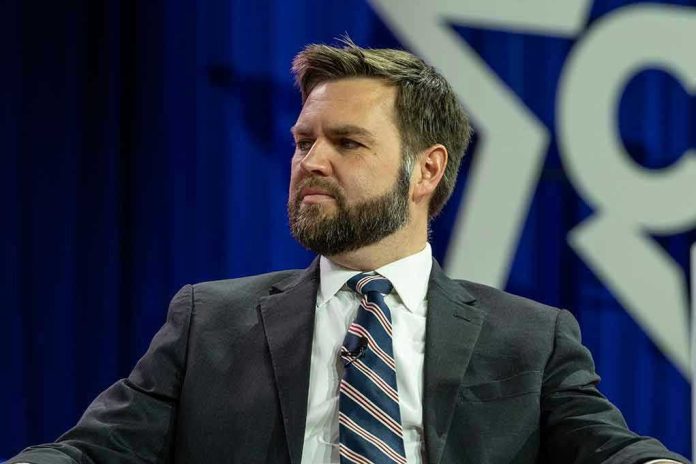
At a Turning Point USA event, Vice President JD Vance publicly expressed his hope that his wife, Usha Vance, who is Hindu, would eventually convert to Christianity. Vance’s comments, made in a political setting, have been perceived as lacking sensitivity towards interfaith relationships and have sparked a wave of backlash from various quarters. Critics argue that such statements undermine the respect necessary in interfaith marriages and fuel religious insensitivity.
The backlash was swift, with many from the Hindu community and interfaith advocates expressing concern over the implications of Vance’s remarks. The criticism has centered on the perceived pressure such statements place on personal faith choices within interfaith marriages, and the broader message it sends about religious pluralism in a diverse society. Vance’s clarification that he respects his wife’s autonomy has done little to quell the controversy.
Interfaith Marriage Dynamics
Interfaith marriages, like that of JD and Usha Vance, are complex and require a delicate balance of mutual respect and understanding. Vance’s comments highlight the challenges faced by such couples, particularly when one partner holds public office. The expectation or hope for a partner to convert can be seen as a challenge to the autonomy and identity of the non-converting spouse, raising questions about the role of personal beliefs in public discourse.
Usha Vance has reportedly stated she has no intention of changing her faith, which underscores her commitment to maintaining her religious identity. This stance is crucial in the discussion of interfaith marriage, as it highlights the importance of respecting individual choices and fostering an environment where multiple faith traditions can coexist within a family.
Political and Social Implications
The incident has broader implications for political discourse, particularly regarding the intersection of personal beliefs and public responsibilities. JD Vance, as a high-profile political figure, holds a platform that amplifies his statements, making the backlash not just a personal issue but a public one. The controversy may influence how politicians address interfaith issues in the future, with a need for greater sensitivity and awareness of religious diversity.
In the political arena, this episode could affect Vance’s standing among minority and moderate voters, who may view his remarks as a lack of inclusivity. While some conservative supporters might align with his views, the potential alienation of interfaith and minority communities is a significant risk. This incident serves as a reminder of the need for public figures to navigate personal beliefs carefully, particularly when they intersect with their public roles.