
Forty‑five million Americans just got a blunt reminder that “winter weather” is not a backdrop, it is a system‑wide stress test for a country already running close to the edge.
Story Snapshot
- A powerful winter storm is hammering the Northern Plains and Midwest with dangerous travel conditions.
- At the same time, a moisture‑loaded atmospheric river is dumping up to a foot of rain on parts of Washington state.
- Roughly 45 million Americans are under some kind of weather alert as these systems converge.
- Back‑to‑back storms are exposing how much everyday life depends on functioning infrastructure, clear communication, and personal preparedness.
When Weather Alerts Become a National Stress Test
Forty‑five million Americans under weather alerts is not just a flashy television tagline; it is a snapshot of a nation whose roads, power lines, and daily routines can be disrupted by one well‑timed storm system. The Northern Plains and Midwest face heavy snow and hazardous roads, while the West Coast deals with a different beast entirely: an atmospheric river that can turn steep Washington hillsides into conveyor belts of mud. The map looks different, but the vulnerability is the same.
National outlets highlight the scale, but the real story unfolds in county‑level forecast discussions, emergency management briefings, and the simple decision of a driver to stay home or press on. When tens of millions sit under overlapping winter storm warnings, travel advisories, and flood alerts, the country gets a quiet preview of what a more demanding future winter climate could look like—more multi‑hazard, more geographically widespread, and less forgiving of poor planning.
The Dual Punch: Blizzard Conditions and a Firehose in the Sky
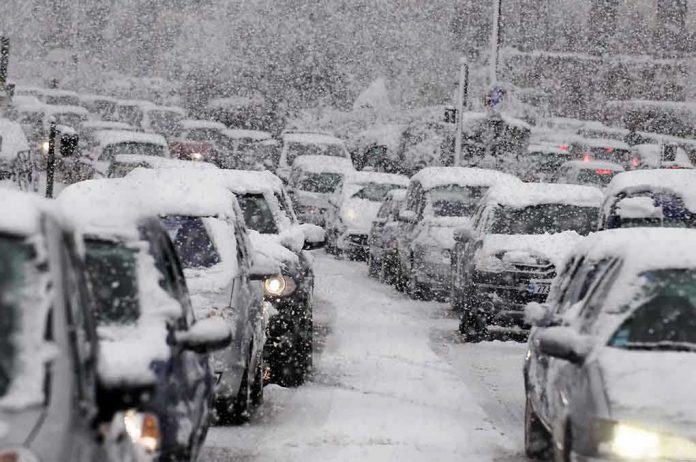
In the Northern Plains and Midwest, the storm’s signature is familiar but no less dangerous: heavy snow, strong winds, and visibility that can collapse from “fine” to “none” in the space of a mile. That combination can shut interstates, jackknife trucks, and turn routine commutes into rescue operations. Drivers often overestimate their vehicles and underestimate physics, which is why first responders repeatedly warn that four‑wheel drive does not help on ice when you cannot see the road.
On the West Coast, the same larger‑scale pattern manifests as an atmospheric river—a long, narrow corridor of deep Pacific moisture aimed straight at Washington state. When that moisture slams into coastal ranges and Cascades, it drops torrents of rain instead of snow, especially when freezing levels run high. An event that wrings out up to a foot of rain in parts of Washington does more than fill rivers; it saturates soils, weakens slopes, and reloads every creek and culvert with the potential for sudden floods and landslides.
Back‑to‑Back Storms and the Quiet Cost of Exhaustion
The current alerts do not arrive in a vacuum. Some central Appalachian communities just dug out from what local forecasters called the biggest December snowstorm in years, only to see another widespread snow event lining up immediately afterward. Blizzard warnings in high‑elevation pockets of West Virginia and western Maryland, with gusts over 45 miles per hour, mean whiteouts, drifting, and rural roads that can become impassable more than once in a week. That repetition matters, because people and systems wear down faster than asphalt and guardrails.
WATCH: 45 million Americans under alerts as new storms take aim https://t.co/Rgku3CNOFV
— KMET1490AM (@KMETRadio) December 10, 2025
When storms queue up, plow crews log overtime, salt piles shrink faster than budgets, and small hospitals and EMS systems strain under crashes, falls, and exposure calls. Families burn through backup supplies they never fully replenished after the last storm. Conservative instincts about self‑reliance and local responsibility look less like political slogans and more like practical survival strategies: a generator checked before winter, a pantry that lasts longer than a weekend, neighbors who know who on the block needs help if the power goes out.
What This Reveals About Preparedness, Policy, and Common Sense
45 million people under alert, raises a harder question than “Will the roads be plowed?” It asks whether a highly centralized, just‑in‑time society can still function when nature refuses to follow business hours. National Weather Service meteorologists do their part with precise watches, warnings, and clear lead time; the challenge often lies in whether those messages are translated into actionable decisions by governors, school districts, businesses, and individuals before headlines turn into damage reports.
American conservative values emphasize personal responsibility, local control, and spending taxpayer money where it produces tangible results. From that lens, the facts argue for investment not in abstract slogans but in specific, unglamorous resilience: power lines trimmed and hardened before storms, drainage and culverts sized for real rainfall extremes, and road networks designed with realistic detours when mountain passes close. None of that replaces individual judgment; it simply respects reality. Weather does not care about narratives. It rewards those who plan ahead and punishes those who treat alerts as background noise.
Sources:
“Video: 45 million Americans under alerts as new storms take aim” – KVNU Talk
“Watch: 45 million Americans under alerts as new storms take aim” – 95.3 The Bee
“Weather Alert Friday for another widespread snow event” – WCHS/WVAH Weather Blog