

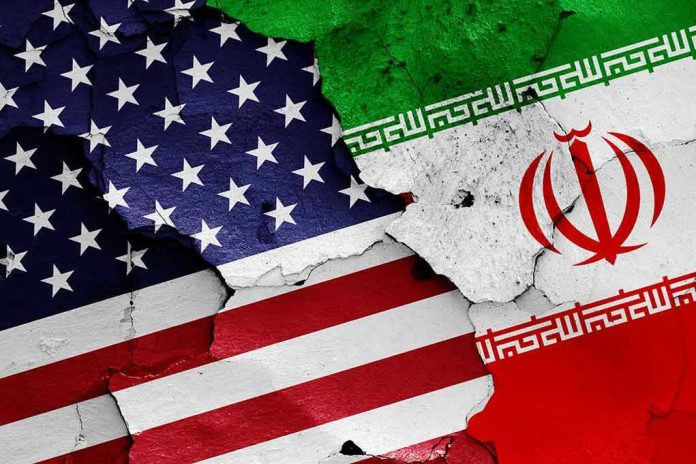
Iran’s president has declared “total war” against America and the West while his nation crumbles from within, facing unprecedented economic collapse and civil unrest that threatens to topple the regime entirely.
Story Snapshot
- Iranian currency has collapsed to 1.4 million reals per dollar amid severe economic crisis
- President threatens war against US, Israel, and Europe despite recent military defeats
- Regime faces widespread protests, water shortages, and women rejecting hijab mandates
- Government executing record numbers of dissidents to prevent collective uprising
- Nuclear program expansion continues despite Israeli strikes on facilities
Economic Devastation Fuels Regime Desperation
Iran’s economy has reached catastrophic levels with the national currency plummeting to an astounding 1.4 million reals per US dollar. This hyperinflation represents one of the world’s most dramatic currency collapses, making basic necessities unaffordable for ordinary Iranians. The economic freefall stems from decades of international sanctions, mismanagement, and the regime’s prioritization of military spending over domestic needs.
Water shortages compound the misery as Iran faces severe drought conditions across multiple provinces. The combination of economic devastation and resource scarcity creates a powder keg situation where public discontent reaches dangerous levels for the ruling clerical establishment.
Military Defeats Expose Regime Weakness
Israel’s recent precision strikes on Iranian nuclear facilities dealt significant blows to the regime’s military capabilities and regional prestige. These attacks exposed vulnerabilities in Iran’s defense systems and demonstrated the limitations of their proxy network strategy. Rather than acknowledging these setbacks, Iranian leadership has responded with increasingly aggressive rhetoric.
The president’s declaration of “total war” against America, Israel, and Europe appears to be desperate posturing designed to rally domestic support and project strength to regional allies. However, this bellicose stance contradicts Iran’s weakened position following successive military defeats and economic collapse.
Civil Unrest Challenges Authority
Iranian women continue defying mandatory hijab laws despite brutal government crackdowns, symbolizing broader resistance to clerical rule. These acts of defiance have spread beyond individual protests to encompass widespread social movements challenging the regime’s fundamental authority. The government’s violent response reveals deep insecurity about maintaining control over an increasingly restless population.
Protests have erupted across multiple cities as Iranians struggle with inflation, unemployment, and basic service failures. The regime’s inability to address these fundamental problems while pursuing expensive military adventures abroad has eroded whatever legitimacy remained among the general population.
Nuclear Ambitions Amid Chaos
Despite Israeli attacks damaging nuclear infrastructure, Iran continues expanding its atomic program as a cornerstone of regime survival strategy. The leadership views nuclear capabilities as essential for deterring further attacks and maintaining regional influence. This nuclear pursuit occurs while the country lacks resources to provide basic services to its citizens.
The regime’s nuclear expansion signals a dangerous escalation that could trigger broader regional conflict. Iran’s threatened “total war” gains credibility only through potential nuclear capabilities, making this program the regime’s most valuable bargaining chip for survival.
Brutal Suppression Reveals Regime Fear
Record numbers of executions demonstrate the regime’s terror of organized uprising as economic conditions worsen. These killings target political dissidents, protesters, and anyone perceived as threatening clerical authority. The unprecedented execution rate reflects leadership panic about losing control entirely.
The government’s simultaneous pursuit of external conflict and internal suppression reveals a regime fighting for survival on multiple fronts. This dual strategy of aggression abroad and repression at home typically characterizes failing authoritarian systems facing imminent collapse.
Sources:
High Court demands state respond to suit against transfer of NIS 1b to Haredi schools