
When a president’s description of a killing clashes with the very video he promotes, you are not just watching a tragedy, you are watching a power struggle over reality itself.
Story Snapshot
- Trump defends an ICE agent after a deadly Minneapolis shooting while the video he shares raises hard questions.
- Minneapolis leaders openly call the federal narrative “bulls**t,” daring Washington to prove its story.
- A legal observer, not an ICE target, ends up dead in a city already scarred by law‑enforcement controversies.
- The clash exposes a deeper war over who defines “self‑defense,” “terrorism,” and the rule of law.
How A Routine Morning Turned Into A National Flashpoint
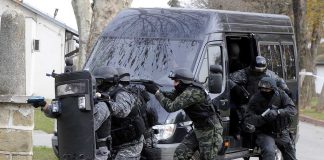
The confrontation began on an ordinary morning at a south Minneapolis intersection, where an ICE operation boxed in a Honda Pilot driven by a 37‑year‑old U.S. citizen who was reportedly acting as a legal observer, not a suspect. Witnesses describe agents surrounding the vehicle, an officer trying to open the door, the driver attempting to move, and then gunshots. Moments later, the SUV rolled forward and crashed into another car. Within hours, bystander videos were online and the spin war had already started.
For residents who still live with the trauma of George Floyd and subsequent police killings, the scene felt grimly familiar: federal power, lethal force, and another body on Minneapolis pavement. That context matters for anyone over 40 who remembers when law‑enforcement narratives were rarely questioned. Now, every smartphone turns citizens into de facto witnesses, forcing agencies and politicians to defend their versions of events in real time, not months later after an internal report.
Trump’s Self‑Defense Narrative And The “Domestic Terrorism” Label
From Washington’s side, there was no hesitation. DHS Secretary Kristi Noem quickly branded the woman’s actions an “act of domestic terrorism,” a term that instantly transforms a chaotic street encounter into something akin to a homeland‑security threat. Trump followed by posting on Truth Social that she had “viciously ran over” the ICE officer, calling her “very disorderly, obstructing and resisting,” and insisting the shooting “seems” like self‑defense. He framed the entire incident as a symptom of “Radical Left” hostility to law enforcement.
That framing fits Trump’s longer campaign to present federal officers as front‑line soldiers under siege from progressive activists and Democratic city halls. To many conservatives, an ICE agent confronting a vehicle is a symbol of order pushing back against chaos—someone who deserves the benefit of the doubt when he says he feared for his life. From that perspective, the president’s instinct to defend the officer and condemn violent resistance tracks with basic common sense about backing the badge.
When The Video Undermines The Story
The complication comes from the very evidence Trump chose to elevate. The video he shared, along with other angles aired by local CBS reporters, does not show an officer being run over. Instead, viewers see the SUV boxed in, agents at the doors, and then shots—leaving a gap between the graphic claims of “viciously ran over” and what the public can actually see. That discrepancy became the central focus of mainstream coverage, not just the shooting itself.
For citizens who value both law and truth, this raises a hard question: if the commander‑in‑chief exaggerates what the video shows, does that help officers, or does it jeopardize their credibility in court and in the community? American conservative values traditionally prize honesty, proportionality, and individual responsibility. When rhetoric races ahead of evidence, it risks turning legitimate self‑defense claims into political theater that even sympathetic observers may find difficult to defend.
Minneapolis Pushes Back And Demands Evidence Over Rhetoric
Minneapolis Mayor Jacob Frey watched the same videos and responded with a blunt, highly unusual word for a sitting president’s narrative: “bulls**t.” City leaders stressed that the woman was a legal observer who was not a target of any ICE arrest, and they demanded an investigation grounded in independent evidence rather than Washington talking points. In a city that has repeatedly seen initial official accounts fall apart under video scrutiny, skepticism is not just political; it is learned behavior.
That clash—federal officials shouting “terrorism,” local leaders shouting “bulls**t”—exposes a deeper conflict about who owns public safety. From a conservative, federalist standpoint, there is a legitimate argument that local authorities closest to the community should have a strong voice in scrutinizing lethal force on their streets. At the same time, there is a competing argument that federal agencies cannot allow their agents to be tried in the court of social media without due process. Both impulses collide in this one intersection.
What This Fight Really Means For Law, Order, And Trust
Beyond the headlines, the death of a legal observer in an ICE operation forces a reckoning with civil‑liberties expectations that many older Americans took for granted. People who film or monitor government actions have long been treated as a safety valve in a free society. When one of them dies at the hands of an officer, and top officials immediately jump to terrorism language, citizens naturally ask whether oversight has turned into a contact sport with fatal stakes.
The outcome of the investigations—still pending in available reporting—will matter for the officer, the victim’s family, and the city. But the narrative battle is already reshaping expectations. More people now assume that video, not press releases, will be the first draft of truth. For conservatives who want both strong borders and honest government, the takeaway is not to reflexively side with either Minneapolis or Washington. It is to insist that claims of self‑defense, terrorism, or “bulls**t” all stand or fall on the same standard: verifiable facts, clearly presented, and tested in the sunlight.
Sources:
CBS Minnesota: Trump claims woman ‘ran over’ ICE agent in Minneapolis
White House: President Trump holds a press conference (Jan. 3, 2026)
FOX 9 Minneapolis segment on ICE shooting and local response