
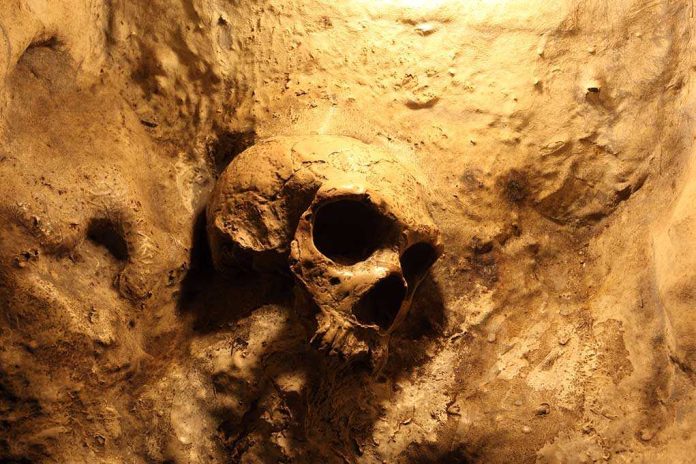
A Pennsylvania man’s home became a macabre museum of death when authorities discovered over 100 human skulls carefully arranged like twisted trophies, revealing a shocking network that turned sacred spaces into shopping centers for the dead.
Story Snapshot
- Over 100 human skulls and numerous other body parts found displayed in Pennsylvania residence
- Suspect allegedly desecrated cemeteries and purchased stolen remains from Harvard Medical School trafficking network
- Case exposes massive gaps in cemetery oversight and medical institution security protocols
- Multi-state investigation reveals thriving black market for human remains sold through online platforms
- Pennsylvania’s institutional vandalism laws carry felony penalties but enforcement remains challenging
The Bone Collector’s Dark Empire
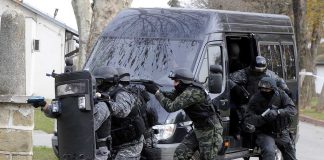
The search warrant execution at the Pennsylvania residence revealed something straight from a horror film. Law enforcement officers discovered more than 100 human skulls methodically arranged throughout the home, along with spines, femurs, and preserved organs displayed as macabre décor. This wasn’t the random collection of a disturbed individual, but the calculated inventory of someone operating within a sophisticated network of body part traffickers.
The suspect faces charges including abuse of corpse, receiving stolen property, and institutional vandalism under Pennsylvania’s Title 18. These aren’t minor infractions – institutional vandalism involving desecration constitutes a third-degree felony when pecuniary loss exceeds $5,000 or when it involves cemetery desecration as defined by state law.
Harvard’s Unholy Alliance
The Pennsylvania case connects directly to a broader federal investigation into stolen cadaver trafficking centered on Harvard Medical School’s Anatomical Gift Program. Morgue managers, funeral home directors, and crematory workers allegedly diverted donated bodies intended for medical education into lucrative black market sales. These weren’t anonymous remains – they were loved ones whose families trusted institutions to handle their final wishes with dignity.
Harvard Medical School has condemned the thefts as “abhorrent violations” of donor trust while implementing enhanced safeguards. The institution’s reputation, built over centuries, now faces scrutiny over how donated bodies meant to advance medical knowledge instead became commodities in an underground marketplace where human skulls fetch hundreds or thousands of dollars.
Sacred Ground Under Siege
Pennsylvania’s cemetery protection laws reflect the state’s recognition of burial grounds as quasi-sacred spaces deserving special protection. Title 9 governs cemetery operations while criminal statutes specifically address desecration of venerated objects, including human remains. The law recognizes that mistreating human remains outrages ordinary family sensibilities and strikes at fundamental concepts of human dignity.
Rural and historic cemeteries across Pennsylvania face particular vulnerability due to limited security and underfunded maintenance. A 2021 state assessment found Pennsylvania law provides incomplete protection for archaeological contexts and older burial sites, creating enforcement gaps that grave robbers exploit. The current case demonstrates how these regulatory weaknesses enable systematic desecration over extended periods.
Digital Graveyards and Online Markets
The internet has revolutionized the human remains trade, creating platforms where collectors buy and sell skulls, bones, and preserved organs marketed as “medical specimens” or “oddities.” Facebook groups, specialized websites, and private marketplaces connect buyers with sellers operating in legal gray areas. Some states weakly regulate possession of human remains when provenance cannot be traced to specific graves or medical institutions.
This digital dimension transforms isolated grave robbing into networked trafficking operations spanning multiple states. The Pennsylvania suspect allegedly purchased numerous skulls through mail delivery from co-conspirators in Massachusetts, Arkansas, and other states, demonstrating how online connectivity scales traditional cemetery desecration into interstate commerce. Federal authorities now treat these activities as organized criminal enterprises subject to conspiracy charges and enhanced penalties.
Sources:
Pennsylvania Institutional Vandalism Statute
Pennsylvania Title 9 Burial Grounds Laws
Historic and Archaeological Human Remains Report
Pennsylvania Criminal Mischief and Vandalism Laws