
In a dramatic escalation, the U.S. under President Trump considers military action as Iran’s protests turn bloody, sparking global tension.
Story Highlights
- Iran’s protests result in over 2,000 deaths as unrest spreads nationwide.
- President Trump threatens military intervention and imposes 25% tariffs on Iran’s trade partners.
- Iranian regime accuses U.S. and Israel of orchestrating the unrest.
- Historical grievances and economic woes fuel the protests against the regime.
Escalating Protests and Rising Death Toll
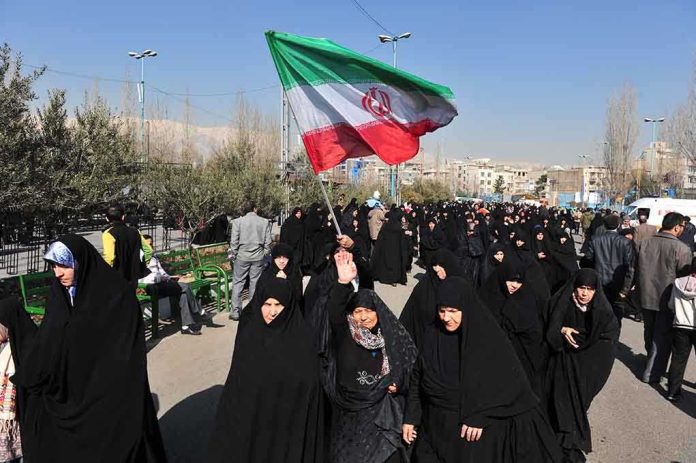
Iran’s anti-government protests have entered their third week with a staggering death toll of over 2,000 people and more than 10,000 arrests across the nation. The protests, initially sparked by economic grievances such as inflation and currency devaluation, have evolved into a movement calling for regime change. Despite a harsh crackdown by Iranian authorities, demonstrators show no signs of backing down, continuing to challenge the regime’s authority on a massive scale.
President Trump has responded with a series of bold moves, including canceling meetings with Iranian officials, issuing stern warnings of U.S. military resolve, and urging Iranian protesters via social media to “take over institutions.” He further escalated the situation by imposing 25% tariffs on countries that continue to do business with Iran, aiming to cripple the Iranian economy and further pressure the regime.
Trump’s Military Threats and Economic Sanctions
The U.S. administration is reviewing military options that include potential airstrikes, should the situation deteriorate further. White House Press Secretary Karoline Leavitt confirmed that all military options remain on the table, underscoring the seriousness of Trump’s threats. Vice President J.D. Vance has advocated for negotiations as a first step, but the administration’s stance remains firm on not ruling out forceful intervention.
The Iranian regime, led by Ayatollah Ali Khamenei, has framed the unrest as a “terrorist war” orchestrated by foreign powers, particularly the U.S. and Israel. This narrative aims to rally nationalist sentiment and justify the regime’s heavy-handed tactics. However, the protests’ scale and persistence indicate deep-seated discontent with the regime’s handling of economic and social issues.
Historical Context and Precedents
The current wave of protests in Iran is not an isolated event but rather the latest chapter in a long history of civil unrest against the Islamic Republic. Since its establishment post-1979 Revolution, Iran has grappled with economic mismanagement, corruption, and repression, leading to recurrent uprisings. Notable precedents include the 2019 “Bloody November” protests, which saw over 1,500 people killed, and the 2022 Mahsa Amini protests focused on women’s rights.
The unrest has spread to all 31 provinces, with strikes and acts of civil disobedience challenging the regime’s authority. Despite attempts to suppress information through internet blackouts and arrests, the protests have gained momentum, fueled by both domestic dissatisfaction and international support from figures like exiled Crown Prince Reza Pahlavi.
Potential Outcomes and Global Repercussions
The situation in Iran presents significant short- and long-term implications. In the short term, escalating violence and potential U.S. military action could further destabilize the region, impacting global markets and trade, particularly in energy sectors. Long-term consequences could include a regime collapse or a broader regional conflict, with the United States reasserting its influence in the Middle East.
The protests have already claimed the lives of over 2,000 Iranians, including children, and resulted in more than 100 security force casualties. The economic impact of the U.S. tariffs is yet to be fully realized, but it poses a significant threat to Iran’s already struggling economy. Meanwhile, the international community remains divided, with allies like China opposing the tariffs and supporting Iran’s trade.