One man’s outburst in a pressurized cabin triggered a chain reaction that exposed the raw nerves beneath the surface of American air travel—reminding every passenger that the true danger in the skies may not just be mechanical failure or weather, but the unpredictable mind in seat 14C.
Story Snapshot
- A United Airlines flight from Dallas to Chicago made an emergency landing in St. Louis after a bomb threat from a passenger.
- Passengers evacuated, suspect arrested, but no bomb found after a full search.
- The incident highlights rising disruptions and the fragile balance of aviation security.
- Authorities and industry insiders now face tough questions about screening, crisis response, and public trust in flying.
One False Move, One Grounded Flight: The Anatomy of a Sky-High Crisis
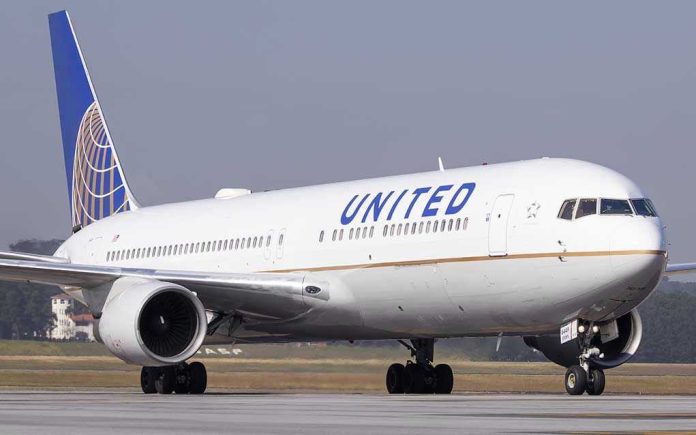
November 16, 2025, began as routine for United Airlines Flight UA380, a Boeing 737-700 packed with travelers escaping Dallas for Chicago, until a mid-flight bomb threat shattered the illusion of safety. The threat was chillingly specific—a man claimed his wife’s luggage concealed a bomb. Within minutes, the pilots declared a general emergency. The cabin, once filled with idle chatter, transformed into a crucible of fear and speculation, as the crew raced to follow protocols drilled into them since 9/11.
St. Louis’s Lambert International Airport became the scene of an orchestrated scramble. As the jet rolled onto runway 29, emergency vehicles surrounded the aircraft. Passengers were hustled onto the B concourse, their journeys interrupted by the shadow of an unseen threat. The suspect, a 26-year-old man, was taken into custody without resistance. Bomb and arson units swept the plane for evidence. No device was found. No injuries were reported. But the psychological toll lingered as authorities pieced together what had happened and why.
The Bomb Threat Playbook: How Security and Common Sense Collide in Real Time
Aviation professionals know that the mere utterance of “bomb” in a crowded cabin can set in motion a crisis response costing hundreds of thousands of dollars and upending the lives of everyone on board. The protocols have been honed by decades of hard lessons—land as soon as possible, evacuate, isolate, investigate, and restore order. Airport director Rhonda Hamm-Niebruegge praised her team’s coordination, but the event raised an uncomfortable question: Are airlines and airports prepared for the new breed of in-flight disruption, where the threat is not a device, but the unpredictable behavior of a passenger?
The industry faces a paradox. Every false alarm must be treated as real. Yet each incident saps public trust and highlights the limits of security screening. Most bomb threats, experts point out, are hoaxes or desperate acts by troubled individuals, not terrorists with sophisticated plots. Still, every scenario must be played out as if the risk is real—a dance between caution and chaos that leaves little room for error or overreaction.
Passengers, Pilots, and Police: Power Struggles and the Human Factor
The United Airlines crew’s rapid decision to divert set the tone for the emergency. In the cockpit, pilots have the final say. On the ground, law enforcement and airport officials take control. This finely tuned choreography is driven by two priorities: protect lives and minimize disruption. The suspect’s motivations remain a mystery, but his actions forced an entire system into defensive mode. Passengers were left to process a harrowing experience—some furious about missed connections, others grateful to be alive, all reminded that security is only as strong as the weakest link in human judgment.
United Airlines, already facing scrutiny from prior incidents, now confronts renewed pressure to reassure the public. The airline has not yet released a detailed statement, underscoring the delicate balance between transparency and liability. Meanwhile, law enforcement continues its investigation, sifting for motives that may never fully make sense to those on the outside.
The Ripple Effect: Security, Scrutiny, and the Road Ahead for Air Travel
The fallout from UA380’s diversion rippled through the industry. Lambert Airport operations resumed quickly, but the disruption sparked delays and raised questions about how quickly airports can return to normal. The incident follows a string of similar threats, including one in Merseyside, fueling a narrative of rising unrest in the skies. Airlines and regulators must now weigh stricter screening, mental health evaluations, and enhanced crew training against the costs and potential erosion of passenger goodwill.
United flight forced to make emergency landing in St Louis after passenger made bomb threat, report says | The Independent https://t.co/RtJBITyoV0
— FireandAviation TV (@FireandAviation) November 17, 2025
For the flying public, the lesson is sobering. While technology and procedures have made aviation safer than ever, no system can eliminate the risk posed by human unpredictability. The next crisis may come from a malfunctioning engine—or from the mind of someone sitting in the aisle seat, carrying nothing more dangerous than an idea.