
One scrambled sentence on live TV flipped the victim and the target in an ISIS-inspired plot—and the cleanup became the real story.
Quick Take
- CNN’s Abby Phillip misstated what happened during a segment on her March 10, 2026 broadcast of NewsNight.
- The actual target was a crowd of anti-Muslim protesters outside Gracie Mansion, not New York City Mayor Zohran Mamdani personally.
- Guest Joe Borelli challenged the framing immediately on-air, saying it reversed the facts.
- Phillip corrected herself the next day on X, apologizing for inaccurate wording as backlash spread online.
How one misframed “terror attack” turned into a trust test for cable news
Abby Phillip’s on-air line landed like a match in dry grass: she said two Republicans made anti-Muslim comments after “an attempted terror attack against New York’s Mayor Zohran Mamdani,” implying the mayor was the direct target. That phrasing matters because it points blame and sympathy in one direction. On a subject as charged as terrorism, the audience doesn’t hear a minor mix-up; they hear a verdict.
Joe Borelli, sitting right there as a guest, pushed back in real time. He argued that calling it an anti-Muslim attack would “completely reverse what happened.” That’s not a semantic nitpick. “Reverse” means you’ve swapped who was threatened and why. When a panelist has to correct the host mid-segment, viewers don’t just question that moment; they start scanning backward, wondering what else got simplified or spun.
What police said happened outside Gracie Mansion, and why the details matter
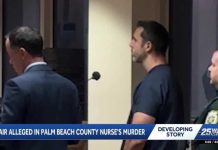
Authorities said two young suspects, Emir Balat (18) and Ibrahim Kayumi (19), threw explosive devices at a crowd of anti-Muslim protesters outside Gracie Mansion, the mayor’s official residence. The devices failed to detonate, and police arrested the suspects. Police Commissioner Jessica Tisch said the suspects consumed ISIS propaganda and aspired to an attack larger than the 2013 Boston Marathon bombing. That is intent plus ideology, not a vague “incident.”
That distinction also collapses a common TV shortcut: “near the mayor’s residence” becomes “an attack on the mayor.” Gracie Mansion is symbolic and high-profile, so it pulls the eye. But the reported target was a specific crowd, at a specific protest, for a specific ideological reason. Conservative common sense says you don’t get to reassign victimhood because a famous address was nearby, especially when law enforcement describes an ISIS-inspired motive.
The moment television turned into social media accountability theater
Phillip returned the next day with a correction, but not on the show. She posted on X on March 11, 2026, writing that the bombs were thrown “into a crowd of anti-Muslim protestors and not specifically targeted at Mayor Mamdani,” adding that her wording was inaccurate and she apologized. That’s a straightforward correction, and the apology language reads like someone acknowledging an error rather than defending a narrative.
Viewers still had a fair question: why does the correction live on social media instead of the platform where the error aired? Cable news runs on immediacy; so do corrections. A post reaches your followers, not necessarily the people who heard the original line while making dinner. When networks train audiences to treat live TV as the “official” version of events, American expectations of transparency say the fix belongs in the same place.
Why this specific mix-up inflamed politics instead of cooling it down
The segment reportedly criticized Republicans and highlighted House Speaker Mike Johnson’s silence about alleged anti-Muslim remarks. That angle depends on the idea that a Muslim mayor faced a terror attack and the political right responded with prejudice. Once the underlying premise wobbles, the moral framing wobbles with it. If the attackers aimed at anti-Muslim protesters and drew inspiration from ISIS, the story becomes about radicalization and public safety, not partisan scolding.
That’s why the backlash hit hard. People tolerate mistakes when they look random. They revolt when mistakes look directional—always pointing blame the same way. No evidence in the available reporting proves intent to mislead, so it’s reasonable to treat it as an error. The problem is pattern recognition: many viewers already suspect major media outlets rush toward narratives that flatter their political priors.
The bigger lesson: terror reporting is a precision craft, not a vibes segment
Terror cases demand disciplined language because the public builds policy preferences from headlines and half-heard snippets. “Attempted terror attack against the mayor” suggests a strike on government, possibly an assassination attempt, and invites a different security conversation than “attack on protesters.” One invites fear of political chaos; the other forces uncomfortable questions about radical ideology, online recruitment, and why teenagers think ISIS propaganda gives their lives meaning.
Another CNN Reporter Walks Back Post Implying That Mamdani Was the Target of Terrorist Attack https://t.co/KhWHh98lWZ
— ConservativeLibrarian (@ConserLibrarian) March 12, 2026
Phillip’s correction was the right move, but it also exposed a modern weakness in journalism: the split brain between broadcast authority and social-media cleanup. The conservative standard many Americans still hold is simple: get the facts right, correct them loudly when you don’t, and don’t use terrorism as a prop in partisan theater. The public can handle complexity; what it won’t forgive is inverted reality presented with confidence.
Sources:
CNN’s Abby Phillip Apologizes After Backlash Over New York Terror Attack Comments
CNN’s Abby Phillip Apologizes After Backlash Over New York Terror Attack Comments