

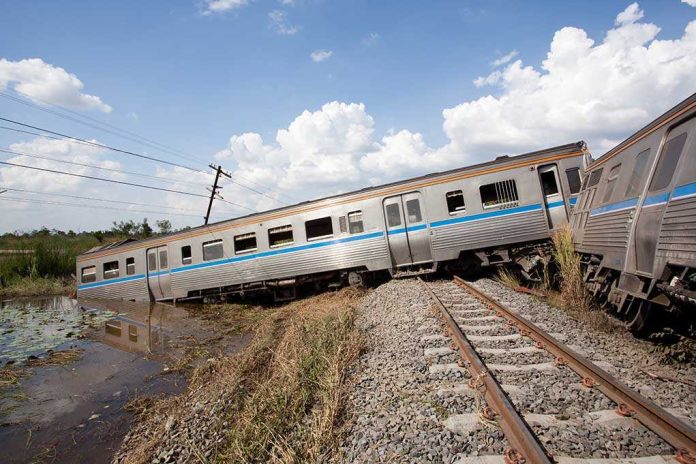
A commuter train rolled calmly into London Bridge terminal and only stopped when it hit the buffers, because the driver had almost certainly fallen asleep for a few deadly seconds.
Story Snapshot
- A Southern Railway train hit buffer stops at London Bridge after the driver suffered a fatigue‑induced microsleep
- Investigators say the roster, extra shifts, and poor sleep turned a routine run into a near‑miss
- Existing safety tech never triggered because the train stayed under the system’s speed threshold
- Regulators now question whether operators and doctors are truly measuring fatigue or just ticking boxes
How a Routine Arrival Turned into a Buffer Stop Collision
The collision began like thousands of other arrivals at London Bridge: a Southern service easing into the busy terminal platforms, passengers grabbing bags, minds already on the office or the walk home. The Rail Accident Investigation Branch later found the crucial difference. As the train approached the buffer stops, the driver did not brake. Instead, he almost certainly experienced a microsleep, a brief loss of awareness that left the train rolling until it struck the buffers at low speed. Investigators described no last‑second emergency reaction, no braking pattern that suggested distraction and recovery, just the signature of someone who was no longer properly awake.
Microsleep sounds trivial, like a drowsy blink, but on the railway it erases the only human line of defence between a moving train and solid infrastructure. The RAIB’s report points to a familiar chain: the driver worked a base duty roster that increased fatigue risk, volunteered for many rest days as working days, and slept less than usual the night before the collision. Each factor alone might have been survivable. Stacked together, they created the perfect conditions for a few seconds of unconsciousness at the worst possible moment.
Fatigue, Rosters, and the Culture of “Just One More Shift”
The report highlights that the driver’s roster pattern, though technically compliant, carried an elevated fatigue risk baked into the base schedule. That risk then multiplied when he worked numerous rostered rest days, effectively trading his recovery time for extra duty. The culture across many safety‑critical industries rewards this behaviour with overtime pay and quiet praise, yet conservative common sense says you do not treat sleep like a negotiable perk when hundreds of lives routinely depend on your alertness. The RAIB concluded that Govia Thameslink Railway’s fatigue risk management fell short of industry good practice, a polite but pointed way of saying the system did not match the stakes.
Fatigue science has been clear for years: chronic sleep restriction degrades performance like alcohol, only with less stigma and far more denial. From a conservative perspective, this is where personal responsibility and corporate responsibility meet. The driver chose to work extra days, but he did so inside a framework that allowed, enabled, and benefited from that choice. A serious operator does not simply trust willpower against biology; it designs rosters, monitoring, and culture so the right choice is the default, not the exception. When management relies on “soldiering through” fatigue, it shifts risk from the balance sheet to the passengers without ever asking their permission.
When Safety Technology Watches Speed but Not Sleep
The London Bridge collision exposes an awkward gap between the promise of modern rail technology and what is actually installed on the front line. The Train Protection and Warning System monitored the approach, but it never intervened because the train’s speed stayed below its trigger threshold. The machine saw a compliant train, not a sleeping driver. RAIB investigators stressed that no mainline trains in Britain currently carry systems designed to detect short, sudden losses of alertness like microsleeps, despite multiple past investigations flagging this vulnerability.
Train driver fell asleep before crashing at London station, investigation finds https://t.co/wbh4VjFDx2 pic.twitter.com/qFDHf1qjeo
— The Independent (@Independent) December 17, 2025
Some critics argue against more technology, warning that automation can deskill drivers or create complacency. That concern carries weight when tech replaces human judgment. This case is different. Fatigue‑monitoring tools whether eye‑tracking, head‑movement analysis, or cab‑based vigilance systems do not replace the driver’s brain; they backstop it when biology fails. From a common‑sense, pro‑safety standpoint, you do not send trucks, planes, or trains into crowded terminals without at least considering an alertness safety net, especially after official investigators repeatedly underline the same blind spot.
Regulators, Doctors, and the Blind Spots in “Fitness to Work”
The RAIB report goes beyond the cab and into the medical and regulatory machinery that signed off on the driver’s fitness. Investigators found that the medical fitness assessment process did not take proper account of the driver’s real working hours and fatigue exposure. Paperwork could say “fit for duty” while the roster and overtime patterns quietly eroded that fitness. That disconnect exposes a deeper problem: box‑ticking medicine and risk models that look only at formal schedules, not how people actually live and work.
A conservative view of regulation insists that rules must be few but serious: if you require medical clearance, it must be grounded in reality, not bureaucracy. Allowing operators to point to a clean medical file while ignoring the cumulative impact of long hours and reduced sleep undermines public trust. The RAIB’s recommendations now focus on tightening fatigue management, forcing operators like GTR to align rosters, overtime policies, and medical oversight with what science already knows about human limits, rather than what spreadsheets prefer.
Sources:
Report 09/2025: Buffer stop collision at London Bridge station
Train crashed into buffer due to driver falling asleep, investigation finds
Train driver fell asleep before London Bridge crash
RAIB releases report detailing 2024 buffer collision at London Bridge station
R092025 London Bridge full investigation report (PDF)