
Four small countries just slammed the brakes on Europe’s favorite glitter show, and the question now is whether Eurovision 2026 is a song contest or a moral battleground.
Story Snapshot
- Four broadcasters from Ireland, Spain, the Netherlands, and Slovenia walk away the same day Israel is cleared to compete.
- The EBU insists Eurovision is “non‑political,” while critics say Russia’s earlier ban blew that claim apart.
- The boycott tests whether cultural events can stay neutral when wars, war-crime accusations, and double standards dominate headlines.
- Fans, politicians, activists, and taxpayers now have to decide: is this still about music, or about what Europe really stands for?
A televised song contest becomes a referendum on war and double standards
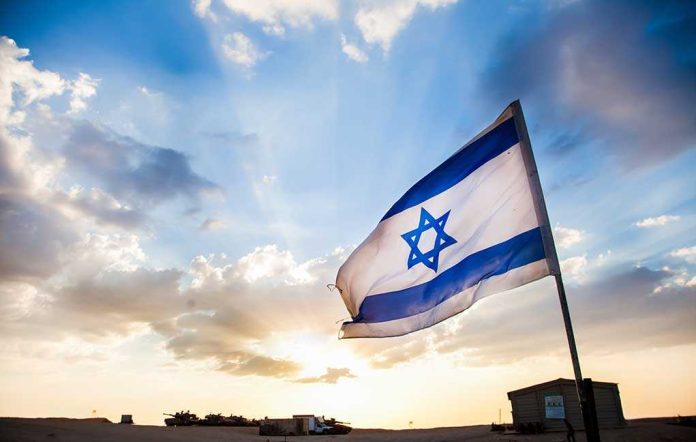
On December 5, 2025, the European Broadcasting Union confirmed Israel would appear at Eurovision 2026, and four broadcasters immediately responded with the one lever that always gets attention: they walked away. Ireland’s RTÉ, Spain’s RTVE, the Netherlands’ AVROTROS/NPO, and Slovenia’s RTV SLO announced they would neither send an act nor even air the show. That kind of coordinated exit from long-time participants does not happen over staging or sound checks; it happens when people feel the institution lost its moral compass.
The EBU framed its decision as rules-based continuity: Israel is a member broadcaster, the contest is non-political, and “a large majority” saw no need for another vote. In blunt bureaucratic terms, they applied the rulebook as written. The problem is that viewers over 40 remember 2022, when Russia was pushed out over Ukraine because organizers said its presence would bring Eurovision into disrepute. You do not need a PhD in international law to see why many now hear the word “neutrality” and think “selective outrage.”
Why these four countries moved first — and why it matters
Each boycotting broadcaster operates in a domestic climate where Gaza casualties, images of flattened neighborhoods, and accusations of war crimes run constantly. Ireland’s RTÉ invoked “unconscionable” participation while civilians in Gaza face a humanitarian catastrophe. Spain’s RTVE moves within a political environment where the government has taken a sharper line on Israel. Dutch and Slovenian broadcasters respond to vocal civil society campaigns and artists who see cultural boycotts as the only lever left when diplomacy looks toothless.
Conservative viewers may roll their eyes at cultural elites turning a song contest into a protest stage, and that skepticism has teeth. Institutions funded by taxpayers have a duty to serve broad public interests, not just activist demands or fashionable causes. Yet those same taxpayers increasingly demand consistency: if armed aggression against Ukraine led to cultural isolation for Russia, why does continued warfare in Gaza not trigger similar consequences? The EBU’s insistence that the two cases differ may be technically defensible, but public legitimacy rarely hinges on technicalities alone.
Eurovision’s fragile claim to be “above politics”
Eurovision has always been more than sequins and key-changes. It is soft power with pyrotechnics, a place where governments, broadcasters, and national identities package themselves for a global audience. Bloc voting, neighborly point-trading, and songs smuggling in political subtext have been part of the show for decades. The EBU’s official line — that Eurovision is “non-political” — now looks like an increasingly thin curtain everyone can see behind, especially when war, sanctions, and boycotts divide the same continent that claims to be “united by music.”
Four Countries Boycott Eurovision After Israel Cleared to Compete https://t.co/WAc2wB4s38 via @BreitbartNews
— Lois Levine Fishman (@FishmanLevine) December 7, 2025
From a common-sense conservative perspective, the crucial test is not whether politics can be kept out — they cannot — but whether standards are clear, consistent, and anchored in real principles rather than vibes. If Russia’s exclusion was about defending Europe’s rules-based order, then declining to apply any comparable scrutiny to Israel signals that principles bend under pressure from sponsors, alliances, and fear of being labeled bigoted. That does not mean every accusation against Israel is fair; it does mean institutions erode trust when they look strategically blind in one direction.
Who really gets hurt when broadcasters boycott?
Boycotts often claim to “speak truth to power,” but their first casualties are usually fans and artists who had nothing to do with the policies being condemned. Viewers in Ireland, Spain, the Netherlands, and Slovenia now face the prospect of no national finals, no flags in the arena, and no live televote. Young artists lose a rare platform to step from national obscurity onto a global stage. Older fans, who grew up treating Eurovision as a kind of annual family ritual, watch politics cancel what used to be one reliably silly, safe night on the calendar.
Many pro-Israel commentators call the boycott antisemitic, arguing that singling out the world’s only Jewish state while ignoring brutalities elsewhere reveals the real motive. Some voices on the right go further, describing these four governments and broadcasters as captured by a left that weaponizes “human rights” only when Israel or the West is in the dock. That charge lands with many American conservatives who see the same pattern at home: celebrities and institutions quick to denounce Israel, slow to mention Hamas, and silent on Chinese or Iranian abuses that lack trendy hashtags.
What this fight exposes about Europe’s cultural institutions
The deeper story is not just four broadcasters versus one contestant; it is about what Europeans now expect from their cultural institutions. Civil society groups demand that stages, screens, and stadiums become tools of accountability when courts and diplomacy feel stalled. Broadcasters insist they cannot become foreign ministries with theme music. The EBU wants a stable rulebook. Activists want moral clarity. Governments want plausible deniability. Viewers just want to know whether they can still sit down next spring, pour a drink, and argue about key-changes instead of casualties.
Eurovision 2026 will almost certainly go ahead, but the illusion that it floats serenely above geopolitics is gone. Future crises — Taiwan, the Caucasus, the Balkans, you name it — will drag the same questions back onstage: Who gets to sing? Who gets silenced? And whose suffering counts enough to cancel the show? For readers used to seeing this dynamic across American sports leagues, awards shows, and universities, Europe’s glittery song contest is now just another front in the same culture war over whether our shared spaces will be neutral, selective, or honestly values-driven.
Sources:
Eurovision boycott over Israel participation | BBC News