

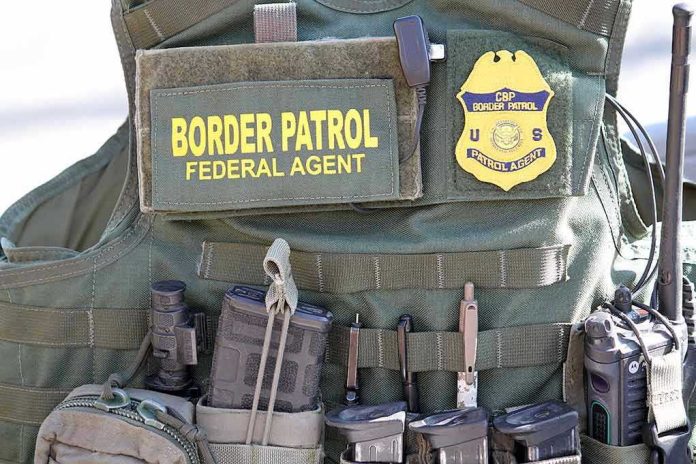
One split-second collision in Evanston’s quiet streets has ignited a national firestorm over federal force, civil rights, and the boundaries of government power—raising questions that won’t disappear with the next news cycle.
Story Snapshot
- Federal immigration agents were caught on video punching a restrained man after a car crash in Evanston, Illinois.
- Bystanders were pepper-sprayed, and a gun was pointed at a woman during the escalating confrontation.
- Outrage erupted locally and nationally, with city officials condemning the agents and demanding accountability.
- The incident highlights deep tensions between federal enforcement and sanctuary cities, and may signal lasting policy battles ahead.
Federal Force Meets Public Outcry in Evanston
Federal authority collided with community values when a routine car accident involving a U.S. Border Patrol vehicle spiraled into chaos on Evanston’s city streets. The now-viral video shows an immigration agent repeatedly punching a man already pinned and restrained on the pavement. The visual evidence, captured by bystanders, leaves little room for ambiguity, fueling outrage in a city that has long prided itself on immigrant protection and progressive policies.
As the confrontation unfolded, agents deployed pepper spray to disperse the gathering crowd and aimed a firearm at a woman who approached the scene, amplifying the sense of fear and disbelief among onlookers. The rapid escalation—moving from a simple car crash to a violent, multi-faceted enforcement action—became a flashpoint, instantly spreading across social media and prompting condemnation from local leaders and civil rights advocates.
Sanctuary City Values Versus Federal Enforcement
Evanston, situated on Chicago’s northern edge, is no stranger to the national immigration debate. As a self-declared sanctuary city, Evanston has enacted policies meant to shield immigrants from aggressive federal enforcement. These measures, popular among residents and city officials, have placed the community at odds with federal agencies tasked with upholding national immigration law. The events of that November day underscored this friction, as federal agents—operating with authority but without local consent—clashed with a city determined to chart its own course.
Local officials moved swiftly in the aftermath. Mayor Daniel Biss openly condemned the conduct of the agents, accusing them of “beating people up” and immediately designating public areas as “No ICE Zones.” The city’s rapid response teams expanded, tasked with monitoring future federal actions and supporting residents caught in the crossfire. Federal authorities, for their part, defended their agents, characterizing the punches as “defensive strikes” and insisting the arrest was performed “by the book.” This stark divide between federal justification and local outrage has only deepened public scrutiny over what constitutes necessary force—and who gets to decide.
National Patterns and Local Fallout
This is not an isolated incident. The last decade has seen a string of high-profile confrontations between federal immigration agents and residents of sanctuary cities across the country. Critics argue that recent administrations have emboldened these agencies, leading to aggressive tactics even in communities that explicitly limit cooperation. Legal experts and civil rights organizations warn that unchecked enforcement actions risk eroding public trust, especially when incidents are broadcast in real time for all to see.
In the immediate aftermath, protests erupted across Evanston and beyond. Community advocates mobilized, demanding transparency, independent investigations, and a wholesale rethinking of federal-local relations. The restrained man at the center of the video, now a symbol for many, remains largely anonymous in official reports, a reminder of how easily individuals can become lightning rods in broader policy wars. Federal agencies, meanwhile, face mounting questions about training, oversight, and the accountability of agents operating in politically hostile environments.
Long-Term Reverberations and Unfinished Business
The implications of the Evanston incident extend far beyond one city or moment. In the short term, heightened tensions have made collaboration between federal agencies and local governments all but impossible, particularly in places where immigrant communities are integral to the social and economic fabric. The fear generated by such confrontations can undermine civic participation, drive families underground, and erode the public’s willingness to cooperate with law enforcement on any issue, immigration-related or not.
Looking ahead, this flashpoint may shape national debates over immigration, federal authority, and civil rights well into the next election cycle. Lawmakers on both sides of the aisle face pressure to clarify the rules of engagement—balancing security with constitutional protections, and local autonomy with national law. For now, the video from Evanston stands as both evidence and warning: when federal power meets local resistance in the public square, the fallout can be swift, unpredictable, and far-reaching.