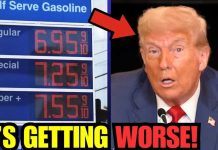
Oil at $90, a wobbly stock market, and a shooting war with Iran have just turned your weekly fill-up into the front line of a global economic fight.
Story Snapshot
- Oil prices jumped roughly 20–40% in a week as the Iran war escalated and spread beyond the Middle East.
- Gas at the pump now sits at the highest level since 2024, just as the U.S. job market softens.
- Wall Street is sliding while Washington scrambles with stopgap fixes, including a Russia sanctions waiver.
- Economists warn of a stagflation threat that could punish savers, retirees, and investors simultaneously.
How a Regional War Turned Into a Global Energy Shock
Late February’s coordinated strikes involving the United States, Israel, and Iran did not just redraw military maps; they rewired energy markets almost overnight. Traders who had priced oil calmly in the mid-$60s suddenly had to account for missiles near one of the world’s most important fuel spigots. Within days, Brent crude vaulted into the $80 range, then pressed above $90 as the fighting showed no sign of winding down or staying neatly contained inside Iran’s borders.
The reason this war bites so fast is simple: Iran still matters enormously to the global energy machine. As a key OPEC producer supplying several percent of world output, Iran sits next to the Strait of Hormuz, the narrow passage that carries about a fifth of the planet’s oil. Any hint that tankers could face delays, sabotage, or insurance nightmares there instantly becomes a tax on every commuter, trucker, and small business owner who relies on affordable fuel.
From Pump Prices to Portfolio Pain
While drivers watched station signs jump more than 30 cents a gallon in a single week, investors saw the same story in red on their screens. Major stock indices dropped sharply, with the S&P 500 logging its worst weekly performance since the previous autumn and the Dow flipping negative for the year. Energy producers caught a short-term tailwind, but the broader market reacted like a patient who just received a dangerous new diagnosis layered onto existing health problems.
That underlying health issue is a slowing economy colliding with fresh inflation pressure. New employment data showed employers cutting more jobs than they created, undercutting the narrative that growth alone could offset higher fuel costs. When layoffs rise as oil spikes, markets start whispering the word every serious investor over 40 remembers from the 1970s playbook: stagflation. The fear is not just higher prices, but higher prices combined with weaker paychecks and shrinking retirement balances.
Washington’s Emergency Tools and Their Political Price
The federal government’s response underscores how boxed-in policymakers feel. The Treasury Department authorized a 30-day waiver on certain Russia sanctions so India could increase purchases of Russian oil, a maneuver designed to keep more barrels flowing into world markets. Officials framed it as a brief, technical adjustment, but it effectively acknowledged that existing policies had painted the United States into a corner where it now leans on adversaries to contain prices.
For many Americans with conservative instincts, that tradeoff raises obvious questions about strategic foresight and energy independence. Years of constraints on domestic production and refining capacity now collide with a shooting war in a vital oil region, forcing emergency workarounds instead of drawing on robust homegrown supply. The situation highlights a hard lesson: when policy prioritizes symbolism over resilience, geopolitical shocks turn quickly into higher grocery bills, steeper heating costs, and political anger that cuts across party lines.
What Stagflation Risk Really Means for Ordinary Americans
Economists at major banks now dissect the conflict with spreadsheets that assume a multi-week war and assign a specific “war premium” of more than ten dollars per barrel to current prices. Their scenarios converge on a clear warning. If crude holds above ninety or punches into triple digits, inflation that had started to cool will reheat, and the Federal Reserve will find itself with almost no good options: cut rates and risk an inflation flare, or keep them high and risk tipping a weak economy into a real downturn.
GAS PRICES SOAR: The price of oil surged higher and showed no signs of halting its rapid climb a week after the U.S. and Israel launched major attacks on Iran that escalated into a war in the Middle East. https://t.co/18f4IxipcU
— WPLG Local 10 News (@WPLGLocal10) March 7, 2026
For households and retirees, that policy trap translates into a harsh, practical checklist. Higher rates for longer threaten stock valuations, especially in growth sectors, while also pressuring housing and credit-card borrowers. At the same time, rising prices erode the real value of savings, particularly for those parked in low-yield accounts. Conservative common sense favors tightening personal belts now: building emergency funds, chipping away at high-interest debt, and resisting the temptation to chase speculative plays in such a jittery environment.
Sources:
Oil Prices Surge as Iran War Impacts Stock Market