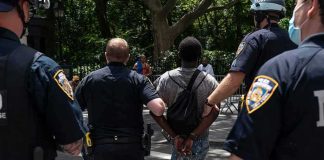

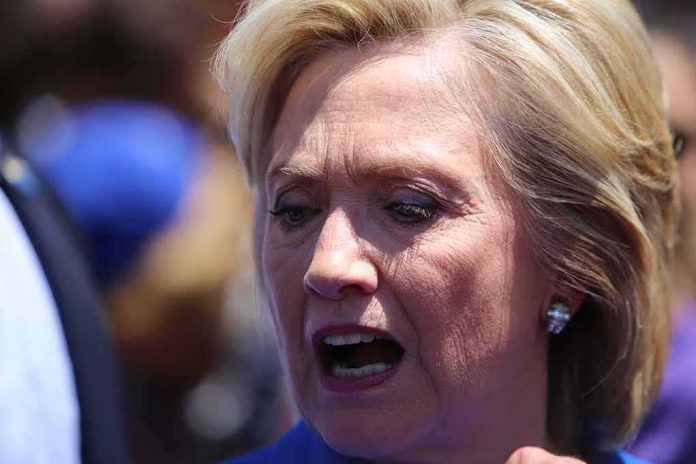
Hillary Clinton sketched a post-Election Day playbook of intimidation, lawsuits, and delayed certifications—then left the receipts to be found later.
Story Snapshot
- Clinton warned of intimidation at polls and legal fights over certification.
- She alleged talk of “seizing ballots” and pressuring states not to certify.
- Critics called it evidence-free fearmongering and conspiracy talk.
- Federal agencies say cyber risks exist, but no proof votes were changed.
What Clinton Actually Claimed On Air
Hillary Clinton told a national audience that “intimidation” and a rush of legal actions would follow the vote. She described threats to “seize ballots,” pressure campaigns aimed at state certifications, and an effort to paint voters as ineligible. She also floated that Immigration and Customs Enforcement or “others” might loom near polling places to scare voters. Reporting of her remarks did not include documents or orders backing these claims, making them warnings, not proof.
Clinton’s forecast matched a real category of risks. The Department of Justice runs an Election Threats Task Force to stop violence and intimidation of election workers. That mission exists because threats have risen and officials need help. The existence of that task force does not prove her polling place scenario, but it shows the government treats intimidation as a live concern with criminal consequences if it occurs.
Where The Facts Support Risk, And Where They Do Not
Cyber and influence operations target elections every cycle. The Cybersecurity and Infrastructure Security Agency documented penetration testing, incident response, and software reviews for election systems over several years. That history shows officials handle vulnerabilities as operational risks, not hypotheticals. At the same time, the Federal Bureau of Investigation and Cybersecurity and Infrastructure Security Agency reported no evidence that cyberattacks changed voter registrations, compromised ballots, or disrupted counting in the last cycle they assessed.
That split matters. Foreign actors push propaganda and probe networks, but federal statements say those actions did not change vote totals or block tabulation. Blending influence attempts, voter-file access, and vote changes into one idea—“hacked results”—confuses the public. The better frame is simple: threat activity is real, and election officials harden systems; claims that votes were changed require proof that has not surfaced in official findings.
The Certification And Lawsuit Angle
Clinton named a tactic many lawyers know well: sue early, sue late, and litigate the count. American law allows recounts, audits, and challenges within rules set by each state. Those tools can defend accuracy or, if abused, stall and spin. Clinton predicted efforts to hold or block certifications. The record cited here does not show a directive, filing, or sworn plan to seize ballots or stop certification in 2026. Her claim remains a forecast, not a documented operation.
Commentators on the right pounced. They argued she offered “zero evidence” for an Immigration and Customs Enforcement intimidation scenario and folded too many alarms—federal agency abuse, hacked counts, Social Security data—into one stew. They cast the segment as a slate of conspiracies built to cushion bad results. That criticism lands where she lacked specifics. When a public figure predicts federal agents at polls, the bar is high; without dates, places, or orders, it reads like a scare tactic.
Common-Sense Guardrails For Election Night
Americans do not need hysteria to protect elections. They need bright lines and receipts. First, no federal or state actor should stand near voting lines unless law requires it for safety or a judge orders it for a clear reason. Second, chain-of-custody for ballots should be logged and auditable at every step. Third, challenges belong in court with evidence, not at canvassing boards with chants. Fourth, agencies should speak plainly fast—what happened, what did not, and what they will do next.
Conservatives and liberals can agree on one thing: the process must be transparent, steady, and boring. That means strong paper backups, public logic-and-accuracy tests, video-recorded canvass meetings, and fast publication of court filings. It also means restraint. Do not call hacking unless systems changed votes. Do not call intimidation unless a badge, a uniform, or a bodycam shows it. Facts build trust; vague alarms drain it. The best answer to fear is proof on the table.
Sources:
redstate.com, justice.gov, news.meaww.com, cisa.gov