A Trump-appointed judge halted Trump’s own media ban within 48 hours, and that swift check tells the real story.
Story Snapshot
- Hillary Clinton called Trump’s White House media ban “beyond the pale.”
- CNN, MS NOW, and Politico sued, calling it a First Amendment assault.
- A federal judge ordered their credentials restored for 14 days.
- Major networks quit the press pool in protest, raising the stakes.
What Clinton Said And Why It Landed
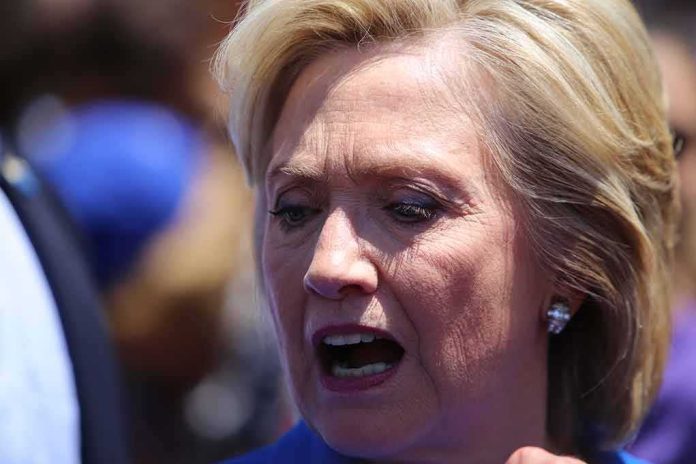
Hillary Clinton told the Washington Post that banning news outlets from the White House is “deeply disturbing,” “beyond the pale,” and the kind of thing “authoritarians do.” Her words hit because they match the facts that followed. Her critique lined up with a federal judge’s fast ruling that the ban likely broke core rules for press access. Rhetoric alone does not prove a case, but her claim found quick backing in court orders and newsroom actions.
Trump said he banned CNN, MS NOW, and Politico because they spread “fake news” and pushed “fiction and lies.” The White House later said the outlets violated conduct standards. The Justice Department added a national security thread. A judge reviewing those reasons said the record did not back the security claim and noted Trump’s own statements tied the ban to coverage he disliked. That linkage is the bullseye in First Amendment fights over government retaliation.
The Lawsuit That Forced The Door Back Open
CNN, MS NOW, and Politico filed a federal suit on September 21. They argued the ban punished viewpoint and skipped due process. Their complaint called it a “direct assault” on free speech. Within two days, U.S. District Judge Timothy J. Kelly issued a temporary restraining order. He told the White House to return the outlets’ credentials at once. He signaled the case was likely to succeed, at least on the process and viewpoint grounds. That is fast judicial triage.
The order restored the status quo and turned the White House’s theory into the issue, not the rule. Courts have long said when the government opens a forum to the press, it cannot kick people out for their views without process and clear standards. Kelly, a Trump appointee, leaned on those basics. He also appeared to doubt the security claim, saying the record lacked support for it. That pushed the debate back to evidence, not slogans or spin.
How The Press Pool Drew A Bright Line
CBS, NBC, ABC, and Fox News pulled out of the press pool after the ban. That move told the White House this was not a minor spat. Press pools share access and feed coverage across outlets. When the biggest networks step back, it signals a red-line breach. Viewers do not need to love the media to see why the pool matters. It is the scaffolding that keeps daily coverage fair, diverse, and on the record inside the “people’s house.”
Conservatives should want rules, not rulers. A fair press process protects everyone when power flips. Today it may be outlets you distrust. Tomorrow it could be outlets you rely on. The case so far did not show proof that security drove the ban. The president’s own posts said it was payback for “fake news.” That is a political judgment, not a legal one. Courts step in when government punishes speech for its viewpoint. That is the American deal.
The Path Forward: Process, Standards, And Proof
The court will now sort facts from claims. Discovery can surface emails, memos, and threat reports, if any exist. Depositions can set who decided what and when. If the White House has real security grounds, it can put them on the record with narrow, neutral rules. If not, the judge will likely make the restraining order permanent. Either way, the remedy is the same: clear standards, notice, a chance to respond, and written reasons tied to facts, not feelings.
Why Clinton’s Swipe Stuck This Time
Clinton’s charge alone would not carry the day. The weight comes from the rapid legal pushback and the judge’s doubts about the stated reasons. The media ban was sweeping, the lawsuit was quick, and the order was blunt. That chain makes her critique feel earned, not just partisan. The better conservative position is steady: defend due process, reject viewpoint punishment, and demand proof for any security claim. The Constitution is not a fan club. It is a fence line.
Sources:
redstate.com, washingtonpost.com, dw.com, thehill.com, theguardian.com, cnn.com, afp.com