Homeland Security Secretary Markwayne Mullin says Immigration and Customs Enforcement (ICE) will not patrol polling places, but agents could show up if a real threat exists there on Election Day.
Quick Take
- Mullin says ICE has no plans to patrol polling sites, only to act on specific, credible threats or active warrants.
- The Department of Homeland Security (DHS) issued a near-identical statement denying any routine ICE presence at polls.
- Voting-rights groups like the Brennan Center and American Civil Liberties Union (ACLU) argue federal law bans armed agents from polling places outright.
- Earlier DHS statements calling ICE-at-polls claims “disinformation” have created confusion about whether this is a clarification or a shift.
What Mullin Actually Said About ICE and Polling Places
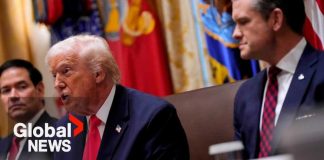
Mullin told reporters on September 1 that “ICE isn’t there to patrol the polling places. We’re there to enforce specific threats.” He said agents would only show up if “there is a threat to that polling place” or officers need to serve “a warrant on someone that we have been actively tracking down.”
NBC News reported the same limits, quoting Mullin’s explanation that any presence would be tied to a specific danger, not general election-day monitoring. DHS backed him up, telling reporters ICE has no plans “targeting polling locations” and that agents only act through “intelligence-driven targeted enforcement.”
A Narrow Exception, Not a New Policy, DHS Insists
Mullin drew a clear line between immigration enforcement and election administration. “If we’re doing something, we’re doing that specifically for immigration custom enforcement,” he said, according to a USA Today transcript of his remarks. That distinction matters. It means any arrest near a polling place would be about a wanted individual, not about who someone voted for or how they voted.
This isn’t the first time DHS has addressed the issue. Back in February, a DHS official told election officials directly, “There will be no ICE presence at polling locations,” according to Politico. The September statement adds a threat-based exception to that earlier blanket denial, which is exactly why critics say the message has shifted rather than simply been clarified.
Why Voting-Rights Groups Say Any Presence Crosses a Legal Line
The Brennan Center argues that federal law has barred armed agents from polling places for more than a century, pointing to a statute that prohibits stationing “troops or armed men” at voting sites except during an actual armed attack on the country. Their position leaves little room for exceptions, even ones tied to genuine threats or active warrants.
The ACLU echoes that stance, saying every voter has the right to cast a ballot “without fear of deception or intimidation.” Section 11(b) of the Voting Rights Act reinforces this by banning intimidating conduct with no requirement to prove intent. Under that reading, the mere sight of armed federal agents near a polling site could count as intimidation, regardless of the underlying reason for their presence.
The Real Tension: Security Versus Perception
Here’s the honest problem. A credible threat to a polling place is a real public-safety concern that any responsible agency has to address. Nobody wants a violent incident at a voting site because federal officers stayed away on principle. But voting-rights advocates are right that armed federal presence near polls has a long, ugly history of scaring off voters, often minority voters, even when officers had no intent to intimidate anyone.
Mullin’s framing tries to thread that needle: act only on specific, verified threats, not general patrol. That’s a reasonable operational principle on paper. The trouble is DHS hasn’t released a warrant number, a case file, or a legal memo defining exactly where the line sits between “responding to a real threat” and “showing up armed near a place where people vote.” Without that paperwork, both sides are arguing from trust rather than proof.
What Comes Next Before Election Day
Expect this fight to head toward the courts before ballots are cast. Voting-rights groups have shown they’re willing to seek emergency injunctions based on public statements alone, and DHS’s mixed messaging over the past several months gives them an opening. Election officials, meanwhile, want clear rules, not competing press statements, about when federal agents can appear anywhere near a voting site.
The midterms are gonna be a crazy shitshow:
"US homeland security secretary Markwayne Mullin on Tuesday said that federal immigration and customs enforcement (ICE) officers could be deployed to polling sites across the country."
Trump might send his SA: https://t.co/D0TRLuahkR
— FaggotsForFuture ✊🌈✊ (@RealTadzioM) September 2, 2026
The bottom line: Mullin’s explanation is narrow and conditional, tied to specific threats and warrants rather than routine patrols. Whether that promise holds up depends on facts nobody has seen yet, like whether any actual threat or warrant materializes at a real polling place this November. Until then, both the reassurance and the alarm are running ahead of the evidence.
Sources:
youtube.com, politico.com, democracydocket.com, lawyer-monthly.com