

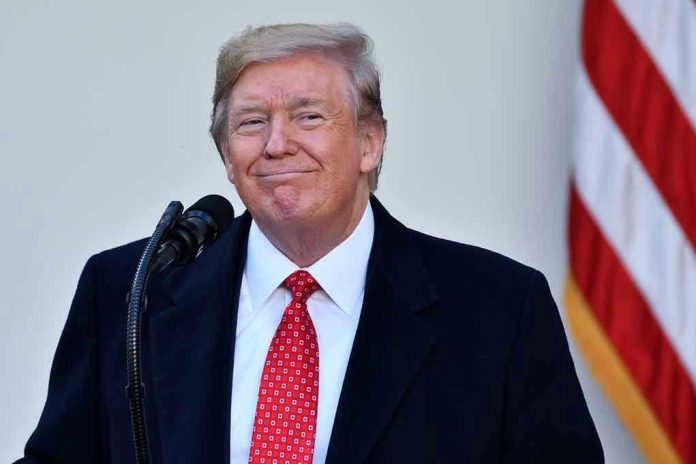
Donald Trump vows to seize Greenland “one way or the other,” thrusting the Arctic into a geopolitical powder keg that could shatter NATO alliances overnight.
Story Snapshot
- Trump escalates threats in January 2026, explicitly including military options to counter Russia and China in the Arctic.
- Danish Prime Minister Mette Frederiksen and Greenland Premier Múte Egede reject any U.S. takeover, affirming sovereignty.
- Bipartisan U.S. senators plan Denmark visit while Danish and Greenlandic envoys head to Washington for urgent talks.
- U.S. controls Thule Air Base but faces NATO backlash over aggressive rhetoric straining allied ties.
- Strategic stakes involve rare earth minerals, naval routes, and blocking adversaries’ Arctic expansion.
Trump Revives Greenland Ambition with Unprecedented Threats
Donald Trump stated on Air Force One January 10-12, 2026, “one way or the other, we’re going to have Greenland” to secure U.S. interests against Russia and China. This marks a shift from his 2019 purchase proposal, which Danish PM Mette Frederiksen dismissed as “absurd.” Trump canceled a Denmark visit then. Now in his second term, he appointed Louisiana Gov. Jeff Landry as special envoy and nominated Ken Howery as ambassador. White House Press Secretary Karoline Leavitt confirmed a “variety of options,” keeping military force on the table.
Greenland, Denmark’s autonomous territory with 56,000 residents, hosts U.S. Thule Air Base under a defense pact. Trump justifies control for national security, citing Arctic resources like rare earth minerals and rival naval activity. Greenland Premier Múte Egede declared it “not for sale” in December 2024. Denmark offered enhanced U.S. security presence in January 2025, but Trump told NBC military action remains possible.
Vice President Vance visited Greenland in March 2025, pledging sovereignty respect, yet Trump’s rhetoric overshadowed assurances. December 2025 saw Denmark summon the U.S. ambassador after Landry’s appointment. Early January 2026 interviews and social media from allies like Stephen Miller amplified threats, prompting Greenland’s government to reject escalation.
Diplomatic Missions Race to Defuse Crisis
Danish and Greenlandic envoys travel to Washington this week for talks with Secretary of State Marco Rubio, who reportedly prefers purchase over invasion per leaks. A bipartisan U.S. Senate group plans a Denmark visit to ease tensions. NATO Secretary General Mark Rutte and European allies back Denmark’s stance, warning of alliance rupture.
Frederiksen asserts U.S. claims violate international law and Greenland’s self-determination. Polls show Greenlanders oppose U.S. control. These visits signal frantic diplomacy amid Trump’s “whether they like it or not” declaration. Facts align with common sense: NATO’s 75-year stability underpins U.S. security, and military threats risk unnecessary isolation when bases already provide leverage.
Historical U.S. interest spans 1946 purchase talks and 1955 base expansions. Senator Tom Cotton pitched a buy in 2018. Trump’s post-2024 reelection revival ties to Venezuela operations, framing Arctic dominance as urgent.
Strategic Imperatives Clash with Sovereignty
Russia and China expand Arctic presence, threatening U.S. missile defense at Thule and shipping lanes. Trump frames Greenland as essential to block them. Experts like Adm. Nils Wang call it a “game-changer” message despite the approach. Michael McFaul deems annexation Trump’s “worst idea,” paradoxical to U.S. strategy.
Andreas Bøje Forsby sees U.S. exclusive zone signals against rivals. Conservative values prioritize strength: securing resources and denying foes aligns with America First, but diplomacy preserves alliances over rash force. Short-term envoy talks may clarify if threats are leverage or literal. Long-term, invasion invites economic disruption in rare earths and NATO dissolution.
Sources:
Trump’s Greenland threats leave allies sweating: How we got here