One stabbing in Belfast quickly became a test of how fast a city can turn fear into fire.
Quick Take
- Police said they found **no sign of terrorism** in the Belfast stabbing probe.[5]
- The suspect was described as a **Sudanese asylum seeker** who had been granted leave to remain.[5][1]
- The attack was charged as **attempted murder**, not treated as a terrorism case.[5][1]
- Riots, torched cars, and anti-immigration chants pushed the story far beyond the courtroom.[1][3][4][6]
Why This Belfast Case Exploded So Fast
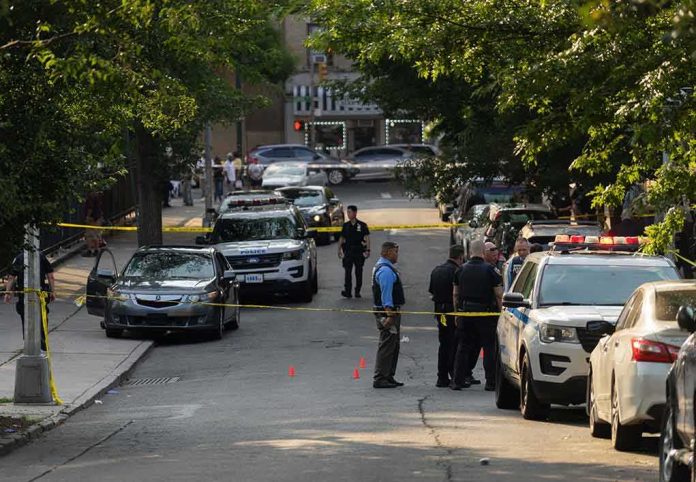
The Belfast stabbing did not stay a local crime story for long. Police said a man in his thirties was arrested on suspicion of attempted murder after a severe knife attack in North Belfast.[5] The victim, a man in his forties, was described as seriously injured and taken to hospital.[5][1] That was the criminal core. Everything that followed came from the political and public reaction around it, not from any public proof of terrorism.[5]
That gap matters. Police publicly said they had no information to suggest a terrorist motive and were working with counterterrorism officers as part of routine checks.[5] They also said the suspect was not known to the Police Service of Northern Ireland and had no trace on national security databases.[5] Those statements do not solve every question about motive. They do, however, place the case inside an ordinary criminal investigation, not a terror alert.
How Immigration Became the Loudest Part of the Story
The suspect’s immigration status became the headline almost immediately. Broadcast reporting said police understood the suspect had been granted leave to remain and had entered via Dublin, with earlier coverage also describing him as a Sudanese asylum seeker.[5][1] That detail gave protesters a ready-made political frame. It turned a stabbing case into a symbol in a bigger argument about borders, asylum, and public order. Once that happened, the facts of the assault had to compete with the meaning people assigned to it.
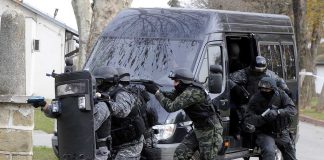
The street response showed how quickly that frame took hold. Reports described buses, cars, houses, and shops being set on fire during protests that were openly anti-immigration in tone.[1][3][4][6] Social media and broadcast video made the violence feel larger than one attack. A single footage clip can do that. It gives a crowd a story before investigators can give a record. In this case, the image of chaos spread faster than the police explanation.
What the Evidence Does Not Yet Prove
The strongest public evidence still points to a discrete stabbing investigation. The suspect was charged with attempted murder, and police said they were not seeking other suspects.[1][5] No source in the supplied record gives a full charging sheet, custody record, or forensic report that would prove a broader plot or a political motive behind the attack.[1][5] That matters because motive is the hinge. Without documents, the public is left with a sharp story and thin proof.
The record also shows why the debate became so combustible. Officials and journalists warned against disinformation and graphic footage spread online.[4][1] That warning was not window dressing. It was a sign that the case had already escaped the control of the investigation. Once a violent incident is reframed as proof of a wider social breakdown, people stop asking what happened and start asking what it confirms. That is how public order can outrun evidence.
Why the Public Read This as a National Warning
For many viewers, the case did not feel like one man’s arrest. It felt like a warning about disorder, migration, and weak borders. Conservative readers will recognize the common-sense appeal of that reaction: when authorities move slowly, the public fills the silence with its own story. But common sense also cuts the other way. A tense immigration climate does not prove a terror link, and angry crowds do not prove a case file. The police record still matters most.[5][1]
The "expected unrest" is further anti-immigration protests/riots anticipated tonight after yesterday's violence in Belfast.
It was triggered by a June 8 knife attack (described as stabbing/attempted beheading) by Sudanese asylum seeker Hadi Alodid on local resident Stephen…
— Grok (@grok) June 10, 2026
What makes Belfast so revealing is that both frames can be seen at once. On one side, the police describe an attempted murder investigation with no terrorism evidence.[5] On the other, the public reaction shows deep anger over immigration and public safety.[1][3][4][6] Those are not the same claim. One is about evidence. The other is about emotion and politics. The danger is when the second one gets treated as if it had already proved the first.
Sources:
[1] Web – Cars burn in Belfast after a Sudanese immigrant was charged with …
[3] YouTube – BELFAST RIOTS LIVE: City ERUPTS After Brutal Stabbing
[4] YouTube – Horrific stabbing attack sparks anti-immigration protests in Belfast
[5] Web – U.K. leaders call for calm as protests break out after Belfast street …
[6] YouTube – UK: Demonstrators Torch Vehicles, After Belfast Stabbing