New York City’s mayor said the police protest unit will be disbanded, and he said it out loud for months before doing it.
Story Snapshot
- Mayor Zohran Mamdani pledged to disband the Strategic Response Group (SRG) and kept repeating it.
- He argues protest response should not be tied to counterterrorism work.
- A city comptroller report urged removing militarized officers from protest policing.
- The SRG grew from a counterterrorism unit into protest and crowd control over time.
Mamdani’s promise was clear and repeated
Mayor Zohran Mamdani did not float this as a trial balloon. He pressed the same line across interviews and public forums in 2026. He said he would disband the Strategic Response Group and separate protest response from counterterrorism work. He told a national audience that the question was not if but when. He drew a bright line between how the city treats marches and how it handles terror threats, and he called the past mix a modern conflation.
He also described the plan on public radio and connected it to a broader reset in how the city handles dissent. He said protests and counterterror threats call for different tools, training, and goals. He framed it as a rights-first change that still takes safety seriously. The through-line was simple: treat protest as speech, treat terrorism as crime, and stop asking a single unit to straddle both at once.
What the Strategic Response Group became
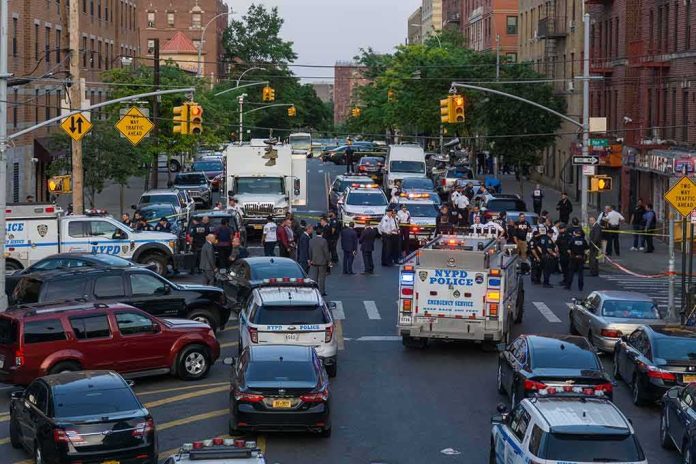
The Strategic Response Group started in 2015 with a counterterrorism mission. It then took on more jobs, including crime reduction, crowd control, and protest response. That shift created a single unit that carried heavy gear and handled parades and marches. The city comptroller documented the growth and the shift in purpose and urged the city to unwind that setup for protests, marches, and demonstrations.
The comptroller’s public-safety report did not mince words. It recommended disbanding the SRG’s protest arm so that militarized officers would not police routine civil gatherings. It tied the change to better protection for speech and assembly and to basic accountability. It also aligned protest policing with de-escalation, clearer command roles, and training that matches First Amendment events, not high-risk threats.
The policy logic: separate missions, sharpen outcomes
The administration’s case rests on mission clarity. Protests center on time, place, and manner rules, safe routes, and quick fixes for friction. Counterterrorism centers on threat detection, interdiction, and force-on-force preparedness. Blending these can trigger a mismatch: speech events met with tactics designed for exceptional danger. The mayor says a clean split makes each response faster, safer, and more lawful because the teams will train and deploy for the job they actually face.
New York City Mayor Zohran Mamdani on Monday followed through on his campaign promise to disband the New York City Police Department’s Strategic Response Group (SRG): a police unit responsible for handling both protests and counterterrorism.
“Those are not the same, and they… pic.twitter.com/EeqCGDuFWn
— Mosheh Oinounou (@Mosheh) November 16, 2026
The comptroller’s framework backs that idea by pointing to protest rights and police practice. It proposes units with lighter posture for demonstrations, clearer thresholds for escalation, and specific accountability tracks. That plan does not remove public safety tools. It reassigns them so that serious threats get specialist attention and peaceful events get guardians, not shock troops. That is a conservative idea at heart: fit the tool to the task and hold people responsible for results.
What to watch next: capacity, command, and community trust
The practical test now is execution. New York must show which units take protest duty, what training they receive, and how they call in support if violence breaks out. It must also show how counterterror units keep readiness high as their focus tightens. The city set the rationale in public and has a policy map to justify it. The next benchmark is simple: safer protests, faster de-escalation, and strong readiness for threats that truly demand hard power.