
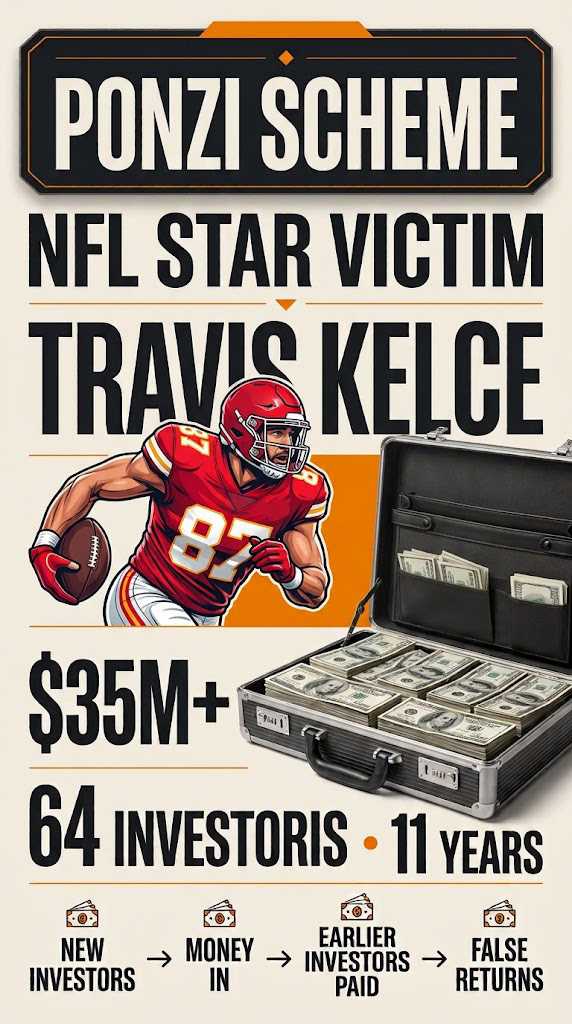
A federal judge sentenced an investment adviser to 11 years for a $35 million Ponzi scheme that prosecutors say victimized 64 people, including NFL star Travis Kelce.
Story Highlights
What Prosecutors Said Happened
Federal prosecutors in Missouri said Siddharth “Sid” Jawahar ran a Ponzi scheme that raised more than $35 million from investors across the country. Prosecutors told the court that money from new investors paid earlier investors, while the adviser lied about business health and returns. U.S. District Judge Zachary Bluestone sentenced Jawahar to 11 years in prison. The government said 64 people lost money, and named Kansas City Chiefs tight end Travis Kelce among the victims during sentencing.
Prosecutors and several outlets report the court identified Kelce as a victim at the hearing. The Justice Department’s case described widespread deception, false promises, and misuse of investor funds. Court filings and prosecutor statements put the total loss figure above $35 million. The sentence also included a restitution order, which can help victims seek repayment, though actual recovery often depends on what assets can be found and seized after judgment.
Who Is Siddharth Jawahar and How the Scheme Worked
Jawahar presented himself as an investment professional and raised funds for ventures that sounded promising, according to news accounts of the case. Prosecutors said he used classic Ponzi tactics: show glossy pitches, tout insider access, pay “returns” using newer deposits, and hide holes in the books. The approach matched well-known fraud patterns that draw in both everyday savers and public figures. That mix boosts trust early, which makes due diligence harder and red flags easier to ignore.
Fraud experts note that these schemes often surface when cash flow runs dry or a victim complains. Media coverage tends to focus on celebrity losses, but the core harm is broad: most victims are not famous and may never make headlines. The Madoff case is the best-known example of that pattern. A few big names drew attention, yet thousands of families, retirees, and charities suffered the deepest pain across years of false statements and delayed truth.
Why This Case Resonates Beyond One Name
This case grabbed attention because of Kelce’s profile. But the lesson is larger. Fraud feeds on trust, speed, and the promise of easy gains. Many readers on both the right and the left see a system that fails to guard regular people. Complex products spread fast, checks are thin, and bad actors slip through until it is too late. That cycle fuels anger that elites play by looser rules while savers and small investors take the hit.
Kansas City Chiefs tight end Travis Kelce was officially named a victim in a $35 million Ponzi scheme, so she can cut his allowance.
— James Shine (@jimbobTNT) September 22, 2026
Protecting yourself starts with simple steps. Verify registrations. Ask for audited financials. Be wary of “guaranteed” returns or pressure to move money fast. Separate custody for assets, clear fee schedules, and third-party statements all help. Prosecutors said Jawahar’s pitch masked holes that plain, slow questions could have exposed. If the numbers do not add up on paper, walk away. In the end, steady, transparent investments beat secret deals and whispered access every time.
Sources:
sports.yahoo.com, jang.com.pk, abcnews.com, fortune.com, usatoday.com