
A White House tradition built to keep governors working together just got turned into a guest list fight—and the real fallout won’t be measured in RSVPs.
Story Snapshot
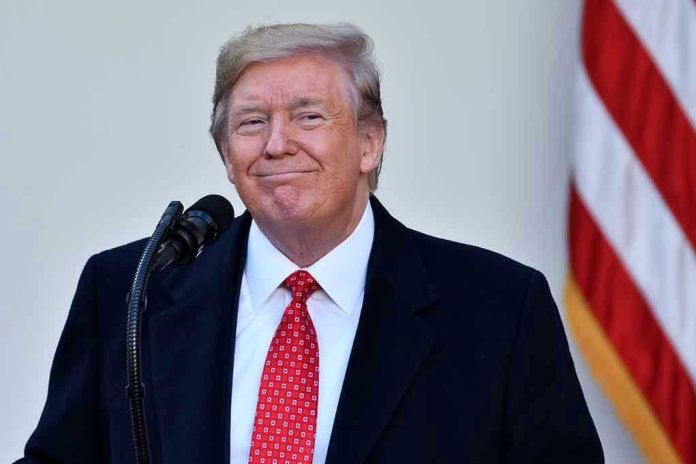
- President Donald Trump scheduled a governors meeting during the National Governors Association winter gathering but invited only Republican governors to the White House session.
- The National Governors Association warned the move weakens practical federal-state cooperation that normally bypasses cable-news politics.
- Maryland Gov. Wes Moore and Colorado Gov. Jared Polis were disinvited from a separate bipartisan dinner without any public explanation.
- Kentucky Gov. Andy Beshear said he will skip the dinner in solidarity and criticized the move as putting party over country.
- The White House defended the decision as the president’s prerogative and argued Democrats still have other opportunities to meet with the administration.
A bipartisan ritual gets rewritten into a partisan room
Trump’s plan for the annual White House governors meeting flips decades of bipartisan expectations into a Republican-only policy session, with Democrats routed elsewhere. That sounds like inside-baseball until you remember why this meeting exists: governors handle disasters, infrastructure, public safety, and budgets that collide with federal rules. The National Governors Association framed the split as undermining “constructive engagement,” which is polite language for: this is how deals get done when Washington can’t behave.
The mechanics matter. Governors’ offices learned about the Republican-only format shortly before early-February reporting, leaving little time for quiet fixes. That timing forces the dispute into public view, where every move gets interpreted as a message. Trump’s defenders can call it a scheduling choice; governors hear something sharper: the White House deciding which states get face time and which get managed at arm’s length. Federalism turns fragile when access turns selective.
The dinner controversy reveals who gets “excluded” and how
A separate dinner, described as bipartisan, should have lowered the temperature. Instead, it became the second front of the fight after reports that Moore and Polis were disinvited without an explanation. That detail changed the story from “Republicans meeting Republicans” to “Democrats being specifically uninvited.” In politics, the act of rescinding carries more sting than never inviting at all, because it implies someone decided you shouldn’t be in the room.
Moore’s role makes the snub harder to shrug off. He isn’t a random attendee; he serves as NGA vice chair. He also pointed to the racial dimension, noting he is the nation’s only Black governor. Readers should keep their common sense: no public evidence has surfaced that race drove the decision, but optics count because leaders signal respect through rituals. When a bipartisan institution’s vice chair gets bounced, the institution itself takes the hit.
Colorado’s Tina Peters dispute adds gasoline to the rumor mill
Polis brings a separate set of political cross-currents. Reporting tied the tension to Trump’s pressure on Colorado officials to pardon Tina Peters, convicted on state charges connected to 2020 election tampering claims. Here’s the practical point many voters understand instinctively: a president can’t issue a federal pardon for state crimes, so pressuring a governor for one turns symbolic fast. If Polis resisted, disinviting him looks less like protocol and more like leverage—whether or not that was the intent.
The White House, through Press Secretary Karoline Leavitt, waved it off as a “non-story” and emphasized that the president can invite whomever he wants. That statement is legally true and politically incomplete. Presidents set guest lists, but presidents also inherit civic traditions because those traditions oil the machinery of governing. Conservative voters often value order, clear lines of authority, and results. A tradition that helps states coordinate with Washington is not “cute”—it’s functional.
Beshear’s boycott turns a private snub into a public test
Beshear’s decision to skip the dinner in solidarity elevates the episode beyond two disinvites. He framed it in plain language on daytime television: putting party ahead of being American. That line matters because it translates process into values, and it pressures other governors to choose sides. Once boycotts enter the chat, the event stops being a working weekend and starts resembling a culture-war marker. The NGA then loses its advantage: a place where governors can talk shop.
The NGA’s message also deserves attention because it comes from an institution that survives by staying practical. When the association says a move undermines collaboration, it signals concern about real-world coordination: FEMA planning, National Guard deployments, grant administration, and the unglamorous phone calls that happen before a crisis. People over 40 remember when governors could fight in the morning and sign agreements at night. The deeper worry is normalization: today’s invite list becomes tomorrow’s operating model.
The conservative common-sense question: what problem does exclusion solve?
Supporters of the White House approach might argue that the president should meet first with governors aligned on policy, or that Democrats have become unwilling partners anyway. That argument only works if exclusion produces better outcomes for citizens—faster approvals, cleaner coordination, fewer political stunts. The available facts don’t show that; they show a tradition broken and relationships strained. Conservatives typically reward competence over theatrics. If the administration wants credit for governing, it needs a process that looks like governing.
National Governors Association annual meeting in DC with the President. All 50 governors always meet with the prez. Trump says nope, invites only Republican governors to meet with him. He’s by far the most hateful, most divisive person in America today. https://t.co/zyov7NXsKV
— Joe Walsh (@WalshFreedom) February 10, 2026
The open loop is whether the White House recalibrates before the NGA winter gathering concludes, or whether governors accept a new era where bipartisan meetings become partisan set pieces. Moore signaled he won’t “bow down,” and the NGA signaled it won’t treat the dinner as an official event if it becomes a tool of exclusion. The next move tells you what Washington really wants: problem-solving with states, or applause from its own side.
Sources:
Trump to exclude Democratic governors from usually bipartisan meeting at the White House
Trump, Wes Moore, Jared Polis, Democratic Governors Association, bipartisan White House dinner
White House excluding Dems from its annual governors meeting
Trump vs. Mills sequel unlikely at White House governors event this month
Trump shuts out Democratic governors from traditional White House gatherings