
The most powerful country on earth quietly grabbed an oil tanker near Venezuela, and almost nobody asked what that really means for American power, energy, and principle.
Story Snapshot
- A U.S. seizure of an oil tanker near Venezuela signals more than a one-off maritime sting.
- The move fits a long pattern of pressure tactics between Washington and Caracas.
- Energy, sanctions, and sovereignty collide whenever the U.S. reaches into foreign waters.
- American conservatives must weigh strength abroad against creeping mission creep.
Trump’s Offhand Remark That Revealed a Strategic Shockwave
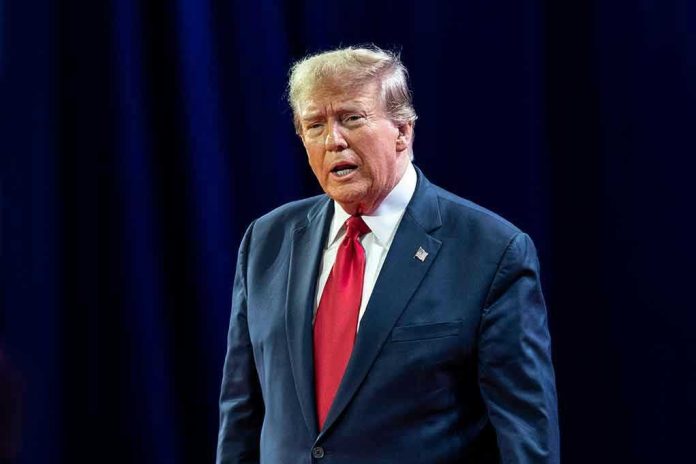
Donald Trump told the world, almost in passing, that the United States had “just seized a tanker on the coast of Venezuela,” and that one line pulled back the curtain on a far bigger geopolitical drama. This was not just about one ship, one barrel of oil, or one defiant socialist regime. This was about how Washington uses raw power on the high seas to enforce its will, and what that choice says about the direction of American foreign policy.
Trump’s comment framed the seizure as a simple fact, but it sat on top of years of rising tension with Venezuela’s government. Washington recognized a rival claimant to power in Caracas, imposed sanctions on the Maduro regime, and sought to choke off its access to oil revenues. Seizing a tanker fit neatly into that toolbox. The message to allies, adversaries, and fence-sitters was blunt: if you help sanctioned regimes move energy, you may lose more than your cargo.
Sanctions, Oil, and the Uncomfortable Question of Reach
The United States increasingly uses financial sanctions, shipping restrictions, and asset seizures instead of sending troops, especially when dealing with hostile governments that lean on oil exports for survival. An oil tanker is both symbol and lifeline. When the U.S. intercepts that lifeline near Venezuelan waters, it flexes a mix of legal, economic, and naval muscle that most countries simply cannot match. That kind of reach can deter bad actors, but it also raises hard questions about limits.
American conservatives usually back strong enforcement against hostile socialist regimes, and with good reason. A government that wrecks its own economy, jails opponents, and clings to power through repression should not enjoy a frictionless path to energy markets. Yet overreach carries real risk. If Washington treats every foreign-flagged ship as fair game whenever it dislikes the destination, it edges toward an informal police role over global commerce that costs money, credibility, and, eventually, public support.
Venezuela’s Crisis as Both Justification and Warning
Venezuela’s collapse provides the moral backdrop many Americans lean on to justify hardline measures. A once-wealthy nation sits in economic ruin, with millions fleeing and basic services crumbling, while the ruling circle still derives critical income from oil. Cutting off that flow sounds not just strategic but humane. The tanker seizure aligns with a clear objective: deny the regime cash, tighten the screws, and force a political reckoning it cannot easily escape.
“We’ve just seized a tanker on the coast of Venezuela. A large tanker, very large,” Trump told reporters. “And other things are happening.”https://t.co/VNjERoKozo
— FOX21 News (@FOX21News) December 11, 2025
Yet history warns that sanctions and seizures rarely operate in a vacuum. Regimes under pressure often deepen ties with rival powers, entrench internal repression, and cultivate anti-American narratives. When a ship is stopped near Venezuelan waters under a U.S. order, Caracas and its partners frame it as imperial overreach. That rhetoric may sound cynical, but it resonates with populations that already distrust Washington’s motives. Strategic pressure, if not tightly defined and time-bound, can slowly morph into a stagnant standoff.
Conservative Principles: Strength Without Endless Entanglement
American conservative values traditionally balance two instincts: assertive defense of national interests and skepticism of open-ended interventions. The tanker seizure touches both. On the one hand, it shows the U.S. acting without apology to enforce sanctions it set and to defend a rules-based notion of trade that punishes tyrants. On the other, it edges into a murky gray area where executive power reaches across oceans with limited public debate and no clear off-ramp.
From a common-sense standpoint, strength means more than proving you can act; it means proving you know when to stop. A targeted ship seizure that clearly disrupts a regime’s sanctioned revenue stream can make sense. A pattern of escalating maritime actions with no defined political objective does not. Conservatives should demand clarity: What is the measurable goal? How will Washington know this pressure campaign has succeeded, and what guardrails prevent it from becoming another forever-crisis?
What This Signals for America’s Future Power Plays
The quiet drama of one tanker off Venezuela previews how future conflicts may look: fewer large wars, more sharp, surgical moves in trade routes, financial systems, and energy flows. The U.S. has unmatched capacity to reach into these channels. That power, used wisely, can punish authoritarian regimes without putting American troops in harm’s way. Used carelessly, it can blur the line between targeted enforcement and informal empire-building that alienates both allies and citizens.
Voters over forty have watched this movie before, from embargoes that lasted decades to interventions that drifted far from their original rationale. The tanker episode should not be dismissed as a footnote. It is a small but telling moment in the larger story of how America wields power in a world that still runs on oil and still watches U.S. moves for clues about its principles. The question is not whether America can seize such ships, but how often, how far, and to what end.