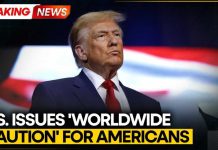

One narrow strip of water is turning NATO’s toughest talk into an awkward silence—and Americans are paying for it at the gas pump.
Quick Take
- Trump blasted NATO allies for refusing to help secure the Strait of Hormuz during the escalating conflict with Iran.
- The Strait carries roughly one-fifth of the world’s oil, so disruption hits energy prices fast and hard.
- NATO signaled discussions and incremental steps, while the U.K. offered base access but avoided making it a NATO mission.
- Trump floated consequences for NATO’s future, even as most Americans oppose sending U.S. ground troops.
The Strait of Hormuz: The World’s Most Expensive Bottleneck
The Strait of Hormuz does not need to “close” to cause panic; it only needs to feel unsafe. Tanker insurance spikes, shipping schedules wobble, and oil traders build fear into the price before a single barrel gets delayed. That’s the leverage Iran holds by geography alone. When the conflict dragged into its third and fourth week, Iranian pressure and regional strikes amplified the sense that the chokepoint could turn from marketplace to minefield overnight.
Trump’s message to allies hangs on a blunt premise: if Europe benefits from stable energy flows, Europe should help defend them. That argument lands with voters who are tired of the United States underwriting global stability while partners debate process and politics. The twist is that Hormuz is not a classic NATO theater, and that mismatch—between what the alliance was built to do and what Washington now demands—sits at the center of the dispute.
Trump’s “Paper Tiger” Shot at NATO Is Really About Burden, Not Boats
Trump’s public criticism painted NATO as reluctant and ineffective, arguing the U.S. “doesn’t need” the alliance even as it seeks tangible help. He also warned that refusal would echo into NATO’s future, a threat meant to convert hesitation into action. From a conservative, common-sense lens, the burden-sharing complaint is not new; it’s the same math applied to a new map: capability, commitment, and who pays when the bill arrives.
NATO’s response sounded cautious: allies were already increasing security efforts and discussing further steps with the U.S. and partners. That wording matters. It signals process, not posture; coordination, not commitment. When American leadership asks for ships, basing, or rules of engagement that carry real political risk, “we’re discussing it” reads like delay. Delay has a cost in a crisis because markets move faster than diplomats, and adversaries probe for daylight between allies.
Britain’s Workaround: Help the U.S., Avoid the NATO Label
The U.K. offered a revealing compromise. Prime Minister Keir Starmer confirmed work with partners to keep oil shipments safe while emphasizing it would not run as a NATO operation. Britain also approved U.S. use of its air bases for Strait-related operations after initial hesitation. That split-the-difference approach reflects Europe’s political constraints: provide practical assistance, but avoid formally expanding NATO’s mission into a Middle East war that many member governments cannot sell at home.
Trump reportedly spoke of talks with about seven countries, and a larger group signaled willingness to help only after a ceasefire. That condition tells you how allies are reading the risk: they want stability operations, not combat operations. Conservatives can respect that clarity even when it frustrates Washington. If partners will only show up after the shooting stops, the United States still shoulders the worst phase alone—precisely the dynamic Trump is attacking.
The Hard Reality: Americans Want Results, Not Another Ground War
Domestic opinion forms the guardrails around every foreign-policy demand. A Reuters-Ipsos poll found only a small minority supports sending U.S. ground troops into Iran, with overwhelming opposition. That public mood explains why Trump’s options tilt toward air and naval power, sanctions, and coalition pressure rather than a large-scale occupation. It also explains the fixation on allies: if Americans reject a ground-heavy campaign, outside support becomes the substitute for manpower.
Trump’s reported push to secure an additional $200 billion for expanded Middle East operations underscores a second reality: quick wars rarely stay quick. Funding requests often signal that the “nearly complete” phase has passed and the “sustainment” phase has arrived—more patrols, more munitions, more logistics, more political exposure. Conservatives generally prefer clear objectives and exit ramps. A widening bill invites skepticism unless leaders explain what “winning” looks like and how it ends.
What This Fight Reveals About NATO’s Next Decade
NATO was designed to deter threats to the North Atlantic area, not to referee every global chokepoint. Yet modern economics makes a distant waterway feel local when fuel prices jump in Ohio. Trump’s warning about NATO’s future aims at a strategic reset: allies that want American guarantees should meet American priorities. The counterargument from Europe is predictable: mission creep weakens legitimacy, and legitimacy is what keeps democracies committed.
https://twitter.com/gatewaypundit/status/2037334742467531194
The best-case outcome is boring but valuable: a multinational maritime security effort that reduces risk, steadies markets, and buys time for diplomacy. The worst-case outcome is a split-screen alliance—U.S. action on one side, allied caveats on the other—inviting Iran to test resolve and inviting voters at home to question why America leads coalitions that sometimes refuse to follow. Trump’s “never forget” line is less a quip than a marker: this episode will shape future favors.
Sources:
Trump warns NATO’s future at stake if allies won’t help secure Strait of Hormuz