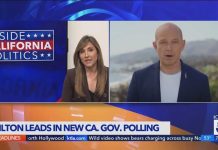

Eighty-nine “hospice” businesses can fit on paper at one Los Angeles address, even when almost nothing else fits in the building.
Story Snapshot
- CBS News investigators walked into a Van Nuys building listed as home to 89 hospice agencies and found empty offices, piled-up mail, and dead phone lines.
- The investigation describes Los Angeles County as a hotspot, with roughly 1,800 hospices and hundreds showing state-defined fraud indicators.
- A parallel inquiry by Assemblywoman Alexandra Macedo found 197 hospice agencies registered at another nearby address, pointing to a broader pattern.
- Officials tout license revocations and arrests, while critics argue prevention failed long before enforcement showed up.
The Van Nuys building that exists on forms, not in real life
CBS News reporters visited a Van Nuys “medical plaza” where 89 hospice companies reportedly registered to a single address. On the ground, the basics of a functioning healthcare operation appeared missing: no steady foot traffic, no clear signs of active businesses, and office cues that suggested neglect rather than care delivery. The most telling detail wasn’t dramatic; it was mundane—mail stacked up like the building had become a storage unit for paperwork.
That physical reality matters because hospice is supposed to be intensely human and hands-on. Legitimate hospice care involves nurses, social workers, chaplains, medical equipment, medication management, and constant coordination with families at the worst moment of their lives. A hospice that “exists” mainly as a suite number and a disconnected phone line doesn’t just look suspicious; it collides with common sense about what patient care requires.
How “ghost hospices” can turn Medicare into an ATM
The alleged playbook described by investigators is simple enough to make you angry: create shell hospice entities, get them licensed or registered, then bill Medicare for services never delivered. Some reporting points to stolen Medicare numbers and the use of identity data obtained online, turning real patients into billing targets without their informed participation. When that happens, taxpayers fund fictional visits while families struggle to find real help.
Los Angeles County stands out in the reporting not only for volume but for clustering. When hundreds of providers appear concentrated within a few miles, the question isn’t whether LA has a sudden surplus of end-of-life clinicians. The question is whether regulators built a system that checks forms instead of reality. In a conservative frame, this is the classic big-government failure: rules everywhere, accountability nowhere.
Red flags were counted for years, and the incentives stayed backward
California’s hospice fraud problems didn’t arrive overnight. A state audit criticized weak licensing controls and described how organized networks exploited oversight gaps. Complaints piled up over years, including hundreds alleging fraud, yet approvals still moved forward in many cases. That timeline creates the kind of frustration voters recognize: government had the signals, had the authority, and still left the public holding the bag.
State officials, including the governor’s administration, point to crackdowns—license revocations, enforcement partnerships, and arrests. Those steps can be real and necessary, and any honest analysis should acknowledge them. The harder question is why so much of the action happens after the money flows out the door. Attorney General Rob Bonta’s public posture aligns with that critique: react to red flags early, not just catalogue them later.
The Macedo factor: a second address, bigger numbers, same smell test
Assemblywoman Alexandra Macedo, a Republican from Tulare, added gasoline to the story by publicizing her own inquiry: 197 hospice agencies registered at another Van Nuys address. Different building, same theme—phones that don’t work, little sign of operations, and paperwork that multiplies faster than real clinical capacity. Her letter to Governor Newsom pressed for regulations and treated the delay as an open invitation to fraud.
Politics sits right on top of this scandal, but the facts don’t need partisan seasoning to sting. Medicare and Medi-Cal operate on trust and verification; when licensing becomes a check-the-box process, honest providers compete against fraudsters who can undercut everyone and still profit. Conservatives don’t object to safety nets; they object to systems that reward cheating while families navigating terminal illness pay the price in chaos.
What this does to real families and real hospices
The most damaging part isn’t the money, even if the numbers are enormous. The damage hits when a family hears “hospice” and wonders if they’re calling a caregiver or a scam. Fraud turns a sacred, late-life service into something that feels like a telemarketing category. Legitimate hospice operators—especially smaller, rural, or faith-based organizations—end up carrying reputational harm they didn’t earn and can’t easily undo.
Patients also suffer in quieter ways. Fraud-driven oversaturation clogs referral networks, confuses hospital discharge planners, and turns provider lists into junk drawers. Time matters in end-of-life care; delays mean unmanaged pain, exhausted spouses, and families making medical decisions in a fog. A licensing system that can’t distinguish a staffed hospice from an empty suite isn’t just inefficient—it’s cruel.
The fix is boring, practical, and overdue
Stopping this doesn’t require a new slogan. It requires unglamorous verification: real-site inspections, ownership transparency that follows the money, rapid suspension authority when basic operational proof fails, and inter-agency data checks that identify suspicious clustering at single addresses. Emergency regulations delayed into the future create the wrong expectation: that compliance can wait. Fraud moves faster than bureaucracy, every single time.
https://twitter.com/JoeHonestTruth/status/2034646161164755103
Families can’t police this on their own, but they can protect themselves by demanding basics: a real office, a reachable clinical coordinator, clear paperwork that matches physician orders, and a care plan explained in plain English. Government’s job is to make sure “hospice” means care, not a mailbox. When 89 agencies fit into one building on paper, regulators should show up in person—before the bills hit Medicare.
Sources:
Valley assemblywoman finds 197 hospice agencies registered at one LA address
Hospice fraud report: Los Angeles CBS report LA County empty offices piled mail
CBS News: Hospice Fraud Investigation