
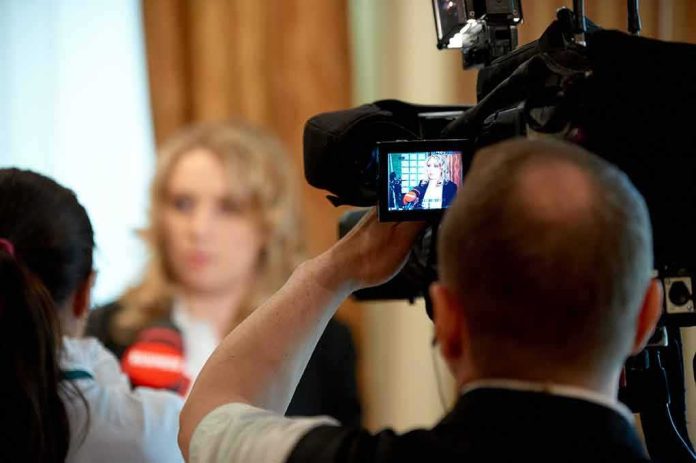
A Utah judge’s decision to allow cameras in the trial of Charlie Kirk’s accused assassin delivers transparency vital to counter conspiracy theories assaulting a conservative icon’s legacy.[2][5]
Story Highlights
- State District Judge Tony Graf denied defense motion for a blanket ban on courtroom cameras in Tyler Robinson’s murder trial.[1][2][5]
- Erika Kirk, the widow, pushed for cameras to ensure public understanding of her husband’s September 10 assassination at Utah Valley University.[2][5]
- Preliminary hearing delayed to July 6-10, 2026, with media requests evaluated case-by-case under Utah Rule 4-401.013A.[2]
- Ruling upholds public’s right to observe justice, rejecting claims of inevitable jury bias from coverage.[2][5]
Judge Rejects Defense Bid for Camera Ban
State District Judge Tony Graf ruled on Friday, May 8, 2026, to deny Tyler Robinson’s defense request for a categorical prohibition on electronic media in the courtroom. Robinson faces murder charges for the assassination of conservative activist Charlie Kirk. The judge found defense arguments insufficient under Utah law to overcome the presumption of media access.[2][5][6]
Judge Graf acknowledged media outlets’ use of footage for out-of-court commentary that vilifies the defendant. He declined a total ban, stating electronic media facilitates public access to proceedings for those unable to attend. Livestreaming holds government branches accountable, aligning with conservative demands for open justice over hidden processes.[2][5]
Transparency Push from Kirk Family and Prosecutors
Erika Kirk advocated strongly for cameras, declaring the public deserves clarity on her husband’s killing. She aims to eliminate hesitation about the events of September 10, when Kirk, 31, suffered a fatal neck shot during a speech in Orem, Utah. Prosecutors and media joined her, arguing openness guards against rampant conspiracy theories.[2][5]
Trial attorney Rebecca Rose Woodland praised real-time coverage as respect for justice and democracy. This stance counters narratives questioning evidence like DNA and lost videos, which fuel skepticism among millions doubting the official account. Cameras promise to showcase prosecutorial strength directly to viewers.[1][2]
Preliminary Hearing Delay and Media Protocols
Judge Graf rescheduled Robinson’s preliminary hearing to July 6 through 10, 2026, granting a defense motion for more preparation time. He established a standing order under Utah Rule 4-401.013A, requiring media requests 14 days in advance. Late filings risk denial, with objections filed in the docket.[1][2]
Charlie Kirk murder: Judge allows cameras in Tyler Robinson trial https://t.co/xNIZCrfioB
— Eloris (@Eloris577717) May 11, 2026
Defense warned of jury bias from slanted reports, online comments, and defendant’s televised appearance suggesting lack of remorse. Graf opted for case-by-case evaluations rather than a ban, preserving fairness while enabling public scrutiny. This balances Sixth Amendment rights with First Amendment press freedoms in a politically charged case.[2][5]
Victory for Accountability in High-Profile Case
The ruling fits patterns in 20-30% of nationally watched trials, where defenses often fail to restrict cameras despite bias claims. For conservatives grieving Kirk’s loss amid Trump’s second-term pushback on leftist overreach, televised proceedings affirm traditional values of transparent government. They expose truth, silencing conspiracies eroding trust in institutions.[5]
Media, prosecutors, and Kirk’s family hailed the decision as essential to dispel confusion. Erika Kirk’s forgiveness plea contrasts the death penalty pursuit, yet unified support for visibility underscores commitment to unvarnished justice. Americans demand courts reflect accountability, not secrecy that breeds doubt.[2][5]
Sources:
[1] Judge allows cameras in Charlie Kirk murder trial
[2] Judge allows cameras in Tyler Robinson trial
[5] Judge rejects request to ban cameras in court from man …
[6] Judge in Charlie Kirk case won’t forbid cameras from …