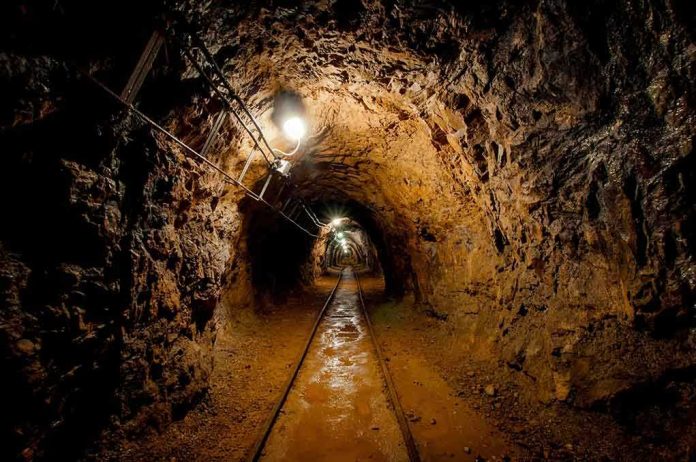
A carbon monoxide alarm screamed in the dark tunnels of a Shanxi coal mine, and within minutes more than eighty men were dead or dying underground.
Story Snapshot
- A gas explosion at the Liushenyu coal mine in Shanxi killed at least 82–90 miners, with dozens more injured and missing.
- State outlets confirmed an early carbon monoxide alert, raising hard questions about what mine managers did next.
- Beijing ordered “all‑out” rescue efforts and a full investigation, but technical details remain tightly controlled.
- The blast fits a long, troubling pattern in Chinese coal mining where production pressure often collides with safety.
A Normal Shift Turns Into A Mass Casualty Nightmare
Miners at the Liushenyu coal mine in Shanxi’s coal belt went underground on the evening of May 22 expecting another long, dirty, routine shift. Roughly 247 workers were below ground when sensors registered dangerously high carbon monoxide levels and an alarm was raised inside the mine’s monitoring system.[1] Within minutes, a violent gas explosion ripped through the tunnels, killing at least 82 people at first count and trapping many more. Death toll numbers climbed toward 90 as rescuers worked overnight.[2]
Emergency teams poured into the site, hauling survivors out of the shaft, some burned, others suffering from gas inhalation. State media cameras captured cranes, ambulances, and lines of exhausted rescuers as officials announced that more than 200 people had been evacuated by early morning, while dozens remained missing underground.[1] Those images delivered the message Beijing wanted the world to see: an all‑hands rescue, a disciplined response, and a country in control of its own disaster.
What Authorities Say Happened Underground
Official accounts describe a classic coal mine catastrophe: accumulation of flammable gas, followed by ignition, followed by a lethal pressure wave and toxic fumes.[1] Reports consistently call it a “gas explosion,” with no suggestion of sabotage.[1] The presence of a functioning carbon monoxide sensor suggests the mine had at least some modern monitoring equipment in place.[1] Beijing’s narrative stresses three themes: swift rescue mobilization, a still‑ongoing technical investigation, and a promise that those responsible, if any, will face legal consequences.
President Xi Jinping and Premier Li Qiang publicly ordered an “all‑out search” for the trapped, a “thorough investigation,” and accountability “in accordance with the law.”[1] This familiar three‑step script—rescue, investigation, punishment—frames the event as a regulated industrial accident rather than a systemic failure. However, none of the available reports include pre‑incident inspection records or specific evidence that Liushenyu complied with safety standards before the blast.[1] The cause officially remains “under investigation,” which keeps many uncomfortable questions suspended in the air.
The Alarm That Came Before The Blast
State media quietly acknowledged the detail that should keep every mine manager up at night: a carbon monoxide sensor triggered an alarm before the explosion.[1] That fact admits at least two possibilities. On the charitable end, conditions deteriorated so rapidly that even a timely response could not clear the tunnels in time. On the more troubling end, the alert may have been downplayed or ignored in the rush to keep tonnage moving. Current public evidence does not yet prove which scenario actually unfolded.[1]
Death counts that jump from eight to fifty to eighty‑plus, with 247 men initially underground, suggest a chaotic emergency where many workers never had a realistic chance to escape.[1] From a common‑sense conservative perspective, that raises questions about preparedness and redundancy. A mine can own monitors, hold licenses, and pass paper inspections, yet still fail when it matters if alarms do not immediately trigger evacuation, gas control, and power‑down procedures. Until alarm timestamps and evacuation logs surface, nobody outside the investigation can say with confidence whether those procedures worked or failed.
A Disaster In A Province That Knows This Story Too Well
Shanxi is not some mining novice; it is one of China’s core coal regions and the site of previous lethal blasts, including a 2009 disaster that killed more than 70 miners.[2] Over two decades, Chinese authorities have touted tougher regulations and technological upgrades, and national fatality totals have fallen from the truly horrific levels of the early 2000s.[1][2] Yet the persistence of mass‑casualty events reveals a stubborn gap between written rules and underground reality, especially where local officials rely on coal revenues and output quotas.
A gas explosion at a coal mine in China’s northern Shanxi province killed at least 90 people, state media said on Saturday. It was the country’s deadliest mining accident in recent years.
Read more: https://t.co/zaepkC2VkM
📷: Cao Yang, Xinhua via AP pic.twitter.com/VwmsJKyNSy
— KSL 5 TV (@KSL5TV) May 23, 2026
Foreign and Chinese coverage routinely link mine accidents to production pressure and corner‑cutting.[1] That context does not automatically mean Liushenyu’s managers broke the rules, but it makes negligence a credible line of inquiry rather than a fringe theory. When central leaders emphasize accountability while local investigators control all the logs, maps, and witness access, the public gets a morality play—bad actors will be punished—without the granular technical findings outsiders would need to verify what truly went wrong.
What This Says About Risk, Responsibility, And Transparency
This single blast exposes a deeper tension between industrial ambition and human life. Coal still powers a huge share of China’s growth, and Beijing publicly insists that safety is non‑negotiable. Yet repeated disasters make it hard to believe that every mine lives up to that standard when nobody is looking.[1][2] For Americans who value both economic strength and personal responsibility, the lesson is simple: real safety is proven by what happens when alarms sound, not by what gets printed on compliance certificates.
The unanswered questions at Liushenyu are painfully specific. Who heard the carbon monoxide alert, and what orders followed in the first five minutes? Were ventilation systems fully functional? Did supervisors hesitate to halt production because of output targets or political pressure? Did regulators previously flag problems at this site and then look the other way?[1] Until investigators release detailed reports, outsiders will not know. The men who died in those tunnels, however, already paid in full for whatever decisions were made on that shift.
Sources:
[1] Web – 2026 Liushenyu coal mine explosion – Wikipedia
[2] Web – 2009 Shanxi mine blast – Wikipedia