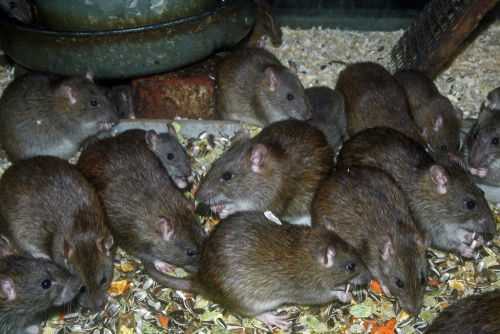
The real story behind “mutant sewer rats” is not horror-movie monsters, but quiet genetic changes that could make old-school poisons a lot less useful in America’s biggest cities.
Story Snapshot
- Most city house mice tested in the urban Northeast now carry genes linked to poison resistance.
- Norway rats are showing early warning signs, but the picture is patchier and less clear.
- Media hype about “super rats” hides the real concern: our go-to poisons may be aging out.
- Smarter, cleaner, non-chemical control may matter more than stronger chemicals in the long run.
What Scientists Really Found In East Coast Rodents
Researchers at Rutgers University analyzed DNA from 147 house mice and 143 Norway rats trapped in dense urban areas of New York, New Jersey, Pennsylvania, and Washington, D.C., all places where pest control companies have leaned on anticoagulant poisons for decades. They focused on a single gene, called Vkorc1, which controls how rodents recycle vitamin K, the same process these poisons attack to cause deadly internal bleeding. When that gene mutates, the poison’s grip can weaken or break entirely.
The results were eye-catching. About 84 percent of the house mice carried at least one mutation in Vkorc1 that is linked in earlier research to rodenticide resistance, and nearly 70 percent carried mutations already known to help them survive common poisons like warfarin and related products. Only about 35 percent of Norway rats had any mutation in the same gene, and scientists do not yet know if those rat mutations truly blunt the effects of the poisons or are harmless background changes.
Why These Mutations Matter For Poisons And For Cities
Anticoagulant rodenticides work by jamming the vitamin K cycle so blood does not clot and the animal slowly bleeds out. When Vkorc1 is changed, the poison may still enter the rodent’s body, but it cannot block the enzyme very well, so clotting continues and the animal lives. Earlier work in Europe and the Middle East has shown that several specific Vkorc1 mutations, such as Y139C and L128S in house mice, can make first generation anticoagulants far less effective and weaken some second generation products as well.
The Rutgers team also uncovered several new genetic variants in both mice and rats that have never been reported in these species before, including novel changes in house mice that had not been seen in this subspecies. Scientists have not yet proved whether those new variants make poisons fail or are simply along for the ride. Lab tests that measure how the enzyme behaves in a dish do not always translate cleanly to resistance in living animals, which is why some of the rat data stays in the “possible, not proven” category for now.
“Mutant Super Rats” Or Local Evolutionary Catch-Up?
Social media rushed to call these animals “mutant sewer rats” and hinted at a nationwide wave of unkillable vermin, but the genetic evidence tells a calmer, more local story. Resistance mutations show up most where people have leaned longest and hardest on anticoagulant poisons, such as dense cities and intensive farm areas. Surveys in places like Richmond, Virginia and Helsinki, Finland, for example, have found no Vkorc1 resistance mutations in Norway rats at all, suggesting that some cities still host entirely susceptible rat populations.
Breaking News
Mutant sewer rats spreading through major US cities as scientists discover disturbing DNA changesScientists have uncovered a disturbing change in both mice and rats infesting America's biggest cities, making the rodents harder to kill than ever before.… pic.twitter.com/0g7LLDgTaZ
— News News News (@NewsNew97351204) June 24, 2026
Global surveys also show that the Rutgers numbers are at the extreme high end, not the new normal. Work in the Netherlands, where rodenticides are also widely used, found about 38 percent of house mice and 15 percent of Norway rats carried a key resistance-linked mutation at codon 139 of Vkorc1, far below the 84 percent mutation rate now reported for northeastern U.S. mice. That gap hints that big American cities may be late to notice a problem other countries have tracked for years: heavy poison use slowly breeds survivors.
Where The Science Stops And The Spin Begins
The Rutgers team is clear about the limits of their findings, even if some headlines are not. They have very strong genetic evidence that most city mice in parts of the Northeast now carry resistance-linked Vkorc1 mutations, and they documented multiple known resistance mutations plus fresh variants never seen in these local populations before. What they do not yet have is large, controlled, real-world testing that shows which specific mutations make which poisons fail, especially in Norway rats.
This gap between early genetic warning and full proof creates room for spin. Rodenticide manufacturers and some industry groups emphasize places like Richmond and Helsinki, where no resistance has been found, and highlight field trials showing that newer, stronger anticoagulants can still kill rodents that resist older products. That argument is not false, but it sidesteps the core point: every time we move to a stronger poison, we raise the stakes for pets, wildlife, and kids while asking evolution to take another swing at our latest tool.
Why Common-Sense Control May Beat Chemical Escalation
The Rutgers researchers do not call for a ban on poisons. They urge cities and property owners to shift toward integrated pest management, a strategy that uses sanitation, hard work, and smart design before reaching for chemicals. That means tighter trash control, sealing entry holes in buildings, removing clutter that offers shelter, using mechanical traps where possible, and treating rodenticides as a last resort instead of the first tool out of the truck. This approach fits a conservative preference for practical, local solutions over endless chemical arms races.
Public health agencies and city governments, however, often move slowly. Regulators want ironclad, in vivo proof before they rewrite rules, and many pest contracts are built around routine baiting with the same products that helped create this problem. Meanwhile, hype about “super rats” makes serious science sound like clickbait, which can turn off citizens who need to cooperate on the basics: storing trash correctly, reporting infestations early, and accepting a bit of short-term disruption to prevent long-term rodent gains.
Sources:
[1] Web – Scientists Find Poison-Resistant Mutant Rats Spreading Across …
[2] Web – Novel mutations in the VKORC1 gene of wild rats and mice – PMC
[3] Web – Urban Rodents May Be Evolving Against Common Poisons
[4] Web – Surveillance of the Vkorc1 Gene Finds No Evidence of Rodenticide …
[5] Web – Distribution and frequency of Vkorc1 polymorphisms in house mice …
[6] Web – Distribution and frequency of Vkorc1 polymorphisms in house mice …
[7] Web – House mice are developing resistance to common poisons, N.J. …
[8] Web – A Rutgers study of rodents found mice with a mutated gene making …
[9] Web – [PDF] Detection of Vkorc1 single nucleotide polymorphisms indicates …
[10] Web – VKORC1 mutations in rodent populations of a tropical city-state as …
[11] Web – [PDF] Anticoagulant Resistance in Norway Rats Conferred by VKORC1 …
[12] Web – [PDF] VKORC1-based resistance to anticoagulant rodenticides … – …
[13] Web – Large‐scale identification of rodenticide resistance in Rattus … – …
[14] Web – Rodenticide Resistance – An Overview – Professional Pest Manager
[15] Web – Mice and rats are now evolving resistance to poison, experts warn
[16] Web – Investigation of anticoagulant rodenticide resistance induced by …
[17] YouTube – Urban Rat Population Dynamics: How Knockdowns and Rebounds …
[18] Web – [PDF] MANAGEMENT—URBAN RODENTS AND RODENTICIDE …
[19] Web – Widespread exposure to anticoagulant rodenticides among common …
[20] Web – [PDF] Integrated Pest Management: Conducting Urban Rodent Surveys