

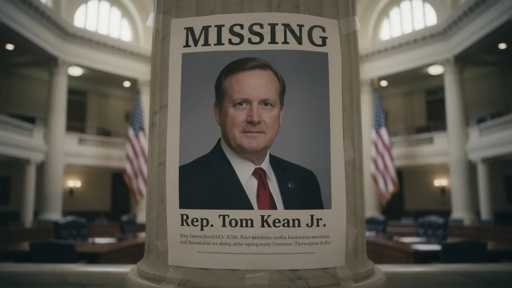
A congressman vanished for months, then returned from a hospital stay for depression and kept voting against paid sick leave for the very workers who would never get what he quietly enjoyed.
Story Snapshot
- Rep. Tom Kean Jr. disappeared from Congress for about four months while still drawing his full salary.
- He later revealed he was hospitalized for depression after initially calling it only a “personal medical issue.”
- Media reports say he missed well over 100–140 votes during this time yet had income security.
- For nearly two decades, Kean has consistently opposed paid leave laws for ordinary workers.
A lawmaker who vanished yet never missed a paycheck
Rep. Tom Kean Jr., a Republican from New Jersey, stopped showing up to vote in early March. His last vote was recorded on March 5, and then the board just kept flashing “not voting” next to his name as the weeks rolled by. While the House battled over surveillance powers, spending fights, and even a government shutdown, Kean stayed absent and still received his full congressional salary, which critics say looks a lot like taxpayer-funded paid leave.
News outlets tracked the missed votes as the count climbed past 50, then into the triple digits, with some reports putting the figure above 140 by the time he returned. Colleagues in both parties asked where he was. New Jersey outlets pressed his staff for details. All they got back were carefully worded lines about a “personal medical issue” and assurances that he would be back “very soon,” even as “soon” stretched into months.
Silence, vague statements, and a late admission of depression
During those months, Kean’s office and House Republican leaders stuck to the same script. They said he was addressing a “personal health matter” and promised a full recovery, but gave no real information about his condition or timeline. Speaker Mike Johnson told reporters that Kean was attending to a health issue, called him “hard-working,” and brushed off concerns as “not a scandalous thing,” while admitting he knew the diagnosis but would not share it.
Only after roughly four months away did Kean step onto the House floor and finally disclose that he had been hospitalized for depression. He described it as something that hits both “physically and emotionally” and said that unless you have faced it, you do not grasp its intensity. He explained that doctors advised him to remain hospitalized because that was the fastest path to recovery, and he admitted he had stayed quiet because he is “a private person by nature,” not because he wanted to spark a media mystery.
The paid sick leave record that fuels the hypocrisy charge
This is where the story stops being just about one man’s health and starts to hit a nerve on values. Investigations by Mother Jones and The Lever show Kean has opposed paid leave measures for almost twenty years, from his days in the New Jersey Senate through his time in Congress. He voted against a 2008 proposal to expand paid family and parental leave and against a 2018 New Jersey law requiring employers to offer at least 40 hours of paid sick time for illness.
During his two decades in the New Jersey Senate, Tom Kean Jr. consistently opposed paid sick leave for his constituents. https://t.co/fRVWXJGdZb
— Mother Jones (@MotherJones) July 1, 2026
Reporters then highlighted the stark contrast: Kean could step away from work for months, follow his doctors’ orders, and still keep his income steady, but his voting record says no when it comes to guaranteeing even a week of paid sick time for regular workers. Social media posts and headlines framed it bluntly as “sick leave for me, not for thee,” and many voters saw a textbook case of political hypocrisy, where the rules for politicians and their staff never match what blue-collar workers live under.
Policy consistency or common‑sense double standard?
Supporters argue that Kean’s stance is at least consistent. He has been against mandated paid leave for years, so his vote after returning from treatment did not suddenly flip; it followed his long-held policy views. From a small-government, conservative perspective, they might say that Congress’s pay rules and private leave mandates are separate issues, and that lawmakers can use existing benefits without endorsing more regulation on businesses.
But that defense runs into an obvious common-sense problem. Most Americans do not get four months of paid time off to handle depression. Many fear losing their job if they miss one paycheck. When a member of Congress benefits from generous leave arrangements funded by taxpayers, yet votes to deny even basic paid sick days to the people who fund his salary, it conflicts with the conservative idea of equal accountability and fairness. The facts line up closer to “special rules for the political class” than to the everyday responsibility conservatives say they value.
Transparency, trust, and what this means going forward
Kean’s case also reveals how secrecy around health issues erodes public trust. Research on political hypocrisy shows that when voters see leaders saying one thing and living another, their attitudes toward that politician and their party sour quickly. Constituents on Reddit and elsewhere asked why, if mental health is such a serious issue, he did not simply tell his district sooner and model honest conversation about depression instead of letting rumors fill the gap.
There is a fair, humane point here: people are entitled to medical privacy, and depression is not a character flaw. Kean had every right to seek treatment. But lawmakers also have a duty to the citizens who pay them and to the workers whose lives are shaped by their votes. When those votes block basic paid sick leave while the lawmaker quietly enjoys months of paid recovery, it is hard for many Americans to see that as anything other than a double standard that undercuts trust in the system and in the promise that public servants live under the same rules as everyone else.
Sources:
instagram.com, bbc.com, motherjones.com, facebook.com, reddit.com, mediaite.com, levernews.com, tandfonline.com