

Twenty-five people died inside a Sri Lankan prison built for order but pushed into chaos by years of overcrowding and neglect.
Story Snapshot
- Two days of clashes at Negombo Prison left 25 dead and over 100 injured, including guards and inmates.
- Violence began as a fight between rival drug gangs, then exploded after inmates got hold of guns from inside the prison.
- The prison system runs at more than double its designed capacity, turning every dispute into a potential mass casualty event.
- Officials still have not clearly explained how weapons were seized or why the facility was left so vulnerable.
How A Gang Dispute Turned Into A Mass Killing
Negombo Prison, a coastal facility north of Colombo, turned into a battlefield over the course of two days. Reports say the trouble started when two drug gangs inside the prison clashed on Sunday, their rivalry spilling out of cramped cells into open violence. Inmates then seized firearms during the unrest, which took the fighting from fists and improvised weapons to live gunfire inside a locked institution. Once guns entered the mix, guards and prisoners alike were caught in the crossfire.
They Destroyed All the CCTV Systems,Minister After Sri Lanka Prison Clashes Kill 25 0607026
Sri Lanka is investigating its deadliest prison violence in years after clashes between rival inmate groups at Negombo Prison left 25 people dead and around 100 injured. pic.twitter.com/vOruF9IQGs— john l (@Maeestro) July 6, 2026
By Monday, authorities and hospital sources were reporting at least 25 dead and more than 100 injured. Among the dead were at least five members of the prison staff, men whose job was to keep order in a place already straining under pressure. Television reports and international outlets carried images of wounded inmates loaded onto buses under heavy police guard, while families waited outside the gates with no clear answers. The fact pattern is ugly but simple: a system on edge finally snapped.
A Prison System Packed Far Beyond Its Limits
This riot did not erupt in a vacuum. Sri Lanka’s own Auditor General has flagged overcrowding as a central failure of the prison system. One performance audit describes facility occupancy hitting 248 percent in 2020, the worst level in a decade, with tens of thousands crammed into spaces built for far fewer. A separate government plan to “overcome” overcrowding admits that many prisons operate at well over double capacity, with some surpassing 200 percent of their design. When you stuff people into dormitories instead of cells, every argument gains a wider blast radius.
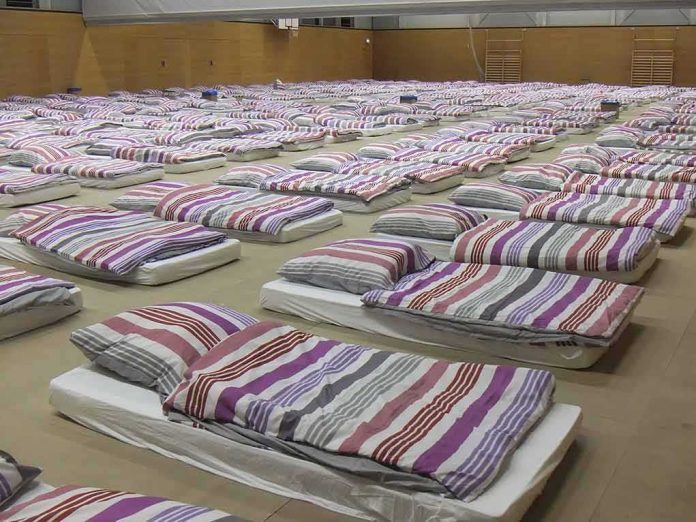
The Human Rights Commission of Sri Lanka found that detention conditions sit “far below” basic living standards, with poor sanitation, weak medical care, and almost no privacy. The British government’s guidance for its citizens warns that Sri Lankan prisons are extremely overcrowded, often without beds, and that inmates sleep shoulder to shoulder on thin mattresses. Add long pretrial detention, gang control of space, and easy access to contraband, and you get a powder keg. Conservatives who talk about law and order should look hard at this: order collapses when the state packs bodies in and then walks away.
Confusion, Silence, And A Clash Of Narratives
On paper, the core facts line up. News agencies and television stations converge on a death toll of about 25, more than 100 injured, and two days of fighting at Negombo Prison. The gaps show up when you ask harder questions. Some early reports spoke of only two deaths and a few dozen injuries, numbers that later rose as more bodies were counted. At least one outlet blurred Negombo with Mahara Prison, reflecting either an editing mistake or the way Sri Lankan prison violence has become grimly routine.
No detailed official report yet explains exactly how the guns were taken or who failed at each stage. Authorities are quoted, but there is no public, signed statement laying out the timeline, weapon inventory, and chain of command. That silence invites speculation. Social media posts push casualty figures up or down and hint at wider conspiracies, but they do not offer hard evidence. From a common sense conservative view, this is backwards: the state owed citizens a clear explanation within days, not a fog of leaks and unnamed sources.
Overcrowding, Rights, And The Limits Of “Lock Them Up”
Sri Lanka’s prison system is not unique; global research ties overcrowding to higher rates of violence, disease, and abuse. The United Nations office on drugs and crime has warned that once occupancy passes safe limits, staff lose control, gangs run informal rule, and serious incidents spike. The Human Rights Commission’s prison report paints the same picture in Sri Lanka, where basic services and protections lag far behind international standards. Negombo becomes one bloody data point in a long trend line.
At least 19 people killed in Sri Lanka prison clashes – Al Jazeera https://t.co/pRYmXTwK4T
Follow @NewsHubGlobe for 24/7 breaking news from around the world. pic.twitter.com/UDY2Zn1jvZ
— News Hub (@NewsHubGlobe) July 6, 2026
There is a hard truth here for anyone who thinks public safety means only tougher sentences and more people behind bars. Law and order also means the state has to keep those people alive and secure. When capacity is blown past 200 percent and governments ignore warning after warning, riots and mass deaths are not “surprises” but predictable outcomes. The conservative instinct to demand responsibility fits perfectly: officials approved budgets, delayed reforms, and let this system rot. The dead in Negombo are the cost.
Sources:
youtube.com, indiatoday.in, aa.com.tr, x.com, facebook.com, ndtv.com, auditorgeneral.gov.lk, icrc.org, prisonstudies.org, unodc.org, en.wikipedia.org