A 20-year-old running through downtown Memphis with a handgun ended up dead at the feet of National Guard soldiers, and the one thing that could settle what really happened — clear video — does not exist.
Story Snapshot
- Tennessee Bureau of Investigation says Tyrin Johnson was armed, fired shots, and was killed after turning toward soldiers with a gun.
- His family says he carried the gun for protection and demands video proof that he pointed it at anyone.
- Two National Guard soldiers on a crime “task force” joined a police chase and used lethal force on a civilian American citizen.
- The case sits inside a bigger pattern: armed personnel in urban areas, shaky evidence, and rising anger over deadly force against young Black men.
How a downtown patrol turned into a fatal shooting
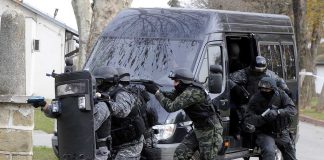
Authorities say the chain of events started in busy downtown Memphis during Fourth of July celebrations, when police responded to reports of gunfire and encountered 20-year-old Tyrin Johnson. The Tennessee Bureau of Investigation (TBI) states Johnson had a handgun and fired shots in the area before taking off on foot. Memphis Police officers chased him. Two Tennessee National Guard soldiers assigned to the Memphis Safe Task Force then joined that pursuit and also ran after Johnson with their weapons drawn.
National Guard soldiers kill 20-year-old Tyrin Johnson in Memphis, Tennessee https://t.co/juOU7T2ERY
— Socialist Equality Party (Sheffield) (@SEP_Sheffield) July 7, 2026
Police say that during the chase Johnson still held the gun as he ran. According to the official narrative, he then turned toward the guardsmen while holding the weapon, which the soldiers saw as a deadly threat and answered with gunfire. Johnson was pronounced dead at the scene. No National Guard member or police officer was hurt. On paper, it reads like a textbook “armed suspect, imminent threat, officer fires” incident, the kind that TBI investigates often in Tennessee.
What officials say, and where the evidence runs thin
TBI and Memphis Police agree on the core points: Johnson had a gun, fired shots before the chase, and was turning toward soldiers when they shot him. They say two Guard soldiers fired their weapons during the pursuit and that Johnson died quickly from those shots. But that story rests almost entirely on what officers say they saw in a fast, chaotic moment. There is no body camera footage from the National Guard, because guardsmen typically are not equipped with cameras while on patrol.
That missing video creates a giant hole in the proof. Without guard body cameras, no independent record shows the exact second when Johnson allegedly turned, how the gun was positioned, or how close the soldiers were. Even basic facts that would matter in court or a serious review feel hazy in public reporting: how many shots Johnson fired, in what direction, and at what time. No dashcam or bystander video has been released yet to back up the claim that Johnson pointed his weapon at anyone, so the most critical moment lives only in sworn statements.
The family’s questions, grief, and pushback
Johnson’s grandfather, Evaniel Johnson, gives a very different frame. He told reporters that his grandson carried a gun because he had recently been “jumped” in Nashville and feared an ongoing feud that spilled over from social media. In other words, the family says the handgun was for protection, not aggression. They do not deny he had the weapon. They challenge what he did with it that night and how fast soldiers chose to shoot.
National Guard soldiers kill 20-year-old Tyrin Johnson in Memphis, Tennessee https://t.co/AbFSNxSRqm
— Angelos Papadopoulos (@angelohrg) July 7, 2026
The family says TBI told them Johnson was shot twice in the chest. That detail raises real questions about body position and threat. A person turning and raising a gun could be shot in the chest, but chest wounds are also consistent with someone still facing away from pursuers or even trying to shield himself. Without video, trajectory analysis and autopsy work matter. So far, no full forensic report on bullet paths or on whether Johnson’s gun was recently fired has been made public.
National Guard as street police, and why that alarms people
This was not a battlefield. These were National Guard soldiers acting as front-line crime patrol in an American city, carrying rifles or sidearms around tourists and families downtown. That choice flows from state policy. Tennessee leaders deployed Guard troops as part of a “Safe Task Force” after rising concerns about crime, despite lawsuits from local Democratic officials who argued that using military forces this way violated the state constitution’s limits on domestic deployment.
A state appeals court overturned an injunction against the Guard patrols in 2025. So when the shots rang out on a Memphis sidewalk, they came from troops whose very presence in a policing role is already legally and politically disputed. For many conservatives who value limited government and clear lines between military and civilian life, that raises alarms. The more we blur those lines, the easier it becomes for uniforms trained for war to use war-level force against citizens, including young men who may be guilty, scared, or simply running.
The pattern: guns, urban streets, and deadly encounters with armed personnel
Zoom out from Memphis and the picture gets even darker. Research shows fatal police shootings hit Black residents of urban areas harder than rural White populations, even after crime levels are considered. Gun deaths of all types are heavily concentrated in cities, and Black Americans are much more likely to die by gun homicide than White Americans. When we put more armed personnel in those same urban cores, we do not magically make violence vanish; we often raise the odds that gunfire ends a tense encounter.
One major study of school shootings found that having an armed guard present did not reduce injuries and was linked to higher death counts in those incidents. Another study found states with higher household gun ownership also have higher rates of fatal police shootings, especially of civilians who themselves have firearms. That is common sense: more guns plus adrenaline plus unclear rules equals more bodies. In Memphis, the presence of armed National Guard troops on city streets did not stop gun violence that night. It became part of it.
What accountability should look like
From a basic rule-of-law viewpoint, this case needs more than press releases and careful phrases like “for reasons still under investigation.” Johnson’s family and many in the public are asking for real evidence: release any police dashcam video, audio from radios, ballistic reports on Johnson’s gun, and the full incident file once the District Attorney completes review. TBI’s own description of its role emphasizes that it is a fact-finder, not the judge of whether force was justified.
A serious conservative approach values both personal responsibility and state restraint. If Johnson fired shots in a crowded downtown and pointed a gun at soldiers, the facts should be laid out clearly and backed by evidence. If the record cannot prove that beyond the words of the shooters, then the state owes citizens tighter rules on when soldiers can patrol our streets with live ammunition and looser fingers on the trigger. The government should not ask for blind trust when it puts armed troops between civilians and their freedom.
Sources:
military.com, npr.org, youtube.com, facebook.com, newsfromthestates.com, abcnews.com, instagram.com, rockinst.org, jamanetwork.com, everytownresearch.org