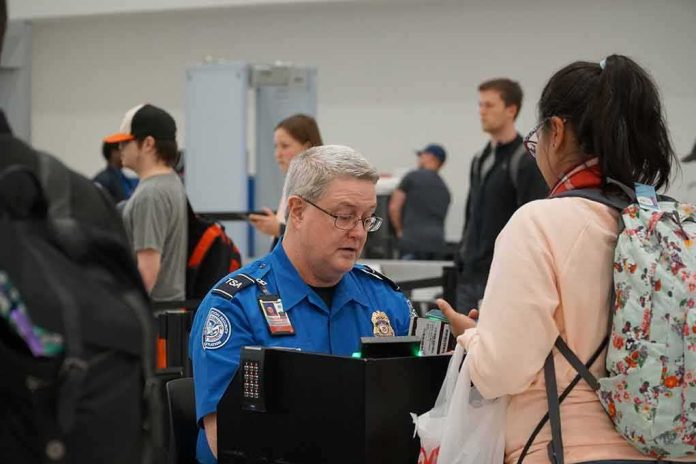
America’s airport security is quietly shifting from government hands to private companies, and the fight over what that means for your safety is just beginning.
Story Snapshot
- New TSA Gold+ program lets private firms run airport screening under federal oversight.
- Major airports like Tampa and Des Moines are among the first to opt in.
- The TSA union warns privatization could “jeopardize public safety” and cost federal jobs.
- Supporters say private control will keep lines moving even during government shutdowns.
How TSA Gold+ Changes Who Guards the Airport Door
The Transportation Security Administration’s Gold+ program hands day-to-day airport screening to private contractors while the agency steps back into a rules-and-oversight role. Under Gold+, a private company hires and manages the screeners and buys and maintains the screening machines that look for guns, explosives, and other banned items. Travelers still follow the same federal security rules, use the same lanes, and face the same bag checks they know today.
Tampa International Airport, Des Moines International Airport, and Charleston International Airport are among the first to sign up, making them test cases for this new model. Tampa’s shift is targeted for May 31, 2027, under a long-term contract where a single firm will run security operations for years. Local airport leaders frame the move as a way to modernize checkpoints and reduce risk from Washington’s budget meltdowns.
Why Union Leaders Call This A Threat To Public Safety
The American Federation of Government Employees, which represents about 47,000 transportation security officers, sees Gold+ as a direct hit on safety, jobs, and accountability. In a statement shared with national media, the union warned that letting private firms control both the workforce and the machines would “jeopardize public safety by removing TSA workers from the screening process.” Union leaders argue Congress built a federal system after 9/11 for a reason, and Gold+ walks back that choice.
The union also connects Gold+ to planned cuts in federal staffing. It points to a budget proposal that would trim thousands of transportation security officer positions as privatization expands, with many of those slots replaced by contractor jobs. From a conservative lens, this is the classic clash between a large federal workforce and a leaner private sector. The union’s safety claims deserve attention, but its clear job interest means taxpayers should also ask for hard performance data, not just alarm bells.
Supporters Say Efficiency And Resilience Are The Real Story
TSA officials and airport managers sell Gold+ as an upgrade, not a gamble. They describe it as the next step in the Screening Partnership Program that already uses private screeners at roughly 20 airports under federal standards. The pitch is simple: keep TSA in charge of rules, audits, and security requirements, but let local private partners handle hiring, scheduling, and technology so checkpoints can adapt faster than Washington’s slow budget cycle.
Tampa’s leadership points straight at this flexibility. During recent government shutdown chaos, federal screeners faced furloughs and pay uncertainty, and passengers faced long lines and flight stress. Under Gold+, Tampa argues privately employed screeners would keep working even if Congress deadlocks again, shielding travelers from political brinkmanship. That claim lines up with common sense conservative values: do not let partisan gridlock stop basic services. The open question is whether contractors can deliver the same or better security while doing it.
What Happens To The People In Blue Gloves
The people most immediately affected are the front-line screeners you see every trip. At Tampa, hundreds of TSA employees received emails and town hall invites explaining the coming change and a “right of first refusal” policy. That means the new private contractor must offer jobs to existing screeners before hiring outsiders, giving many a path to stay in place even as their employer changes.
Tampa International Airport will transition to private security screeners under the TSA Gold Plus program next May, making it one of the first major airports in the country to adopt the expanded program.🔽https://t.co/G6oxjzyPyn pic.twitter.com/2ViwdsHsf4
— ABC7 Sarasota (@mysuncoast) July 21, 2026
Still, union leaders warn that private jobs could mean lower pay, weaker benefits, and loss of collective bargaining rights compared with federal employment. For readers who value stable middle-class careers, that matters. But conservative common sense also asks a counter question: if a private firm can staff checkpoints well, obey federal rules, and keep security strong while controlling costs, should taxpayers be locked into federal payroll forever? The answer depends on proof, not promises.
What Travelers Will Actually Notice At The Checkpoint
For now, the average traveler’s experience will look almost identical. Reports across multiple airports stress that Gold+ does not change what you can pack, how you show ID, or whether you can use TSA PreCheck or touchless identity lanes. The same federal liquids rules, the same banned items list, and the same screening procedures still apply, because TSA standards remain in force no matter who signs the paychecks.
Behind the scenes, though, contractors gain control of technology choices. At Tampa, officials talk about using artificial intelligence and other tools to cut wait times and smooth passenger flow. Supporters promise faster lines and more reliable service. Skeptics note there is no independent evidence yet showing Gold+ sites catch more threats or move people faster than traditional TSA airports. Until that data exists, headlines about “modernization” are more marketing than math.
Security, Politics, And What Happens Next
The Gold+ fight sits inside a larger pattern: when Washington talks privatization, one side highlights speed and savings, the other warns about profit motives at the heart of public safety. With President Trump pushing a broader shift of airport screening into private hands and a smaller Transportation Security Administration, that debate is not going away. Airports can choose whether to join Gold+, so expect city-by-city battles as more facilities weigh the trade-offs.
From a conservative, common-sense view, the bottom line is clear. Let private partners take on more work if they can meet or beat federal security standards under tough oversight, but demand proof. Gold+ should live or die on real-world performance: detection rates, incident handling, and wait times at places like Tampa and Des Moines compared with similar federal airports. Until that evidence arrives, travelers will keep walking through the same metal detectors, while the quiet war over who owns them plays out above their heads.
Sources:
timesnownews.com, npr.org, fox9.com, youtube.com, federalnewsnetwork.com, aviationweek.com, nypost.com, linkedin.com