
Congress just moved to slam the door on any presidential self-pardon — and the text leaves little wiggle room.
Story Snapshot
- A Senate bill states a self-pardon is “void and of no effect.”
- A 1974 Justice Department opinion said a president cannot pardon himself.
- The Constitution Annotated says courts have never ruled on self-pardons.
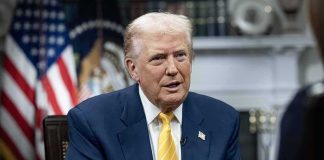
- President Trump has claimed he is allowed to do a self-pardon.
What the bill says and why it matters now
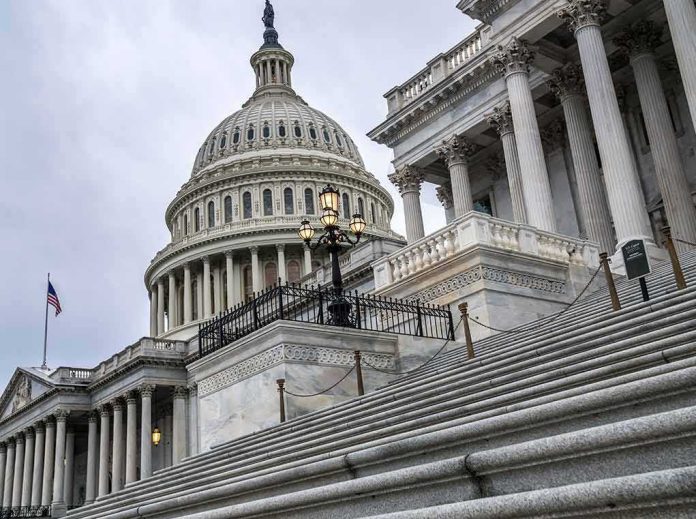
Senator Catherine Cortez Masto, joined by Senators Adam Schiff, Richard Blumenthal, and Mazie Hirono, introduced the Abuse of the Pardon Prevention Act of 2026. The bill declares any presidential self-pardon “void and of no effect,” and it says such a document would not block courts from hearing a case or stop investigators from doing their jobs. The text targets a narrow but explosive question: can a president erase his own federal crimes with a stroke of a pen?
The proposal answers with a blunt no. It aims to cut off a courtroom fight before it starts by telling judges what a self-pardon does legally: nothing. That approach signals Congress wants clarity before a crisis, not during one. Supporters point to a simple rule most Americans learn early. No one should sit as judge in his own case. That idea, they argue, should not fail the moment the defendant sits in the Oval Office.
The legal backbone Congress leans on
The Department of Justice’s Office of Legal Counsel weighed this exact issue during Watergate. In 1974, it advised that a president cannot pardon himself because no person can be a judge in his own case. The memo is short but direct and has guided executive branch lawyers for decades. It is not a court ruling. It still sets a clear internal rule inside the government that the self-pardon crosses a constitutional line.
The Constitution’s text grants the pardon power for federal offenses “except in cases of impeachment.” That carveout already proves the power is not limitless. The Constitution Annotated, Congress’s own legal guide, says no court has decided the self-pardon question. That cuts two ways. It keeps the field open for Congress to shape expectations. It also warns that only the courts can finally settle the matter when a case lands on their docket.
The strongest pushback and how it stacks up
President Trump has said he is allowed to do a self-pardon and called the pardon power the most powerful tool a president has. That view reflects a common argument: the Constitution lists two limits on pardons, so the rest should stand. The counter is tight and practical. A self-pardon would merge suspect, decision-maker, and beneficiary. That blend clashes with the rule of law and the design of checks and balances that guard liberty.
Critics will argue the pardon power comes only from the Constitution and Congress cannot shrink it by statute. Courts have described the power in sweeping terms. That is a serious hurdle for any limit Congress writes. The bill answers by framing its rule not as shrinking a valid pardon, but as defining a non-pardon. If a self-pardon sits outside the true power, then saying it is “void” does not reduce anything. It names a nullity as a nullity.
How this would work in the real world
Picture the test case. A president signs a self-pardon. A grand jury later indicts him for a federal offense. His lawyers move to dismiss, waving the parchment. Under the bill, the judge denies the motion because the self-pardon has no legal effect. The case continues. Appeals follow. The Supreme Court, at last, answers the question the country has argued about since Nixon. Until that day, the Department of Justice policy and this bill point to the same bright line.
🇺🇸 House Democrats are pushing legislation that would explicitly prevent Donald Trump and future presidents from pardoning themselves.
The proposal, known as the Abuse of the Pardon Prevention Act, would make presidential self-pardons void and introduce further oversight of the… pic.twitter.com/zBjRNvIgkB
— CryptoSavingExpert ® (@CryptoSavingExp) November 21, 2026
Conservative common sense favors rules that prevent self-dealing and keep the courts open. The framers built impeachment to check lawless presidents and kept criminal law on a separate track. A self-pardon would flip that order. It would let one person erase his own federal exposure without trial or verdict. The better path is clean and even-handed. If a president faces charges, let the evidence be heard and let the same rules apply to all citizens.
Sources:
twitchy.com, constitution.congress.gov, docs.house.gov, economictimes.indiatimes.com