
After 84 years, a World War II prisoner of war is finally coming home with a name, a story, and science to prove it.
Story Snapshot
- Defense POW/MIA Accounting Agency identified Pfc. Bernard F. Sweet and arranged his return.
- Researchers tied Sweet to Common Grave 701 and verified identity through dental, skeletal, and DNA analysis.
- The flight home closes a case that began with wartime burials at Cabanatuan POW camp in the Philippines.
- Families across the nation are seeing similar long-delayed homecomings as labs solve WWII mysteries.
A Name Restored After Eight Decades
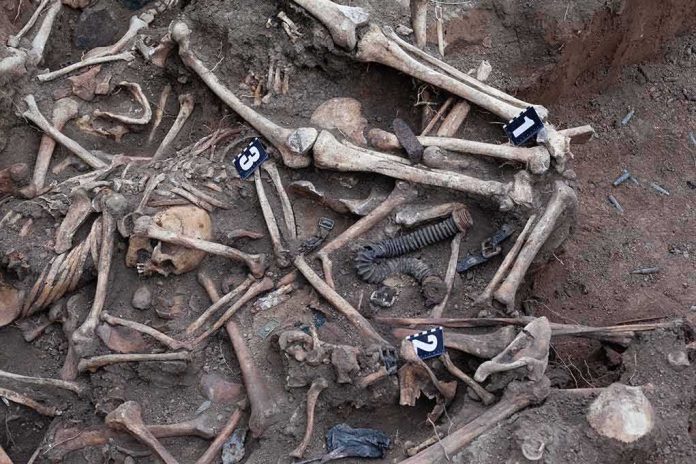
The Army notified the family that Private First Class Bernard Folteen Sweet, who died in Japanese captivity in 1942, has been accounted for and is returning to the United States for burial. Defense POW/MIA Accounting Agency records state that investigators linked him to remains recovered from the Cabanatuan cemetery’s Common Grave 701, a site long associated with American prisoners of war who died that year. The return follows years of case work under the agency’s Cabanatuan Project and newer laboratory methods that confirm identity with high confidence.
Officials tracked the case across three eras. Wartime burials created a paper trail. Postwar recovery by the American Graves Registration Service disinterred the grave and moved remains to a United States military cemetery in Manila. Modern teams then disinterred, separated, and analyzed the commingled remains in 2020, seeking matches to named individuals from the camp rolls. This slow, careful path is typical for complex World War II cases where records survive but bones from multiple people share one grave.
The Evidence Behind The Match
Analysts combined several lines of proof. Forensic dentists compared teeth and jaw features with service records. Anthropologists studied bones for age, stature, and unique traits. DNA specialists compared genetic material from the remains to family reference samples to test kinship. Defense POW/MIA Accounting Agency guidance emphasizes convergence: no single test carries the day; the goal is agreement across documents, recovery context, lab findings, and DNA so that reasonable alternatives are ruled out. That cross-checking standard protects against error while giving families firm answers.
The final step is administrative but vital. Once evidence aligns, the agency issues an identification announcement and coordinates a dignified transfer and burial with the next of kin. The Connecticut landing described by local press reflects that cadence: a lab determination, an official accounting, and then a homecoming with honors. The broader repatriation effort has returned hundreds of World War II dead in recent years, as technology and archive work unlock long-stalled cases and keep the promise that service members will not be left behind.
What We Know, What We Do Not Need
Some readers ask for the full laboratory file, chain-of-custody logs, or the raw DNA markers before they will trust the conclusion. Those documents exist inside government case systems but are not always published with announcements. That gap does not undercut the core fact that the agency publicly accounted for Sweet, tied to a named grave context, and backed by multi-method analysis. Skepticism without a specific competing record or expert rebuttal is not a counter-case; it is a request for more paper.
The Japanese ship sank off the coast of the Philippines in 1944 while carrying hundreds of American POWs. Recovering their remains has been impossible—until now. https://t.co/4YbmbDXjYJ via @WSJ #POW #WWII #USA 🦅🇺🇸
— Matthew Lance 🇺🇸🦅🐘🐙🔴 (@LlMatthew) July 30, 2026
Common sense and conservative values press for two things at once: rigor and respect. Demand process that resists fads and shortcuts, and honor the result when the process clears the bar. Here, the record shows a conservative process—archival mapping, physical evidence, and DNA reconciliation—ending in a named identification and a family burial. That is the right balance. It preserves truth, gives closure, and treats sacrifice as more than a headline or a hashtag.
Why These Homecomings Are Rising Now
Advances in DNA extraction and kinship statistics, combined with refined dental and skeletal methods, now solve cases that once seemed impossible. Laboratories can separate remains that were mixed in one coffin, build profiles from tiny bone fragments, and match them to relatives who never met the fallen. At the same time, historians reassemble unit records and burial maps to guide the science. The result is what we see today: names restored, flags folded, and families able at last to lay their own to rest.
Sources:
yahoo.com, bgindependentmedia.org, idahostatesman.com, propublica.org, youtube.com