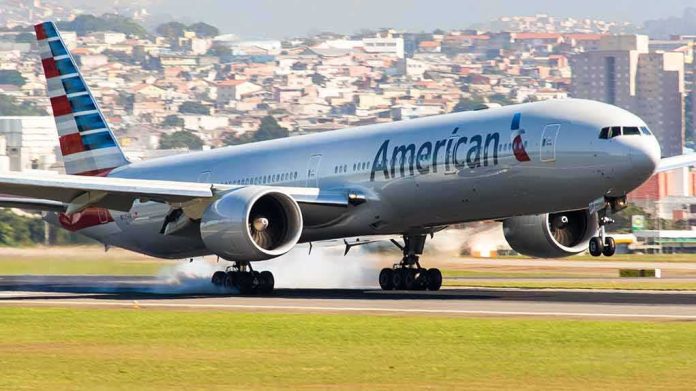
Flames and smoke burst from an American Airlines jet engine after a bird strike forced a quick turnback to Myrtle Beach.
Story Snapshot
- The flight was headed to Charlotte when the crew reported a bird strike shortly after takeoff.
- The plane returned safely to Myrtle Beach International Airport and no injuries were reported.
- American Airlines removed the aircraft from service for inspection after landing.
- Reporters and air traffic control recorded smoke, debris, and a nearby pilot’s warning about the left engine.
The Return to Myrtle Beach
American Airlines Flight 1760 took off from Myrtle Beach on Monday morning and turned back after the crew reported an engine problem tied to a bird strike. Airport officials said the aircraft landed safely, taxied to the gate on its own, and let passengers deplane normally. American Airlines said it took the plane out of service for maintenance inspection, while the Federal Aviation Administration said it would investigate the event.
The public record now points to a familiar aviation pattern. Bird strikes happen often enough that airlines train for them, and the usual response is caution, not panic. In this case, the airplane came home under control, and the first official statements focused on safety, inspection, and a routine return to service only after maintenance cleared the aircraft.
What Witnesses Saw
Video and radio traffic made the incident look more dramatic than the outcome. CNN reported flames erupting from one engine, while another pilot told air traffic control that he saw smoke from the left engine after the airplane hit birds. CNN also reported that ground crews found a significant amount of bird debris and feathers on the runway during inspection. ABC News later reported that no fire or leaks were found once the plane landed.
That gap matters. The visuals showed a frightening engine event, but the outcome stayed controlled. Passengers heard a loud bang and rumbling, yet the flight did not break apart, crash, or injure anyone on board. The important fact is not just that the engine looked bad. It is that the crew still brought the jet back safely and the airport handled the return without emergency injury reports.
Why Bird Strikes Still Shake People
Bird strikes remain a basic but serious aviation hazard because they can hit at the worst possible moment, usually takeoff or landing. Most end with a precautionary return and an inspection, which is exactly what happened here. The sharp sound, the smoke, and the short timeline can make a routine safety event feel like a disaster unfolding in real time, especially when a clip spreads before the official explanation catches up.
American Airlines Declares Mayday And Returns To Myrtle Beach As Flames Shoot From Aircraft Engine Over Bird Strike #Travel #traveling #travelblogger #vacationmode https://t.co/KrDSMDmaEw
— TheTravel_com (@TheTravel_com_) August 11, 2026
The unfinished part of this story is the technical one. Public reporting has not yet spelled out the exact damage inside the engine, and the early statements do not say whether any parts were bent, burned, or replaced. That is why the maintenance inspection matters so much. It will show whether the bird strike caused only a scare, or whether it left behind deeper mechanical damage that passengers never saw.
Sources:
facebook.com, abcnews.com, theguardian.com, nypost.com, people.com