Someone turned the World War II Memorial into a soap bath and a billboard, and officials say they plan to find who did it.
Story Snapshot
- Park Police are investigating vandalism at the World War II Memorial in Washington, D.C.
- Pink spray paint read “Clean hands, Dirty $,” and the fountain overflowed with bubbles.
- The Interior Department condemned the act and closed areas for cleanup.
- This fits a years-long pattern of repeat attacks on National Mall sites.
What Happened On The Mall And Why It Matters
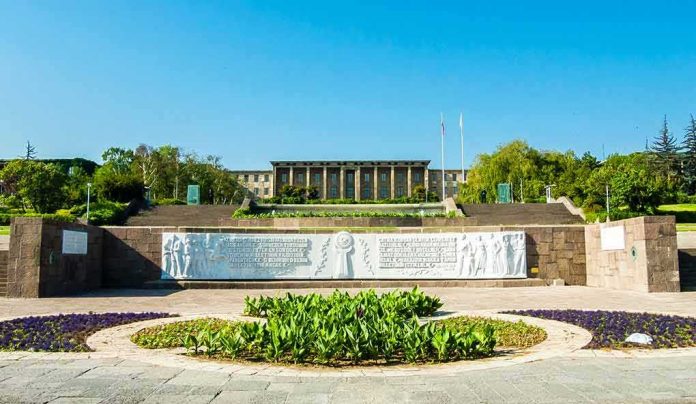
U.S. Park Police said the World War II Memorial on the National Mall was vandalized. Crews found pink paint with the words “Clean hands, Dirty $” across a stone surface facing Constitution Avenue. The memorial’s fountain was also frothing with bubbles. The Department of the Interior called it a disgrace, and officials taped off parts of the site while investigators worked. The agency said it will pursue charges once it identifies a suspect, a standard step for damage to federal property.
🚨 🇺🇸 DOJ ARRESTS SUSPECT OVER WWII MEMORIAL VANDALISM AS TWO FEDERAL FELONY CHARGES FOLLOW
Federal prosecutors say Melissa L. Farris was arrested after the World War II Memorial in Washington was vandalized on Aug. 13. U.S. Attorney Jeanine Pirro announced charges tied to…
— Naeem Aslam (@NaeemAslam23) August 14, 2026
The reaction landed fast because the target matters. The memorial honors more than 16 million who served, and over 400,000 who died. That is why a few words in spray paint and a sudsy prank set off alarms. The point is not only what was written. It is where it was written. Officials treat damage at this site as an attack on shared memory, not just on stone. That frame drives strong language and quick action.
A Repeat Problem For America’s Front Lawn
This incident fits a pattern. Vandalism on the National Mall has spiked during tense moments and quiet ones alike. In 2017, the National Park Service documented graffiti at the World War II Memorial along with damage at the Lincoln and Washington memorials. Crews moved fast to remove markings and protect surfaces. The agency’s own records show these are not one-off shocks, but repeat headaches that pull staff and money from other needs.
During 2020 unrest, vandals defaced multiple Mall memorials in one weekend. The World War II Memorial took hits alongside the Lincoln Memorial and others. Park officials had to mobilize monument preservation teams and bring in special cleaning methods to avoid etching or smearing paint into porous stone. The scope showed how quickly a symbol-rich area can become a target map for agitators and opportunists.
What Officials Are Doing Now
Investigators will review security footage, eyewitness reports, and the paint’s path. They will look for matching paint tags at other sites and track retail sales if the make and color are distinct. Crews will test small patches before full cleaning to avoid surface burn or color ghosting. Park Police have handled similar cases, which helps them choose the right solvents and methods. The Interior Department’s public stance aims to deter copycats while the case moves forward.
World War II Memorial Vandalized with Spray Paint and Soap
The National World War II Memorial on the National Mall in Washington, D.C., was vandalized on Thursday, August 13, 2026.
Spray paint was used on parts of the memorial, with the message “Clean hands Dirty $” written… pic.twitter.com/FdtKUWQJIn
— News Picks Daily (@NewsPicksDaily) August 14, 2026
Calls for stronger deterrence will follow. Common sense and conservative values align here: protect national symbols with certainty of consequence. That means more visible patrols at peak hours, rapid barriers when incidents start, and fast, publicized charges when suspects are caught. Critics sometimes claim attention only glorifies the act. The better answer is swift cleanup and clear penalties. The goal is to make the stunt feel pointless and costly, not famous.
Respect, Resilience, And The Cost Of Cleanup
Every defacement costs real dollars and diverts skilled staff from long-term care. It also risks lasting scars. A single harsh scrub can bite into stone or bronze. That is why preservation teams use low-pressure washes, gels, and poultices instead of quick blasts. The process takes time and care. Taxpayers foot the bill. Veterans’ groups have said they support peaceful debate but condemn attacks on the memorials that hold the names, dates, and ideals we all share.
The Bottom Line
The World War II Memorial will be cleaned and reopened. The message will fade; the memory will not. Officials are right to call this an insult and to chase the person behind it. Free speech thrives in America without a spray can on sacred ground. The fix is simple but firm: restore the site, tighten the watch, and make sure the next person who thinks about tagging a war memorial understands that some lines are not to be crossed.
Sources:
wjla.com, vfw.org, wtop.com, foxnews.com, fox5dc.com