

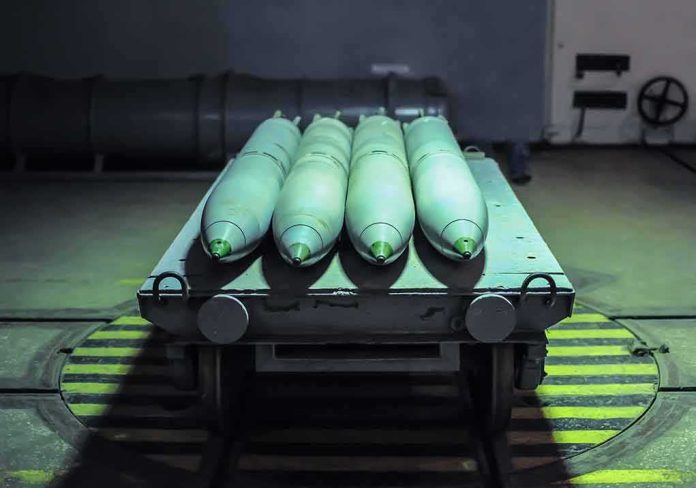
A fire flashed in the powder room, a blast followed, and south of Rome held its breath.
Story Snapshot
- An explosion struck the KNDS Ammo Italy plant in Colleferro on August 13, 2026.
- No injuries were reported by local officials and early wire services.
- Investigators focused on the powder-compaction area as the likely origin.
- Prosecutors opened an inquiry; the company said cause details were still under review.
What Happened In Colleferro And What We Know Now
Italian emergency crews converged on the KNDS Ammo Italy factory in Colleferro after a fire and explosion on August 13, 2026. The facility sits southeast of Rome. Early reports agreed on a clear sequence: fire first, then a blast inside the production area. Local leaders stressed evacuations and public safety while crews secured the site. Authorities reported no injuries linked to the event in the initial hours, and plant personnel were accounted for, according to multiple outlets that quoted officials on the scene.
Plant owner KNDS said teams on site were assessing the scene and reviewing the chain of events. The company said it was too early to confirm what sparked the incident or the precise order of failures, a standard position during the first 24 to 48 hours of a high-hazard plant response. Regional president Francesco Rocca underlined a clear priority: keep residents safe and give firefighters and police the space to work. That approach fits routine major-incident playbooks where hazard inventories can change by the minute.
Where The Blast Likely Started Inside The Plant
Multiple reports pointed to the powder-pressing, also called powder-compaction, department as the likely origin. That step packs energetic material into shape under pressure. The process concentrates chemical energy and can create heat and friction. Both hazards can turn a small spark into a flash fire. In many past cases worldwide, compaction and mixing areas rank among the highest-risk spaces because air, dust, pressure, and ignition sources can briefly overlap if controls fail or drift out of range.
The Small Arms Survey’s handbook on unplanned explosions at munitions sites shows a pattern that matches what responders often see after events like this. Fire and blast often start where energetic materials get shaped, heated, or stressed. The triggers vary. Static, tool strike, poor grounding, off-spec powder, or a ventilation fault can each start a rapid burn that transitions to an explosion in seconds if confinement builds pressure. Safety engineering aims to break that chain with spacing, venting, bonding, and strict housekeeping.
Why No Casualties May Suggest Safety Systems Worked
The reports of zero injuries hint that alarms, muster points, and shelter-in-place options worked as designed. Media cited either evacuations or workers sheltered in secure areas during the response window. That aligns with good practice for explosives facilities, where time, distance, and shielding are the three lifesavers. In several serious events cataloged by the European Commission’s accident database, timely evacuation and engineered barriers often explain why a blast that wrecks a room does not take lives across a site.
Italian prosecutors in Velletri opened an inquiry, as they should after any explosion tied to defense production. Early stories referenced an arson-related offense code in the filing language. That legal step preserves options while investigators test residue, map damage, and pull maintenance logs. Several outlets, however, reported that officials had not presented public evidence of sabotage at that stage, and the working lens stayed on an industrial accident pending results. One caveat applies: final cause findings often take weeks, not days.
How This Fits The Global Risk Picture For Energetic Materials
Energetic-materials manufacturing carries a repeat theme: unplanned explosions happen most often during processing and handling, not storage alone. The United States Chemical Safety Board’s updates on explosives incidents emphasize the same core lessons: control dust, control static, verify procedures, and detect unsafe drift before heat or pressure builds. A classic defense-research review of single-base propellants adds a technical edge case. Under certain conditions, burning can transition to detonation, which makes even a small fire unforgiving if confinement grows.
A fire triggered a huge explosion at the KNDS Ammo Italy ammunition factory in Colleferro, near Rome.
Officials said no injuries were reported. Now the question is how a munitions plant ended up sending a mushroom cloud over the city. pic.twitter.com/hTRvbQIfPV
— Voyte (@voyteapp) August 15, 2026
Supply-chain watchers flagged the plant’s role in ammunition lines tied to Ukraine. That matters for timelines and output, but it should not overrun the verified facts on the ground. The priority on day one remains worker safety, site security, and origin analysis. Claims that the facility was “wiped out” or that a covert attack occurred need evidence that, at the time of these reports, officials had not shared. A calm, fact-first approach honors both public safety and common sense.
Sources:
planet-today.com, washingtonpost.com, albawaba.com, abcnews.com, euronews.com, bloomberg.com, kyivindependent.com, yahoo.com, wsws.org, apps.dtic.mil