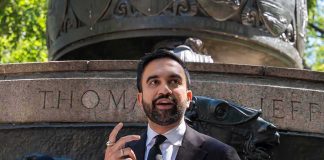

Abdul El-Sayed says he is both African and Arab, and he wants Black voters in Michigan to believe it matters to them.
Story Snapshot
- Abdul El-Sayed, son of Egyptian immigrants, won Michigan’s Democratic Senate primary after months of trying to win over Black voters.
- Polling in July showed El-Sayed with just 21% support among Black voters, while rival Haley Stevens held 67%.
- El-Sayed has publicly said his African heritage is “real,” tying it to his family’s roots in Egypt.
- Critics say his outreach focused more on what his own community owes Black voters than on real policy offers.
A Candidate Leans Into Identity To Close A Gap
Abdul El-Sayed grew up in Rochester Hills, a Detroit suburb, the son of Egyptian immigrants Mohamed and his wife. He went to the University of Michigan, then Columbia for medical school, then Oxford as a Rhodes scholar. That resume built him a strong following among younger, progressive voters. It did not translate into trust from Black voters in Detroit, a group that makes up roughly a quarter of Michigan’s Democratic electorate.
He responded by leaning harder into his ethnic story. “My Arab heritage is real, as is my African heritage,” El-Sayed told The Grio, framing his identity as a bridge between two communities. He pointed to his years working in Detroit public health as proof his commitment predates the campaign. The message: he is not new to Black Detroit, he came home to serve it.
That framing raises an obvious question for anyone paying attention to how identity politics actually plays out. Is calling yourself African, because your family comes from Egypt, the same thing as sharing lived experience with Black Americans in Detroit? Voters get to decide that for themselves, and Michigan’s Black primary voters gave a pretty clear answer at the ballot box.
The Numbers Tell A Harder Story Than The Speeches
The Hill reported that Black primary voters backed Haley Stevens over El-Sayed by wide margins, with July polling showing him at just 21% support among Black voters compared to Stevens’ 67%. Stevens led him by eight points in districts where Black residents made up more than 15% of the population. Identity talk alone did not close that gap before the primary vote.
A WDET report captured a subtler problem with his pitch. Rather than telling Black voters what he would deliver, El-Sayed’s message centered on what his own Arab and Muslim community owed Black residents, including calling out “economic racism” by Arab business owners in Black neighborhoods. That is a notably different message than a typical campaign promise. It reads more like an apology tour than a policy platform, and some voters likely noticed the difference.
What Research Says About Racial Appeals In Campaigns
Academic studies on racial messaging show mixed results for candidates who lean on identity. One peer-reviewed study found that positive racial appeals and endorsements both increase Black voters’ willingness to back a candidate, with little difference between the two approaches. Other research on Kamala Harris found that attacks questioning her racial identity barely moved support among Black voters, and in some cases increased it.
That research suggests El-Sayed’s heritage claims were unlikely to backfire simply because they invited scrutiny. The bigger risk was substance, not sincerity. Voters seem to reward candidates who connect identity to concrete action, not just shared ancestry or rhetorical solidarity. El-Sayed’s public health record in Detroit gave him some of that substance, but the primary results suggest it was not enough for a majority of Black voters.
Michigan Democrats are scrambling to rebuild a fractured coalition following a contentious Senate primary race.
Meanwhile, Republican candidate Mike Rogers and his campaign are actively working to peel away disaffected voters—particularly targeting Jewish and Black communities… https://t.co/OUHpDbf9dY pic.twitter.com/tzfC9ycTc7
— VigilanzPunk (@blockapunk) August 16, 2026
El-Sayed won the primary anyway, powered by strong turnout elsewhere in the state. Now he faces the harder task of uniting a party still split along these same lines heading into November. Detroit News reported he also faces resistance tied to his early role in the 2024 “uncommitted” movement against President Biden over the Israel-Hamas war, a stance some Black voters believe cost Kamala Harris turnout and enthusiasm [see note]. Whether calling himself African wins back skeptical voters or simply reminds them of the gap between his story and their daily reality remains an open question Michigan will answer in the general election.
Sources:
twitchy.com, thehill.com, detroitnews.com, reddit.com, youtube.com, circle.tufts.edu