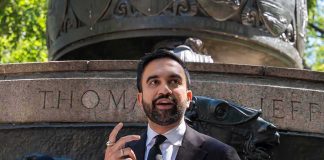
A man who says he hunted terrorists for America now sits in a U.S. detention cell, fighting deportation to a place a judge already called too dangerous.
Story Snapshot
- Immigration and Customs Enforcement detained Blerim Skoro in early August during a routine check-in.
- A 2022 court ruling blocked his removal to Kosovo under the Convention Against Torture but did not give him legal status.
- The law allows deferral of removal to one country while keeping a final deportation order active.
- Skoro says he aided U.S. agencies against terrorists; the government has not publicly confirmed that.
What ICE Did And Why It Matters
Immigration and Customs Enforcement detained Blerim Skoro in early August 2026 at the Elizabeth Detention Center after a routine appointment, according to contemporaneous reports. His lawyers say the agency moved toward deportation without first getting a judge’s permission, which they argue was required by a prior protection order. The agency has not publicly explained its legal steps. The detention put a complex case back into high gear and raised sharp questions about law, loyalty, and risk.
Public reports describe Skoro as a Staten Island resident with a criminal past who was deported in 2007, returned illegally after he says his cover was blown, and has lived in legal limbo since. That record gives the government a baseline claim that he remains removable. Yet the timing of this arrest—years after a judge blocked his removal to Kosovo—has fueled claims that enforcement is ignoring the danger he could face if sent back there. The facts sit at the junction of national security and immigration procedure.
What The 2022 Ruling Actually Did
An immigration court in 2022 granted Skoro deferral of removal under the Convention Against Torture and barred his deportation to Kosovo because of the risk of torture or death there, but it did not grant him lawful residency. Deferral protects against removal to a specific country but leaves the final removal order in place and can be revisited if conditions change. That structure explains how detention can resume even when direct return to one country remains blocked. The legal nuance here is not a loophole; it is the rule.
Deferral of removal is narrow and technical by design. It prevents the government from sending a person to a country where torture is more likely than not. It does not erase past convictions, unlawful entries, or the final order. It does not create a path to citizenship. It can be terminated if the risk subsides or if new facts emerge. That is why advocacy headlines often clash with enforcement actions. Both can be true at once: protection from one destination and continued removability in general.
The Spy Claims, The Silence, And The Stakes
Skoro says he aided the Federal Bureau of Investigation and the Central Intelligence Agency after the September 11 attacks, received training, infiltrated terrorist networks, and helped stop plots before his cover was blown. These are claims, not official confirmations. Immigration and Customs Enforcement and the Central Intelligence Agency did not answer questions in the visible reporting. The lack of an on-record rebuttal leaves a vacuum that his account fills by default. That puts public sympathy on one side and process on the other.
🇺🇸 A man who says he risked his life infiltrating al Qaeda for the U.S. is now sitting in an ICE cell.
Blerim Skoro, a Staten Island cab driver and former informant, was detained earlier this month during an immigration check in New Jersey.
He now faces deportation to Kosovo,… pic.twitter.com/ssb7GlhrBa
— Mario Nawfal (@MarioNawfal) August 22, 2026
American conservative values pull in two directions here. The first is law and order: final orders must mean something, and unlawful reentry has consequences. The second is honoring service and keeping promises to people who risked their lives to help U.S. interests. On the facts available, the 2022 judge found a real risk in Kosovo. That weighs heavily. The clean, common-sense path is simple: enforce the law while obeying the court’s bar, and do not send him where a judge said torture is likely.
What Comes Next And What To Watch
The immediate fight lands in federal court, where Skoro’s team has sought to stop removal and test whether Immigration and Customs Enforcement needed judicial authorization before detaining him in 2026. The government can try to remove him to a safe third country, but that raises practical, diplomatic, and human rights hurdles. The core document to watch is the 2022 deferral order’s text, which sets boundaries on what the agency can do. The next filings will show whether process, not headlines, drives the outcome.
Sources:
reddit.com, cbsnews.com, jpost.com, orrick.com, aa.com.tr, youtube.com, facebook.com