

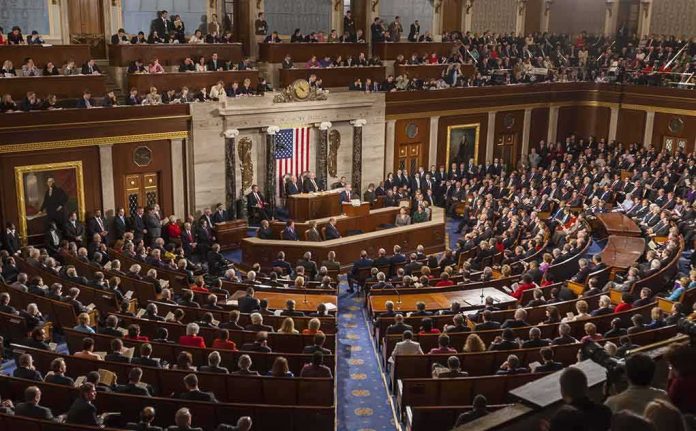
Mike Johnson says White House staffers told him he is Trump’s “co-president,” and he is acting like it.
Story Snapshot
- Johnson says Trump aides call him a “co-president,” citing constant talks with the president.
- Reports show Johnson’s frequent presence at the White House and deep involvement in strategy.
- The Speaker’s access is notable, but the Constitution gives no such role as “co-president”.
- The label signals tight alignment between the House and the White House on policy and optics.
Johnson’s Claim And The Access Behind It
House Speaker Mike Johnson told NOTUS that members of President Trump’s staff have described him as a “co-president,” linking the comment to his constant contact with the president. Johnson said the two speak “all the time,” a rhythm he presents as a working partnership on policy and politics. This is not a stray boast. Over recent months, he has publicly referenced briefings from presidential staff and long sit-downs with Trump at the White House, underscoring unusual face time for a legislative leader.
Johnson’s orbit around the West Wing has been visible. A New York Times report described him moving with Trump and Vice President Vance inside the White House in early 2025, in a way that drew comparisons to a staff role rather than a separate branch leader. Johnson has also framed himself as a conduit between House Republicans and the administration, including relaying caucus positions directly to White House aides and securing swift feedback on sticky agenda items.
What “Co-President” Really Signals
America has one president at a time. The Constitution vests executive power in the presidency alone. No statute, memorandum, or tradition creates a “co-president.” That matters because words shape expectations. The phrase here functions as branding for deep access and influence, not a claim of shared executive power. Speakers and presidents from the same party often coordinate intensely on laws and messaging. That partnership can look like co-governance without altering the legal chain of command.
Close ties carry real consequences. Tight alignment can speed budgets, nominations, and priority bills. It also raises clear lines of accountability. Voters know whom to credit or blame when the White House and the House move in lockstep. From a conservative lens, that clarity serves limited government: agencies move when elected leaders agree, and stall when they do not. The public can then judge results at the ballot box, which is how our system is supposed to work.
How Johnson Converts Access Into Leverage
Johnson appears to use proximity to shape outcomes in both directions. He has brought House Republican consensus straight into White House deliberations, at times pushing for tactical shifts on linked bills and timelines. Reports have also shown Republicans relying on him to stabilize choppy moments, with senior staff pointing to his role in calming cross-pressures and hastening decisions inside the building. Access lets a Speaker test language, tweak asks, and cut delays before fights spill onto the floor.
Effective speakers turn conversation into concrete wins. Johnson’s frequent calls with Trump, and recurring briefings from presidential staff, suggest a standing lane for rapid coordination on emergencies, foreign crises, and domestic standoffs. That does not make Johnson a second chief executive. It makes him a very present negotiating partner who can pre-clear options, deliver votes, and warn when a plan will falter. That is the kind of friction-saving role conservative governance often values: fewer showdowns, more results, and a cleaner chain of responsibility.
Optics, Power, And The Speaker’s Office
Media narratives thrive on symbols. Video of Johnson shadowing the president and vice president inside the White House feeds the “co-president” story because it looks like executive work, not legislative independence. Some scholars argue this style risks shrinking the Speaker’s institutional muscle by tying it too closely to the president’s agenda. Others counter that when the branches agree on aims, integration speeds delivery without ceding any formal power. Both points can be true depending on outcomes.
Mike Johnson says some of Trump's staff have told him "'it’s really like you’re co-president' . . . because the president and I speak all the time.” https://t.co/PBJacwu50A
— Tim Grieve (@timgrieve) August 24, 2026
History offers a simpler filter. Speakers from the majority party often sit in the room where it happens. They attend high-level meetings, coordinate calendars, and shape bill text before public rollouts. That level of cooperation is ordinary under unified government. What is unusual here is the blunt “co-president” tag and the pace of contact Johnson himself describes. The label may be over the top, but the access behind it looks real and consequential for how fast the White House and House move together.
Sources:
mediaite.com, punchbowl.news, cbsnews.com, centraloregondaily.com, x.com, independent.co.uk, nytimes.com, speaker.gov, youtube.com, abcnews.com