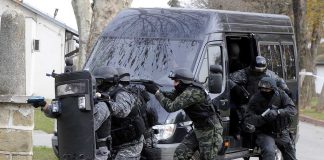


A shuttle bus slammed into a wall outside Newark Liberty’s Terminal B before sunrise, sending 13 people to the hospital and snapping the airport awake.
Story Snapshot
- Thirteen people were injured; three suffered serious injuries.
- The crash happened outside Terminal B on the departures roadway in the early morning.
- Port Authority police and emergency crews secured the scene and moved patients to hospitals.
- Investigators will review driver actions, bus condition, and airport road design.
Early-Morning Crash Jolts Terminal B
Airport officials and local outlets reported the bus hit a fixed wall on the departures level by Terminal B, injuring riders and crew in the pre-dawn rush. ABC7 said the impact happened around 3:45 a.m., and counted 13 hurt with three seriously injured, though none were reported in life-threatening condition. Fox 5 New York linked the scene to the Level 3 departures roadway and confirmed the 13-injury total based on Port Authority information. Patients went to area hospitals for treatment and evaluation.
News 12 New Jersey said Port Authority police, airport operations, and emergency medical teams responded quickly and moved people off the bus for triage. Crews closed lanes near the scene to let ambulances through and keep crowds back. Airport staff guided early travelers to other entry points while investigators documented debris and impact marks. Traffic rippled through the terminal loop for much of the morning, but flights continued as ground teams worked around the crash perimeter.
What Investigators Will Scrutinize Next
Investigators will start with the basics: who drove, how fast, what the driver saw, and what failed. They will pull maintenance logs, duty rosters, and driver hours to check for fatigue or missed fixes. The Federal Transit Administration’s accident practices call for a close look at vehicle condition, braking systems, and camera data when available. They also study the curb geometry, barriers, lighting, and lane markings to see whether the road design played a role in the run-up to impact.
Airports create a special kind of ground hazard. Ramps stack, merge points are tight, and buses weave between private cars, ride-shares, and delivery vans. Small errors can snowball in seconds. Prior cases show injury counts often shift in the first hours as doctors reassess patients and agencies sync numbers across reports. That churn is normal in a fast-moving, access-controlled zone. The key signal here remains stable so far: a single-bus impact at Terminal B with 13 injured, three of them serious.
Safety Questions That Matter Beyond One Crash
Airport bus fleets handle heavy loads every day, often before sunrise and after midnight. That makes training, rest rules, and preventive maintenance non-negotiable. Conservative sense says the basics still work best: alert drivers, sound equipment, clear lanes, and firm accountability when rules slip. If the probe points to human error, retraining and duty-time checks should follow. If hardware failed, parts, inspections, or even vendor choices may need an upgrade path with real timelines and cost controls.
BREAKING Newark Airport rocked by early morning shuttle bus crash leaving at least 13 injured including three seriously as road closures trigger widespread disruption and more than a dozen flight delays#NYI pic.twitter.com/xta8BfNcQT
— NewYork-Insight (@NewYork_Insight) August 31, 2026
Some readers will ask whether the bus type, powertrain, or fleet age mattered. Investigators will separate speculation from fact and track root causes to fixes, not press lines. Public agencies owe riders transparency, not jargon, when they publish findings. When they share the “what” and the “why,” the “how we fix it” should come attached. That means clearer signs where buses queue, calmer merge zones at Terminal B, and better alerts to steer early travelers away from closures the next time a lane shuts down.
Sources:
foxnews.com, newjersey.news12.com, abc7ny.com, nj.com