

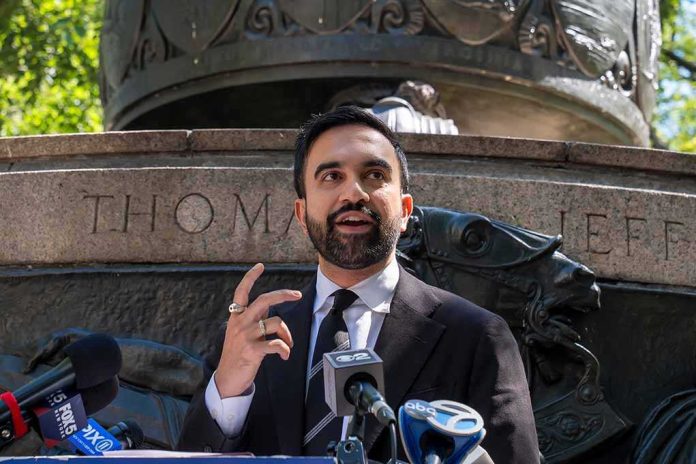
One short sentence on a debate stage forced a clean line between grief, politics, and character.
Story Snapshot
- Cait Conley publicly denounced Mayor Zohran Mamdani’s Oct. 7 statement after Rep. Mike Lawler pressed her during their NY-17 debate.
- Mamdani’s Oct. 7 statement condemned Hamas but focused heavily on Israel’s military response in Gaza, drawing swift backlash from Jewish groups and leaders.
- Mamdani stood by his wording and rejected calls to apologize, saying criticism of Israel is not antisemitic.
- The dispute sharpened a core test: how candidates balance mourning Jewish victims with views on the Gaza war.
Why Conley’s Five Words Landed With Weight
Rep. Mike Lawler confronted Cait Conley on stage and demanded a clear answer about Mayor Zohran Mamdani’s Oct. 7 post. Conley replied, “Yes, I do denounce Mamdani’s statement.” That brief line mattered because earlier exchanges left room for doubt about whether she would name and reject that specific post. She had condemned antisemitism in general, but not that statement by name. The debate closed that loop and put a pin in a charged local argument.
The exchange hit a nerve because the audience already knew what came next. If Conley hedged, Lawler would turn that into a trust question. If she condemned it, progressives might bristle. Voters saw a choice under bright lights. Her answer steered toward the district’s center of gravity: respect for Jewish grief on the anniversary of Oct. 7 and clarity about rhetoric that communities said felt off on that day of mourning.
What Mamdani Wrote—and Why It Sparked Backlash
Mayor Zohran Mamdani’s Oct. 7 statement called Hamas’s attack “horrific war crimes” and said the date was “profoundly painful.” The bulk of the post, though, condemned Israel’s response in Gaza, which he labeled a “devastating, ongoing genocide.” Jewish leaders and groups said that focus displaced the victims of the massacre on a day set aside to mourn them. Protests followed, and news cameras captured the anger. The mayor’s office initially declined comment amid the blowback.
Mamdani later defended his words and rejected calls to apologize. He argued that criticism of the Israeli government is not the same as hatred of Jews. He also said antisemitic acts would not be tolerated. That stance did not cool the debate. Critics pointed to timing and emphasis: on the anniversary of a mass killing of Jews, the statement trained most of its attention on Israel’s conduct, not the dead, the survivors, or the hostages.
The Lawler-Conley Clash: Politics Meets First Principles
Lawler framed Mamdani’s words as antisemitic and accused him of blaming Jews for their own butchering. That charge goes beyond what the reported language shows. The quoted text condemned Hamas and targeted Israel’s military actions, not Jewish people as a group. Still, as a political move, Lawler’s challenge worked because it tested whether Conley would call out an ally’s statement on the most sensitive date in the Jewish calendar this decade.
.@Lawler4ny SLAMS Cait Conley for refusing to denounce Zohran Mamdani:
"Last debate Cait was given four opportunities to denounce Zohran Mamdani's antisemitism and she refused each time. Only for us to see him issue the most vile antisemitic statement on October 7th." pic.twitter.com/Fbb6Ic7Ujc
— RNC Research (@RNCResearch) October 14, 2026
Conley’s final debate answer set a clearer standard. She described Oct. 7 as a day to honor and mourn Jewish loss and said she denounced Mamdani’s statement. That aligned with American conservative values of moral clarity about terrorism and respect for faith communities under threat. It also met a common sense test: on memorial days, lead with the victims, not with geopolitical indictments. Conley’s wording did that, even if her path there took time.
Where The Line Is—and Why It Matters Now
The fight reflects a broader struggle to draw lines between policy criticism and bigotry. Most experts agree that criticizing a government is not antisemitic by itself, and that line matters in a free society. At the same time, language that erases Jewish suffering, applies a unique double standard, or denies Jewish self-determination can cross into antisemitism. The fiercest disputes happen when timing and tone clash with communal grief, as they did here.
Campaigns compress nuance into yes-or-no hits. That is how single sentences become character tests. The lesson for leaders is simple and hard: on days of mourning, speak first to the wounded, name the evil that struck them, and only then widen the lens. Mamdani’s statement reversed that order. Conley’s debate answer, under pressure, finally restored it—and with it, a baseline most voters still recognize as decent.
Sources:
nypost.com, politico.com, nytimes.com, abc7ny.com, apnews.com, yahoo.com