
Your biggest Thanksgiving flight risk is not your seat—it’s your airport’s choke points.
At a Glance
- Thanksgiving round-trip airfare averaged $402, up 31% year over year.
- Christmas round-trip airfare averaged $452, up 23% year over year.
- The airline-fare index rose about 22% from last September to this September.
- Delta’s chief said higher fuel costs would be passed to customers and saw little pushback.
Prices Are Up, And So Is The Pressure On Hubs
Hopper’s holiday index showed the steepest prices in a decade: $402 for Thanksgiving and $452 for Christmas, well above last year’s averages. Bureau of Labor Statistics data backs the trend with a roughly 22% jump in the airline-fare index year over year, not just a holiday blip. That means you are flying into a pricier system, not just hitting bad luck. The story starts at the airport level, where capacity, staffing, and runway limits set the tone before you even pick a seat.
Large hubs throttle travel when demand peaks. Gate shortages, short taxiways, and crew timing rules can turn a small delay into a day-ender. Airlines raise fares first where demand stays strong and backup options are few. That describes many major hubs the week of Thanksgiving. When weather stacks arrivals, the airport sets ground-delay programs that ripple for hours. Track the airport’s schedule heat map and arrival rates. A green seat map on your app means nothing if your hub turns red.
Fuel, Demand, And Why Your Fare Feels Like Surge Pricing
Delta’s chief executive said the company expected to pass almost all higher fuel costs to customers and saw limited resistance from its core flyers. That aligns with a tight market where many travelers must fly on fixed days. When demand is inelastic, prices climb until enough people say no. This year, more said yes than no. That is how you get a $402 Thanksgiving average and still-crowded planes. The airline-fare index trend shows it is not just one carrier’s strategy.
Airlines also price in airport stress. Routes that funnel through a single congested hub carry more risk and fewer substitutes. That shows up in last-minute prices and change fees. A nonstop between secondary airports can beat a hub-and-spoke path on both time and chaos. Think like a ship captain, not a seat shopper. Chart the whole port-to-port path, including backup gates, runway work, and crew base locations that speed recovery when things slip.
Beat The Crunch By Planning For The Airport, Not The Airline
Build your plan around airport bottlenecks. Check your departure and arrival airports for runway closures, peak-hour arrival rates, and typical taxi-out times during holiday weeks. Scan schedules for banked waves that strain security and baggage systems. Choose first-wave departures that launch before delays stack. Split tight connections at risky hubs into longer buffers or avoid them with a short-haul drive to a calmer airport. A 90-minute drive can save you nine hours of rolling delays.
The Barclays 2026 Holiday Spending and Travel Pulse survey reveals that 56% of Americans have skipped—or say they would skip—a holiday gathering because they could not afford it. In the same survey, 82% of respondents indicated that time spent with family is worth the cost. These… pic.twitter.com/n9OY1ErPrN
— THE WORLD CORRESPONDENT (@TheWorldCorresp) November 20, 2026
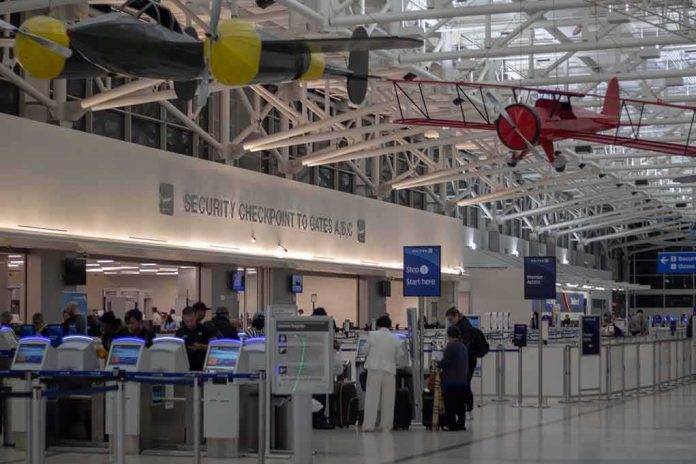
Track airport operations live. Use the airport’s official social feeds for security wait times and terminal alerts. Watch the Federal Aviation Administration delay map and your hub’s arrival flow. If your inbound aircraft sits behind a ground stop, rebook before the stampede. Pick airlines with multiple flights on your route that day. Multiple swings at the plate beat one shot when weather cuts the schedule. Ask agents to reroute you through less crowded alternates if your main hub clogs.
What The Numbers Mean For Your Wallet—And Your Sanity
Holiday fares are high because the math said they could be. Demand stayed firm, fuel got pricier, and airports cannot conjure gates or crews overnight. That mix rewards early planners and punishes wishful thinking. Buying earlier still helps when averages climb because you dodge the last-mile spike. Flex your airport choice if you cannot flex your travel date. A cheaper fare through a brittle hub is a fake win if you miss dinner with family.
American conservative common sense says plan for the bottleneck you cannot control. Do not rely on corporate promises to smooth the rush. Airlines will charge what the market bears and protect their best hubs. That is their job. Your job is risk control: first flights out, bigger buffers, backup airports, and carry-on bags that let you switch planes fast. Track the airport, and you track your odds of getting there on time at a price you can live with.
Sources:
youtube.com, fortune.com, businessmodelanalyst.com, hanetf.com